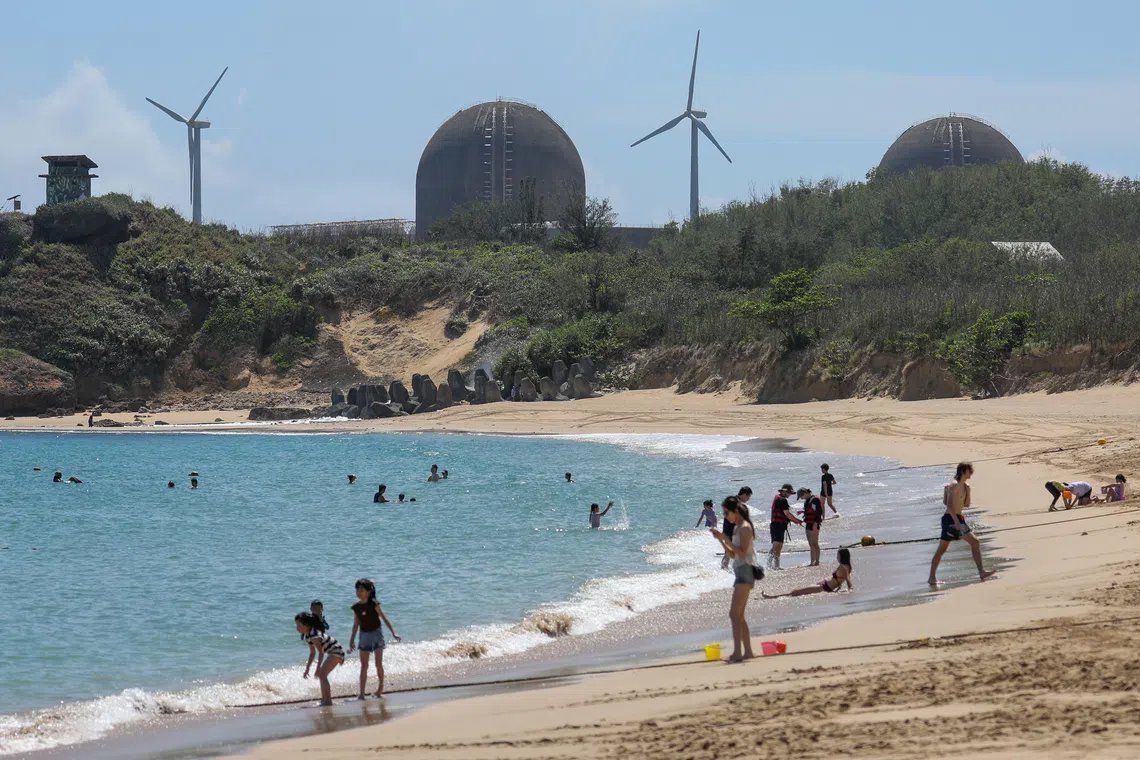
Taiwan's electorate faces yet another nuclear energy referendum on November 28, this time bundled with nationwide local elections that will determine thousands of public officials. The proposed measure asks voters whether the government should abandon its "Nuclear-Free Homeland" policy to address electricity security, support artificial intelligence development, and strengthen national defence. Yet beneath this ostensibly straightforward policy question lies a deeper struggle: how Taiwan's major opposition parties—the Kuomintang (KMT) and Taiwan People's Party—are strategically deploying referendums to mobilise conservative voters and gain ground against the ruling Democratic Progressive Party (DPP) in an increasingly fractious political landscape.
The frequency of nuclear referendums alone demonstrates the instrumentalisation of direct democracy. This is Taiwan's fourth nuclear policy referendum since 2016, with the previous ballot occurring merely a year ago in August 2025. While legitimate arguments exist that geopolitical and economic circumstances have shifted dramatically—including threats to global oil supplies from the Strait of Hormuz closure and surging energy demand from artificial intelligence infrastructure expansion—observers point to electoral calculus as the primary driver. Three referendums were submitted to Taiwan's Central Election Commission this year; only the nuclear measure secured approval. Proposals on legalising caning for serious crimes and earmarking traffic fine revenue for road safety were rejected, though the caning rejection stemmed from human rights concerns rather than procedural grounds.
The strategy underlying this referendum push reflects sophisticated political calculation. Qi Dongtao, senior research fellow at the National University of Singapore's East Asian Institute, argues that electoral considerations rival or exceed the substantive policy dimensions. The KMT and Taiwan People's Party appear convinced that contentious issues like nuclear energy and law-and-order can energise their traditionally conservative voter base to participate in local elections. Historical precedent validates this reasoning: during the 2018 local elections, when Taiwan held ten national referendums simultaneously, the opposition KMT achieved exceptional electoral performance. Higher turnout among conservative voters in competitive local races directly translates to opposition gains, making referendum timing an integral component of electoral strategy.
The opposition's framing strategy extends beyond merely raising issues. Chong Ja Ian, associate professor of political science at NUS, observes that the KMT deliberately positions itself as committed to law-and-order governance while depicting the DPP as obstructing tough-on-crime measures. This rhetorical positioning references Singapore's regional reputation for law and order combined with prosperity—a powerful political signal within Taiwan's cultural context. By proposing conservative-aligned referendums alongside local elections, opposition parties communicate that they embody the values and governance approach voters should prefer, essentially using direct democracy mechanisms as extended campaign vehicles.
However, the accelerating pace of referendums has prompted serious concerns among legal scholars and democratic governance experts. Associate Professor Lin Jia-he from National Chengchi University's College of Law contends that Taiwan conducts national referendums with unprecedented frequency and minimal deliberative space. Switzerland, typically cited as a referendum-heavy democracy, allows three to five years between initial proposals and final votes, enabling substantive public debate and government preparation. Taiwan's November 2026 referendum was announced on August 28, providing voters merely three months to grapple with complex energy policy questions. This compressed timeline eliminates the possibility of rigorous public deliberation on Taiwan's optimal energy mix and the genuine trade-offs involved, reducing referendums to binary choices divorced from nuanced policy discussion.
The fundamental challenge traces to 2017 legislative reforms that dramatically lowered the threshold for holding and passing referendums. Previously, referendums required 50 percent voter turnout to be valid—a standard so stringent that former President Chen Shui-bian's 2004 cross-strait relations referendums failed despite commanding overwhelming voter support. The reformed rules require only that "Yes" votes exceed "No" votes and valid "Yes" votes represent at least 25 percent of the total electorate. This substantially lower bar transformed referendums from exceptional constitutional instruments into routine political tools. The consequence has been exactly what sceptics predicted: a sharp increase in referendum proposals since 2017, with political parties recognising referendums as weapons in partisan competition rather than mechanisms for authentic popular sovereignty.
Qi contends this dynamic fundamentally corrupts the purpose of direct democracy. When political parties habitually propose controversial issues specifically designed to mobilise supporters and secure media attention, referendums transition from instruments of popular will into battlegrounds of partisan strategy. Referendums should theoretically address major constitutional questions deserving direct popular authorisation, not serve as supplementary electoral weapons. Yet Taiwan's current system incentivises exactly this perversion. Smaller opposition parties particularly benefit from referendums that energise their base and potentially disrupt coalition-building by the ruling party, making referendum proposals rationally attractive from a strategic perspective even when policy substance matters less than electoral calculation.
Public sentiment increasingly reflects scepticism toward this referendum proliferation. Sean Chang, a 39-year-old Taipei resident working in public relations, articulated this growing fatigue following Taiwan's 2018 referendum experience. Although Chang initially viewed referendums as expressions of democratic intent, he now perceives them as "a tool for each political party to manipulate public opinion." Rather than stimulating engaged citizenship across multiple policy perspectives, the cascading referendums produced resignation. Chang eventually disengaged from referendum participation entirely, preferring to avoid the exhausting exercise of interpreting every proposal through multiple lenses. This anecdotal evidence suggests that over-reliance on referendums may paradoxically undermine democratic participation by generating cynicism rather than engagement.
The November 28 elections will determine 11,051 local public officials across Taiwan's municipalities and counties, including county magistrates and city mayors. While local election campaigns typically emphasise parochial issues—infrastructure, local environmental concerns, municipal services—political analysts treat these elections as crucial indicators for Taiwan's national political trajectory. Elections scheduled for 2028 will be shaped significantly by party momentum and voter alignments established during these local contests. Should opposition parties successfully mobilise conservative voters through strategically deployed referendums, the results could redefine Taiwan's political competitive landscape and influence which party commands momentum heading into presidential contests.
The nuclear referendum itself merits serious independent consideration beyond partisan maneuvering. Taiwan's energy security genuinely remains contested terrain. The island depends heavily on imported energy sources, making vulnerability to supply disruptions a legitimate strategic concern. Renewable energy expansion faces geographical constraints, and liquefied natural gas imports have proven expensive. Some policy specialists argue that selective nuclear capacity could provide baseload power during Taiwan's transition toward renewable dominance, particularly as energy demands intensify with artificial intelligence infrastructure development. Conversely, others contend that continued vulnerability to nuclear safety incidents and waste disposal challenges makes full energy transformation more prudent. These substantive considerations deserve rigorous public deliberation.
Yet the current referendum environment undermines rather than enhances such deliberation. When referendums occur within three-month windows before elections, when opposition parties explicitly deploy them as mobilisation tools, and when the Central Election Commission approves some proposals while rejecting others based on content evaluations, the process becomes transparently politicised. Voters rationally doubt whether their referendum votes reflect independent policy judgment or conscious participation in partisan competition. This erosion of legitimacy potentially damages Taiwan's democratic institutions more than any specific referendum outcome could improve governance. Reforming referendums to require longer deliberative periods, perhaps restricting them to every two years, and ensuring non-partisan expert guidance might restore their credibility as direct democracy instruments rather than extensions of electoral campaigns.

