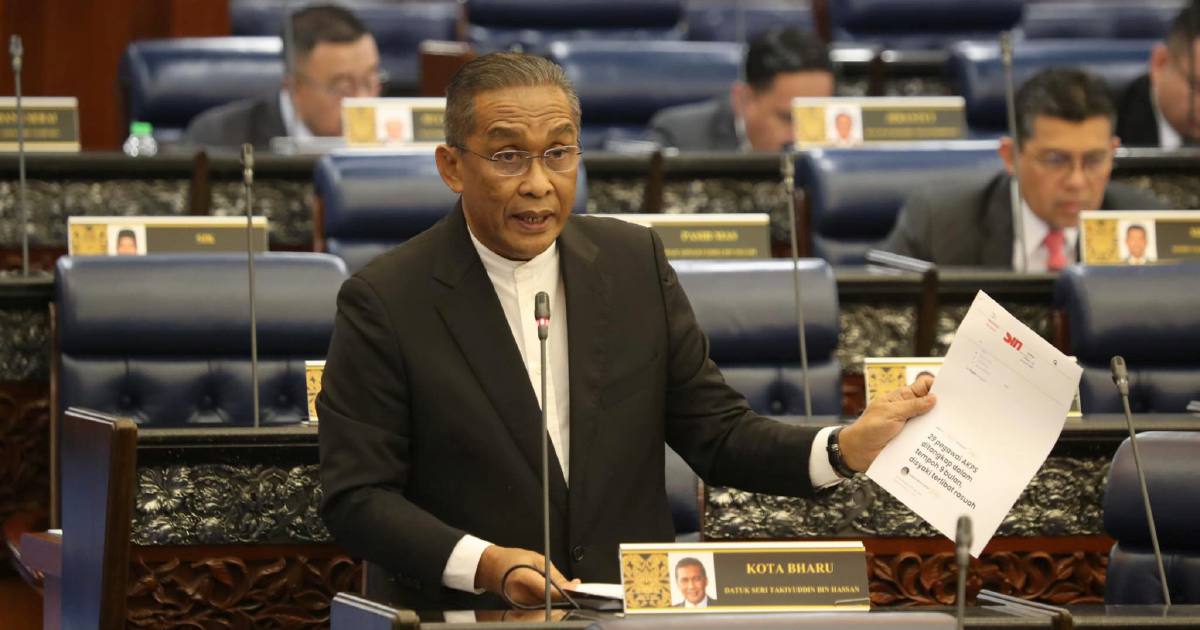
The opposition has formally called for a delay in the forthcoming parliamentary session dedicated to examining the Royal Commission of Inquiry report into Tabung Haji management, proposing that discussions be shelved until Prime Minister Datuk Seri Anwar Ibrahim is able to attend in person. Datuk Seri Takiyuddin Hassan, serving as the opposition chief whip, has publicly articulated this position, raising procedural concerns about proceeding with such a significant debate in the absence of the nation's chief executive.
Takiyuddin's intervention reflects broader parliamentary protocol considerations regarding major government inquiries and their parliamentary reception. The RCI report into Tabung Haji—Malaysia's pilgrimage savings institution that manages billions of ringgit in contributions from Muslim Malaysians—represents a matter of considerable national importance, given the fund's centrality to the financial security of contributors and its role in facilitating the hajj obligation. An absence of the Prime Minister during such proceedings raises questions about the completeness of governmental accountability and the opportunity for direct engagement between the executive and Parliament on findings of significance.
Tabung Haji has long been subject to intense scrutiny over investment decisions, governance structures, and fund management practices. The establishment of the RCI itself indicated serious concerns warranting formal investigation at the highest judicial level. The subsequent report's examination by Parliament constitutes a critical juncture for public understanding and parliamentary oversight of how the institution has operated and what systemic issues may require remedial action. The pilgrimage fund affects millions of Malaysian households, making its governance a matter extending beyond bureaucratic interest into households and communities nationwide.
The timing of parliamentary proceedings on such matters carries procedural weight in Westminster-derived systems like Malaysia's. While Parliament can certainly proceed with opposition members present and junior government ministers representing the executive, the participation of the Prime Minister himself carries both symbolic and substantive implications. His presence signals governmental seriousness about the inquiry outcomes and provides the forum for direct questioning and accountability at the highest level, creating a more complete parliamentary record of governmental response to the RCI's findings.
Anwar Ibrahim's absence appears to be temporary in nature, possibly related to official duties or international commitments, though the specific circumstances were not detailed in available information. The opposition's request thus represents a calculated procedural manoeuvre with potentially significant implications. By proposing postponement, Takiyuddin positions the opposition as advocating for thoroughness and accountability rather than obstruction, framing the debate not as a delay but as an insistence on proper parliamentary practice.
Government scheduling of parliamentary business generally falls within the executive's prerogative through the Dewan Rakyat leadership. However, consultation with opposition leadership on significant matters has become increasingly common, reflecting evolving parliamentary conventions. The opposition's formal input may carry weight with parliamentary schedulers, particularly if delaying the debate creates no substantive disadvantage and potentially enhances the debate's quality and parliamentary legitimacy.
For Malaysian pilgrims and contributors, the timing of this parliamentary examination matters considerably. Thousands make annual decisions about hajj contributions based on confidence in Tabung Haji's stewardship. Parliamentary scrutiny of the RCI findings, conducted thoroughly and at the appropriate level of governmental authority, ultimately serves public interest in ensuring that pilgrim savings are managed with proper oversight and accountability. Delays in parliamentary examination, while potentially frustrating, may be preferable to superficial proceedings conducted without full governmental participation.
The broader context of Malaysian parliamentary life suggests an institution increasingly engaged with detailed scrutiny of significant matters. The Dewan Rakyat has demonstrated willingness to convene special sittings and dedicate parliamentary time to specific issues, reflecting recognition that certain matters demand focused legislative attention. The Tabung Haji RCI report clearly qualifies, given the fund's scale and its implications for millions of Malaysians. Takiyuddin's intervention thus occurs within a framework of legitimate parliamentary procedure and institutional self-governance.
Regionally, Malaysian parliamentary practices around government inquiry reports carry significance for Westminster-derived systems across Southeast Asia. How the Dewan Rakyat processes the Tabung Haji RCI findings will establish precedent for future inquiries and their parliamentary reception. The involvement of senior leadership in such proceedings reinforces parliamentary democracy's capacity to function as meaningful accountability mechanism rather than procedural formality.
The postponement proposal ultimately reflects tensions inherent in parliamentary governance between procedural efficiency and thoroughness. While expeditious parliamentary business remains important, equally crucial is ensuring that significant matters receive appropriate attention from senior government figures capable of providing authoritative responses and policy direction. Takiyuddin's call for delay, viewed through this lens, represents a defence of parliamentary substance over mere process, advocating for the kind of governance that builds public confidence in both the hajj fund and the institutions overseeing it.

