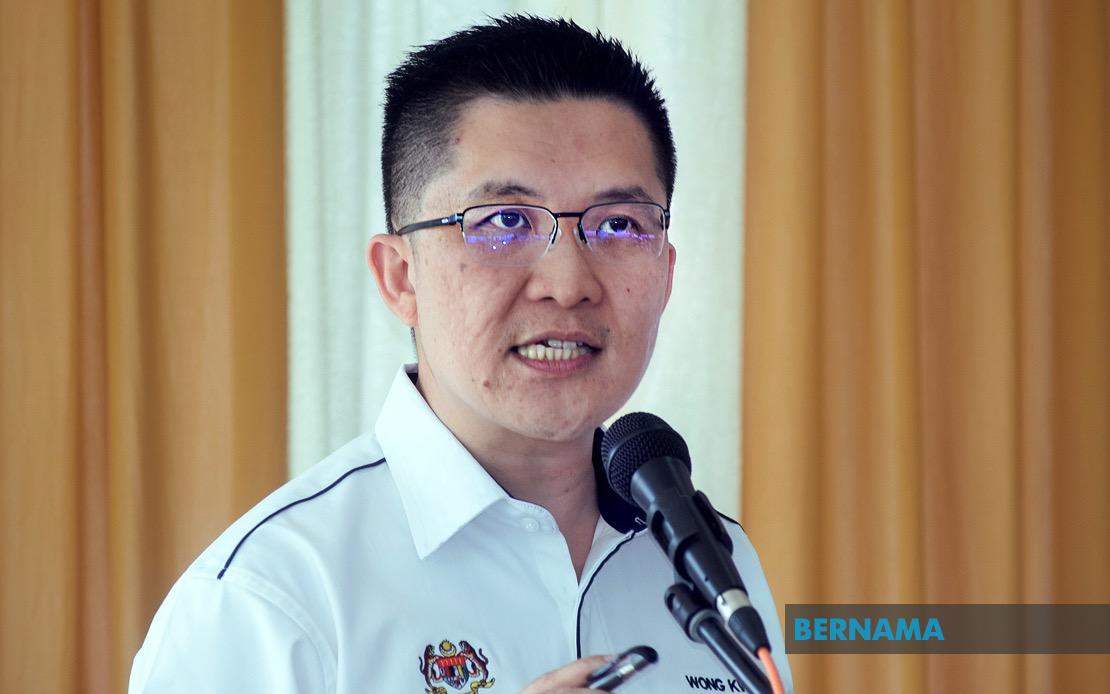
Malaysia's Tamil national-type schools continue to serve a substantial portion of the Indian-origin student population, with 528 institutions operating across the country and accommodating 78,501 pupils as of the end of May. Speaking in the Dewan Rakyat, Deputy Education Minister Wong Kah Woh outlined the current state of Tamil-medium education and the government's ongoing commitment to developing these schools, which form a critical pillar of Malaysia's multicultural education system.
The trajectory of Tamil language uptake in major national examinations reveals a gradual decline in candidate numbers over recent years. In 2023, approximately 8,023 candidates registered for the Sijil Pelajaran Malaysia examination with Tamil as a subject, a figure that has contracted to 7,925 in 2024, 7,693 in 2025, and 7,494 this year. This downward trend warrants attention from education policymakers and community stakeholders, though the ministry emphasises its determination to sustain Tamil as a vital language option within Malaysia's examination framework. The Education Ministry has explicitly affirmed that Tamil language will remain available as a subject within the Examinations Syndicate's offerings, reinforcing institutional support for this linguistic stream.
Notably, the ministry clarified that access to Tamil-language examinations extends beyond students in dedicated Tamil schools. Pupils attending institutions that do not offer Tamil instruction remain eligible to register for the subject in the SPM, provided they meet standard examination registration protocols. This provision broadens opportunities for Tamil learners across diverse school settings and acknowledges that language study is not exclusively bound to ethnically designated institutions.
Johor represents a significant concentration of Tamil-medium education in Malaysia, hosting 71 Tamil national-type schools with a combined enrolment of 12,906 pupils. Within Johor Bahru district specifically, fifteen such schools operate, though enrolment is heavily concentrated in a handful of well-established institutions. Four schools dominate the district's Tamil student population: SJKT Taman Tun Aminah leads with 1,529 pupils, followed by SJKT Ladang Rini with 1,055, SJKT Jalan Yahya Awal with 890, and SJKT Masai with 768. This concentration pattern reflects broader demographic and geographic factors affecting educational accessibility and parental school selection in urban and suburban areas.
The Education Ministry has undertaken substantial infrastructure investment to support Tamil-medium institutions, particularly in Johor where expansion projects are underway. SJKT Ladang Rini and SJKT Kulai Besar have each received allocations of RM4.3 million for new building construction, initiatives designed to expand capacity by an additional 200 to 300 pupils each. Such investments signal institutional recognition that certain Tamil schools face capacity constraints and require physical expansion to meet demand. Conversely, the ministry has identified two Tamil schools in Johor Bahru operating with critically low enrolment below 30 pupils—SJKT Ladang Sungai Plentong and SJKT Ladang Mados—presenting administrative and financial challenges that necessitate targeted intervention strategies.
Addressing the structural challenge of under-enrolled schools has become a key policy priority for the Education Ministry. A dedicated roadmap has been established to manage institutions struggling with insufficient pupil numbers, employing multiple approaches including multi-grade classroom configurations, relocation of schools to areas of greater demand, and selective retention based on local community needs. As of May 2026, 135 Tamil schools nationwide have transitioned to multi-grade teaching arrangements, while 36 institutions have been approved for relocation to potentially more viable locations. These measures represent pragmatic responses to demographic shifts and educational demand patterns that have reshaped the Tamil school landscape in recent years.
Teacher recruitment and qualification levels demonstrate that the ministry has successfully exceeded baseline staffing requirements for Tamil-medium education. At the primary level, Tamil schools require 1,334 qualified teachers according to established standards, yet the ministry has achieved staffing levels of 1,733—representing a surplus of nearly 400 positions. At secondary level, the requirement stands at 584 teachers with current staffing at 648, indicating adequate supply. This surplus capacity at primary level particularly demonstrates substantial investment in human resources for Tamil education, though questions remain about optimal utilisation and retention of these additional teaching personnel.
Curriculum development initiatives form another dimension of the ministry's commitment to Tamil-medium education. The anticipated implementation of the 2027 School Curriculum represents a significant undertaking designed to strengthen Tamil language instruction and enhance teaching methodologies. Alongside curriculum revision, the ministry has prioritised improvements in Tamil literature offerings, recognising the importance of robust language and cultural content in sustaining student engagement and achievement. These curriculum reforms aim to ensure that Tamil-medium education remains contemporary, rigorous, and capable of meeting learners' intellectual and linguistic development needs.
The ministry's commitment to infrastructure and teacher development underscores recognition that Tamil schools face distinct challenges in resource allocation and professional support compared to majority-language institutions. However, the declining trajectory of Tamil examination registrations suggests that broader social and demographic factors—including economic mobility, linguistic preferences among younger generations, and demographic shifts within Tamil-origin communities—may be constraining growth in Tamil-medium education demand. The ministry's multifaceted approach addresses immediate institutional needs through physical infrastructure and staffing, yet the sustainability of Tamil-medium education ultimately depends on maintaining community engagement and ensuring these schools remain attractive educational options for families.
Examination standards and grading transparency represent complementary areas where the ministry has sought to reinforce confidence in Tamil-medium educational pathways. Wong clarified that grade boundaries for SPM examinations are determined through systematic evaluation by panels comprising subject specialists, curriculum experts, and educational measurement professionals, rather than through quota systems or predetermined percentage targets. Grade boundaries do vary year-to-year reflecting the performance characteristics of particular candidate cohorts and examination instruments, aligning with international examination practices. This technical clarification addresses historical concerns about examination fairness and affirms that Tamil language examination candidates are evaluated according to identical professional standards applied across all language streams in Malaysia's national examination system.