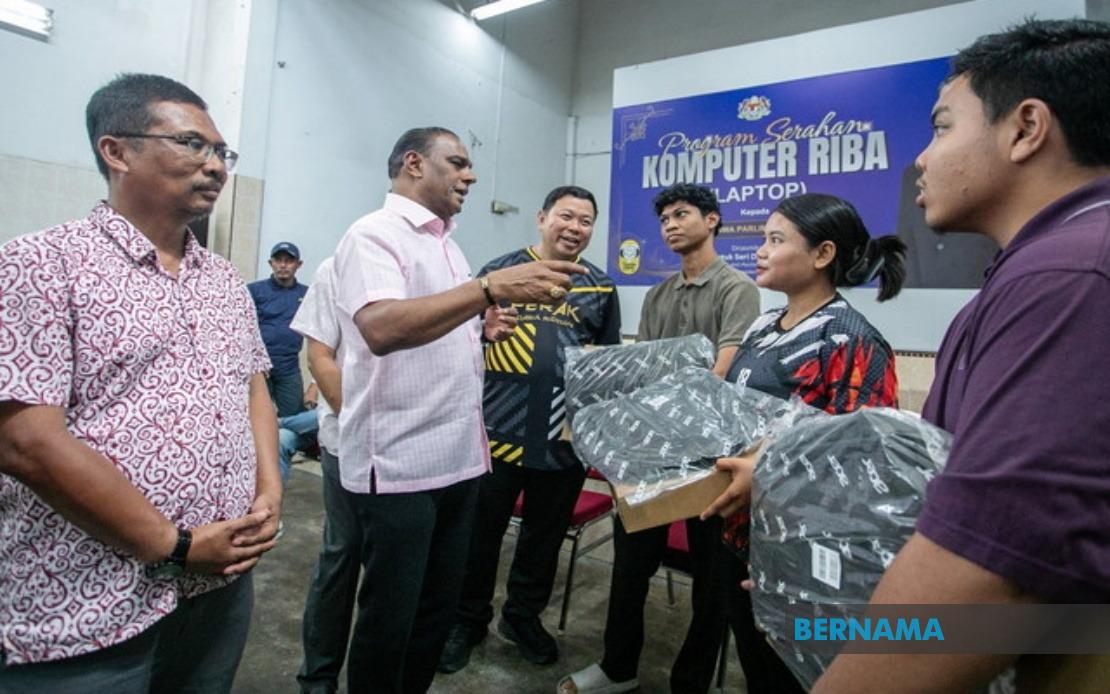
Forty-five university students from low-income B40 households in the Tapah parliamentary constituency have received laptops as part of a long-standing assistance programme that has now benefited more than 1,000 learners since launching in 2008. The distribution ceremony, held at Mahatma Gandhi Hall, underscores ongoing efforts to bridge the digital divide affecting Malaysia's economically disadvantaged student populations seeking tertiary education.
Tapah Member of Parliament Datuk Seri M. Saravanan emphasised that digital devices have transitioned from luxury items to educational essentials in contemporary learning environments. The devices are no longer supplementary conveniences but fundamental tools required for academic success, particularly as educational institutions increasingly incorporate online platforms, virtual classrooms, and digital submission systems into their delivery models. Students lacking reliable access to such technology face tangible disadvantages when completing coursework and engaging with course material, creating barriers that disproportionately affect those from financially constrained backgrounds.
The 2024 cohort of recipients reflects Malaysia's diverse educational pathways. The group included 30 diploma students, five pursuing certificate-level qualifications, four matriculation students, and three degree-track undergraduates, alongside single recipients from SPM, STPM, and foundation programme levels. This composition demonstrates how the initiative spans the full spectrum of post-secondary education, recognising that financial hardship impedes access across multiple qualification tiers rather than affecting only university degree seekers.
The selection process involved rigorous vetting to ensure assistance reached genuinely eligible families. A dedicated committee evaluated each application whilst consulting the District Education Office and community leaders within Tapah to verify applicants' economic circumstances and educational legitimacy. This verification approach aims to prevent misallocation of resources whilst building accountability into the distribution mechanism, ensuring taxpayer-funded assistance targets those most in need of intervention.
Saravanan highlighted meaningful progress among indigenous communities within his constituency, particularly Orang Asli youth accessing higher education and professional pathways. Over two decades, the region has witnessed Orang Asli individuals entering medicine, law, and specialised fields—a transformation that creates aspirational models for younger cohorts still navigating educational decisions. This intergenerational momentum suggests that removing practical barriers like equipment costs has tangible multiplier effects within traditionally marginalised communities.
Aidil Iskandar Ramlan, an 18-year-old former student of SMK Syeikh Abdul Ghani in Bidor, will commence a Diploma in Public Administration at Universiti Teknologi MARA's Raub campus next month. For Aidil, whose father works as a school security guard and whose mother maintains a household, the laptop represents genuine financial relief. Without this intervention, his family would have confronted substantial expenditure acquiring a suitable device whilst balancing other essential living costs—a scenario repeated across numerous B40 families managing education expenses alongside pressing financial obligations.
The device enables Aidil to undertake assignments, conduct research, and participate in study activities that increasingly depend on digital platforms. Beyond completing coursework, the laptop facilitates his transition into tertiary education during a critical developmental phase when technological competence increasingly determines academic and professional outcomes. His gratitude reflects broader sentiment among beneficiaries recognising how targeted assistance addresses real economic constraints limiting educational opportunity.
Ea Endry Iana Aslan, 19, will utilise her laptop whilst pursuing a Diploma in Early Childhood Education at FELCRA College. Like Aidil, Iana recognised that acquiring a personal device independently would impose unsustainable burdens on her household economy. The assistance programme thus functions as practical economic intervention enabling students to access educational infrastructure their families cannot otherwise afford, regardless of individual ambition or academic aptitude. This distinction proves critical—the programme removes artificial financial barriers preventing capable students from progressing in tertiary institutions.
The initiative carries particular significance for Malaysia's B40 demographic, comprising approximately 40 percent of households earning below median incomes. Educational attainment among this group directly influences intergenerational economic mobility, poverty reduction trajectories, and broader socioeconomic development. When financial constraints prevent B40 students from accessing basic educational tools, the consequences extend beyond individual academic outcomes to affect national productivity, skills availability, and social cohesion. Conversely, programmes removing such barriers generate measurable returns through improved completion rates and professional contributions.
Since 2008, distributing over 1,000 laptops through this Tapah-based initiative represents sustained commitment to digital inclusion across successive electoral cycles. The consistency of this approach—maintained across multiple parliamentary terms—suggests institutional recognition that digital access constitutes fundamental educational infrastructure rather than discretionary luxury. As learning methodologies continue evolving toward hybrid and predominantly online delivery, particularly following pandemic-related educational disruptions, such programmes become increasingly vital for ensuring economically disadvantaged students maintain parity with peers from affluent backgrounds possessing ready access to technology.
The programme's sustainability raises questions about replication potential across other Malaysian constituencies facing comparable digital access disparities. Tapah's model—combining systematic needs assessment, community verification, and targeted distribution—offers a framework potentially applicable elsewhere. However, scaling requires sustained political commitment, adequate budgeting, and coordination between education authorities and community stakeholders. The initiative's longevity suggests these conditions exist in Tapah, yet whether comparable resources and political will extend across Malaysia's diverse constituencies remains an open question affecting millions of B40 students nationwide.

