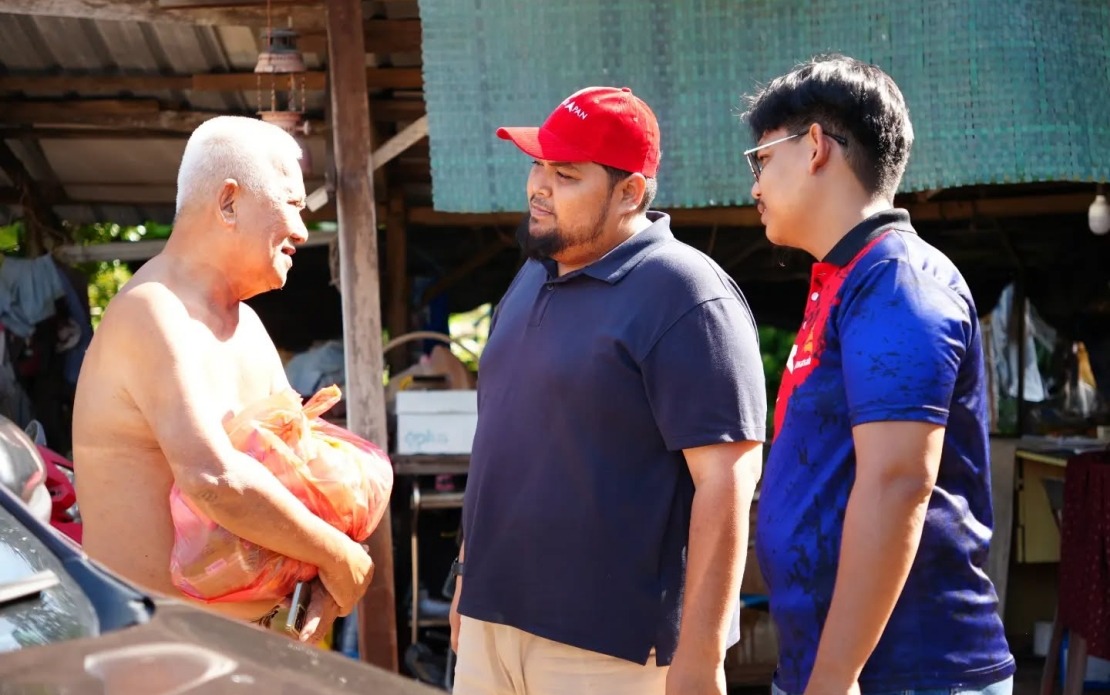
Muhammad Taqiuddin Cheman, the Pakatan Harapan hopeful vying for the Maharani state seat in Johor's 16th state election scheduled for Saturday, July 11, is channelling the final stretch of campaigning into direct engagement with young constituents. The candidate, known affectionately as Taqi, has shifted focus toward addressing the employment anxieties and entrepreneurial aspirations that dominate conversations among voters under 40, recognising that economic prospects remain the primary concern driving electoral choices in the district.
With merely four days remaining before polling day, Taqi has structured his remaining efforts around a series of grassroots sessions with youth organisations and young professional networks across Muar. The strategy reflects a calculated recognition that young voters—often overlooked by traditional campaign machinery—hold the key to shifting the electoral calculus in a constituency where demographic decline has become a defining challenge. By positioning himself as an attentive listener rather than a distant authority figure, the former Pulai Sebatang assemblyman (2018-2022) is attempting to establish credibility on bread-and-butter issues that resonate most powerfully with voters entering their economically formative years.
Muar's designation as a "retirement town" underscores the structural problem that Taqi's campaign seeks to address. The persistent exodus of young talent from the district represents not merely a demographic inconvenience but a fundamental erosion of the constituency's economic vitality and future tax base. Young professionals depart in search of employment opportunities concentrated elsewhere, whilst others who remain are often trapped in low-wage positions within the semiconductor manufacturing sector, lacking pathways toward career progression or business ownership. This brain drain has created a self-reinforcing cycle in which limited local opportunities drive further outmigration, reducing the consumer base and entrepreneurial dynamism necessary to generate new employment.
During recent engagement with young entrepreneurs operating from District 84, a pattern emerged that crystallises the frustration many face. Approximately 70 traders operate from the commercial area, yet insufficient space forces them into a rotation system that severely constrains business viability and growth. Many have independently identified alternative commercial locations that could accommodate expansion, yet lack the institutional backing or municipal connections necessary to formalise applications and secure these sites. Taqi's positioning of himself as a potential advocate and facilitator—someone who understands bureaucratic navigation and possesses political leverage—appeals directly to this constituency of thwarted ambition.
Pakatan Harapan's broader policy framework appears tailored to address these concerns systematically. The "Johor For All" manifesto allocates RM500 million specifically toward young entrepreneur development, a commitment substantial enough to signal serious intent whilst remaining targeted rather than universally distributed. This targeted approach reflects recognition that young businesspeople require not handouts but structured support systems: access to capital, mentorship networks, and removal of regulatory obstacles. The fund's explicit framing around youth entrepreneurship distinguishes it from generic development spending and suggests a strategy to retain and nurture local talent rather than subsidising consumption.
The anticipated completion of the Maharani Energy Gateway (MEG) project introduces a potential game-changer in the district's economic equation. Infrastructure projects of this magnitude typically generate employment multiplier effects extending far beyond direct construction jobs, attracting supply chain investments, servicing industries, and ancillary businesses. For young voters evaluating whether their future lies in Muar or elsewhere, evidence of concrete investment in productive capacity carries outsized persuasive power. However, the project's completion timeline remains vague—"expected to be completed soon" provides neither certainty nor specific dates—which may limit its immediate impact on voter confidence.
Taqi's advocacy for establishing quality Technical and Vocational Education and Training institutions within the Maharani constituency addresses a critical supply-side constraint. Malaysia's persistent skills gap in vocational fields has created genuine labour market opportunities, yet geographic mismatch forces young people to relocate for training. By proposing local TVET facilities calibrated to regional industry requirements, the candidate positions himself as someone who understands that talent retention requires removing friction from opportunity access. The specific mention of supporting second-generation fishermen signals attention to traditional maritime communities often overlooked in modernisation narratives, though this demographic represents an increasingly smaller share of the young electorate.
Secondary campaign issues—drainage infrastructure affecting oil palm agriculture and shallow-water navigation constraints at Parit Raja Laut—illustrate the granular approach Taqi has adopted. These are not headline-grabbing policy positions but rather the accumulated local grievances that generate disproportionate electoral sentiment. Farmers and fishing families struggling with tangible operational obstacles represent constituencies with concentrated grievances and high electoral motivation. By demonstrating familiarity with these specific challenges, Taqi establishes local knowledge and investment in community welfare beyond formulaic campaign messaging.
The Maharani contest unfolds as a genuinely competitive four-way race. Mohamad Anuar Hayan representing Perikatan Nasional, Datuk Ashari Md Sarip from Barisan Nasional, and Muhammad Amir Fiqri of Muda all command organisational resources and voter bases. The fragmentation of opposition votes among three non-PH candidates provides neither clear advantage nor disadvantage without understanding local coalition dynamics and vote-splitting patterns. Taqi's explicit focus on youth mobilisation implicitly acknowledges that winning Maharani likely hinges on activating dormant or marginally engaged younger voters who constitute a significant but historically lower-turnout segment.
The campaign's emphasis on engagement over pronouncements reflects a maturation in electoral strategy. Young voters, particularly in peripheral constituencies like Muar, often view themselves as peripheral to political consideration. Taqi's deliberate cultivation of listening sessions and responsiveness to organically identified problems—rather than imposing a pre-packaged agenda—represents an attempt to reverse that alienation. Whether these final four days of intensive youth outreach translate into electoral support remains uncertain, but the strategy acknowledges a fundamental political truth: sustainable election victories increasingly depend on convincing young voters that their concerns merit genuine priority.

