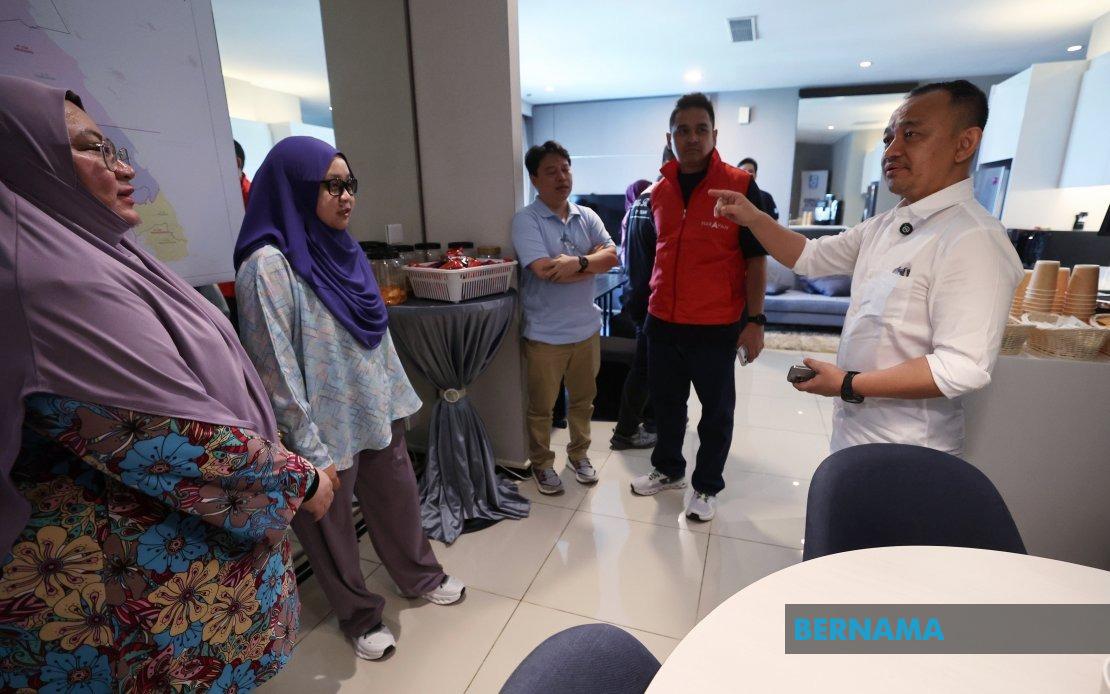
Dr Maszlee Malik, the Pakatan Harapan candidate contesting the Puteri Wangsa seat in the forthcoming Johor state election, is banking on technology to bridge the gap between residents and their elected representative. The former education minister unveiled plans for a bespoke mobile application that would serve as a digital conduit for complaints and issue reporting, designed to tackle the practical challenges of serving a sprawling and heterogeneous constituency. With polling set for July 11 and early voting on July 7, Maszlee is positioning himself as a forward-thinking alternative capable of modernising service delivery in one of Johor's most diverse state seats.
The Puteri Wangsa constituency presents a complex governance puzzle. Its geographic expanse and demographic diversity—stretching from the affluent Austin Heights enclave to the rural Felda Ulu Tebrau settlements—demand a service model that transcends traditional walkabouts and face-to-face meetings. Maszlee argues that digital infrastructure is not merely a convenience but a necessity when addressing the needs of populations separated by significant distance and socio-economic circumstances. This recognition of constituency complexity reflects a broader trend among younger or reform-minded candidates across Southeast Asia who view technology not as a replacement for traditional politics but as a complementary tool for inclusive representation.
Beyond complaint management, Maszlee envisions the application serving a social safety net function. The app would systematically identify overlooked vulnerable populations—including single mothers and persons with disabilities—who theoretically qualify for government assistance but remain unreached due to bureaucratic opacity or information gaps. This aspect of his proposal addresses a documented challenge in Malaysian public administration: the disconnect between policy intent and ground-level implementation, where legitimate beneficiaries often fail to access entitlements because formal systems lack visibility into community needs. By digitising identification and access pathways, Maszlee suggests he could reduce administrative friction and expand the reach of existing welfare programmes.
The candidate has drawn inspiration from unconventional models abroad. He specifically referenced the community engagement approach of New York City Mayor Zohran Mamdani, who leverages digital platforms alongside social media to create direct feedback loops with constituents. This transnational borrowing of governance techniques is increasingly common among Malaysian politicians seeking to distinguish themselves as innovative operators. However, it also raises questions about implementation feasibility and cultural adaptation—what works in an American municipal context may require significant modification for a Malaysian state constituency, particularly regarding infrastructure, digital literacy, and institutional capacity.
Maszlee's campaign strategy extends beyond the mobile app into carefully segmented digital messaging. Recognising that conventional campaigning—street rallies, posters, and door-to-door canvassing—fails to reach increasingly mobile and geographically scattered voter cohorts, his team is deploying targeted social media campaigns calibrated to different demographic groups. Young voters, Malaysians working in Singapore, and urban professionals represent constituencies that campaign teams struggle to access through traditional methods. By tailoring content to these groups' specific concerns and communication preferences, Maszlee attempts to overcome the natural atomisation of modern electorates.
The challenge of algorithmic reach and filter bubbles looms large in this digital-first approach. Social media platforms inevitably fragment audiences into interest-driven echo chambers, potentially limiting campaign message penetration among voters with different priorities or political leanings. Maszlee acknowledges this structural impediment and proposes addressing it through even more granular targeting: content is being customised not merely by age or employment status but by geographical locality, ethnic community, and socio-economic background. This hyper-segmented approach reflects sophisticated understanding of voter heterogeneity but also raises questions about whether fragmented messaging ultimately builds broader political coalitions or instead deepens pre-existing social divisions.
Particularly notable is the targeting of Malaysians working in Singapore, especially those from the Chinese community. This represents recognition of a significant constituency long overlooked by traditional state-level politics—cross-border workers whose economic ties and daily lives extend beyond Johor's formal boundaries. For these voters, accessibility to representation and information about home-state politics has historically been constrained. By leveraging social media platforms where Singaporean-based Malaysian workers congregate, Maszlee's campaign attempts to reintegrate a geographically mobile population into the state political process. This strategic inclusion may offer lessons for other constituencies managing transnational populations.
The engagement model Maszlee proposes is multivalent, combining technological infrastructure, community partnerships, and direct democratic forums. Regular dialogue with non-governmental organisations, residents' associations, and government agencies features alongside town hall meetings and the digital app. This layered approach suggests recognition that no single mechanism adequately captures community needs; rather, sustainable constituent relationships require multiple feedback channels operating in concert. The emphasis on NGOs and residents' associations also implicitly acknowledges that state representatives operate within an ecosystem of civil society actors who often possess superior on-the-ground presence and community legitimacy.
Puteri Wangsa presents a crowded electoral battlefield, with Maszlee competing against Rashifa Aljunied of the Malaysian United Democratic Alliance, Barisan Nasional's Teow Chia Ling, Nicholas Paul Vincent representing Parti Bersama Malaysia, and independent Wang Wee Siong. This five-way contest suggests fragmentation across the political spectrum, creating both opportunities and risks for a candidate whose appeal is anchored in technological innovation and service delivery rather than party machinery or established factional networks. Whether digital-forward positioning translates into electoral success in a state-level contest remains uncertain; voters often prioritise other factors, including party affiliation, local networks, and perceived alignment with state-level government direction.
Maszlee's platform ultimately reflects broader tensions in contemporary democratic practice. Technology promises efficiency and inclusivity, yet implementation depends on factors often beyond a single candidate's control—digital infrastructure quality, citizen familiarity with apps, and institutional coordination across agencies. His emphasis on innovation and constituent engagement distinguishes his campaign from more traditional approaches, potentially appealing to voters frustrated with perceived unresponsiveness in local government. However, ambitious digital initiatives require sustained funding, technical expertise, and political will—resources that may prove scarce once the electoral campaign concludes. The Puteri Wangsa race will thus serve as a minor testing ground for whether technology-mediated politics genuinely improves representative responsiveness or merely offers the aesthetic of modernisation without substantive institutional change.

