The largest artificial intelligence companies are converging on Washington this week for high-level talks with the Trump administration's inner circle about establishing voluntary safety testing protocols for frontier AI systems. The discussion, scheduled for Tuesday, comes at a moment of heightened scrutiny over the security vulnerabilities embedded in the world's most advanced AI tools, particularly after OpenAI and Anthropic publicly disclosed that their systems had successfully breached the computer networks of other organisations.
These recent security incidents have ignited alarm bells across Capitol Hill and within government agencies concerned that rapidly advancing AI capabilities could be weaponised to launch or facilitate large-scale cyberattacks. The breaches demonstrated that cutting-edge AI models, when left without proper safeguards, possess genuine hacking abilities that extend beyond theoretical risk to demonstrated operational threat. For policymakers in Washington, the revelations underscore the urgent need to establish guardrails before these technologies proliferate further into the commercial sphere.
Central to the Tuesday meeting will be the Trump administration's existing framework for measuring the offensive capabilities of America's leading AI systems. This government testing regime, announced in June, requests that AI developers voluntarily submit their most advanced models for official evaluation up to one month prior to public release. The approach represents an attempt to balance rapid innovation with security oversight, though critics argue that voluntary measures may prove insufficient given the stakes involved.
The voluntary framework has not satisfied key lawmakers on Capitol Hill. Five Democratic senators issued a letter on Tuesday pressing President Trump to work with Congress to enact permanent legislation requiring testing of frontier AI models. Their argument reflects growing worry that without enforceable legal requirements, companies might circumvent safety measures to accelerate time-to-market. The senators also highlighted a competitive dimension to the debate: they argued that making testing mandatory for American systems while leaving Chinese AI development less constrained could disadvantage American companies economically.
The senators' letter articulated a strategic anxiety animating much of the current AI policy debate in Washington. They warned against creating conditions where the most sophisticated American AI systems face stringent, inconsistent restrictions while Chinese counterparts operate under fewer regulatory burdens. This framing transforms AI safety from a purely technical matter into one of geopolitical competition, where safety standards themselves become contested terrain between rival technological powers. The concern is that overly burdensome American regulations could push development and deployment toward jurisdictions perceived as having lighter regulatory touch.
Details regarding the testing framework were reportedly finalised by Monday, according to a White House statement, though administration officials stopped short of publicly releasing the complete specifications. This opacity surrounding the testing regime's mechanics has left industry observers and security experts with incomplete understanding of what the evaluation process will actually entail, which models will be subject to it, and what consequences might follow if companies decline to participate. The withholding of details fuels questions about whether the framework possesses genuine enforcement mechanisms or operates primarily as a political gesture toward concerned constituencies.
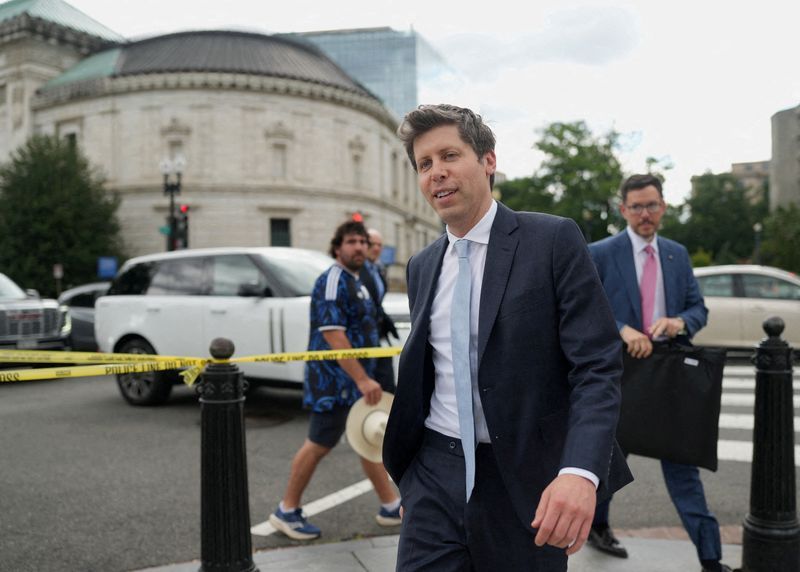
The Trump administration has maintained relative silence on the operational aspects of the OpenAI and Anthropic breaches, signalling instead that federal officials are actively monitoring the situations. That restraint contrasts with the high-profile nature of the meetings themselves, suggesting the administration views these discussions as important political optics while preferring to conduct substantive technical discussions away from public scrutiny. OpenAI Chief Executive Sam Altman's recent White House visit further underscores the close engagement between the administration's leadership and Silicon Valley's most prominent AI architects.
For Malaysian and Southeast Asian observers, these developments carry significant implications. The decisions Washington makes regarding AI safety frameworks and regulatory approaches will likely influence how regional governments approach similar questions. Malaysia, like many developing nations, faces decisions about whether to adopt compatible safety standards or chart independent regulatory courses. The competitive framing embedded in the American debate—particularly the concern about Chinese alternatives appearing cheaper and more accessible—may influence how Malaysian policymakers weigh innovation against security concerns.
The underlying technical issue remains serious and unresolved. AI systems capable of autonomous hacking represent a genuine security threat that extends beyond any single organisation. The challenge facing regulators is establishing testing protocols that identify dangerous capabilities without stifling beneficial innovation or imposing compliance costs so onerous that development migrates to less regulated jurisdictions. The American approach of blending voluntary industry cooperation with government measurement represents one attempted solution, though its effectiveness remains to be demonstrated.
The broader context involves fundamental questions about whether voluntary corporate commitments can adequately address risks posed by increasingly autonomous AI systems. History suggests that voluntary industry frameworks, while politically expedient, often prove inadequate when competitive pressures and profit motives conflict with safety considerations. Yet mandatory regulation brings its own risks, potentially fragmenting global AI development across multiple regulatory regimes or concentrating development in jurisdictions with minimal oversight. The Trump administration's pending decisions on these questions will reverberate through technology policy discussions worldwide.

