TEKUN Nasional has channelled RM36 million in financing to around 1,500 entrepreneurs across Negeri Sembilan through June this year, signalling continued support for small and medium-sized businesses in the state. At the broader national level, the agency has distributed RM540 million to approximately 25,600 entrepreneurs during the same period, reflecting the scope of Malaysia's commitment to grassroots entrepreneurship development. These figures underscore the ongoing reliance on targeted microfinance schemes to nurture local business ecosystems across the country's diverse economic landscape.
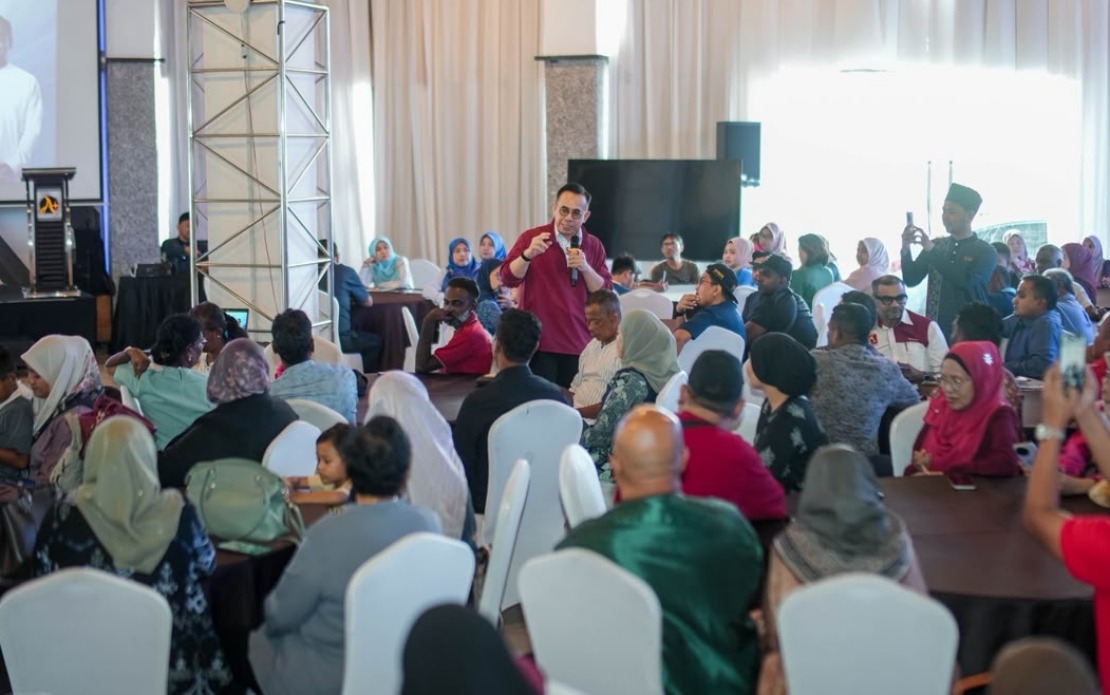
Minister of Entrepreneur Development and Cooperatives Steven Sim Chee Keong highlighted the achievements while acknowledging that TEKUN, now three decades old, has become instrumental in shaping the entrepreneurial landscape in Malaysia. The scheme's longevity demonstrates its institutional importance, yet Sim recognised that maturity brings responsibility to evolve service delivery. Speaking during an engagement with TEKUN entrepreneurs in Seremban, he gathered direct input from business owners about their experiences navigating the application, disbursement, and repayment processes. This ground-level feedback mechanism is crucial for identifying friction points that may deter potential applicants or delay business expansion plans.
Among the most significant announcements was Sim's commitment to expedited decision-making on financing applications. For requests of RM100,000 or less, his ministry aims to deliver approval or rejection decisions within seven days, regardless of outcome. For smaller micro-financing applications capped at RM20,000, the Ministry of Entrepreneur Development and Cooperatives (KUSKOP) is targeting a 24-hour turnaround. These timelines reflect international best practice standards and address a persistent complaint in Malaysia's entrepreneurship ecosystem: the lag between application submission and fund availability often hamstrings business operations during critical growth phases.
Simultaneously, Sim stressed that accelerated approvals mean little without equally efficient disbursement mechanisms. Entrepreneurs frequently report that even after approval, funds may take weeks or months to reach their accounts, negating the benefit of rapid decision-making. By emphasising coordination between approval and disbursement processes, the ministry is attempting to compress the entire cycle from application to active capital deployment. For small business owners operating with tight cash flows, this compression could be transformative, enabling them to seize market opportunities without excessive delay.
A particularly contentious issue addressed by Sim was the elimination of political patronage from the TEKUN application process. He explicitly stated that financing decisions must rest solely on professional evaluation and transparent assessment of applicant eligibility, free from letters of support from political leaders or third-party endorsements. This represents a significant cultural shift, as informal practices have long seen entrepreneurs seeking political backing to strengthen their applications. By insisting that merit, regardless of the applicant's political affiliation or religious background, determines outcomes, Sim is attempting to depoliticise a programme that historically operated within Malaysia's fraught communal and factional landscape.
The minister's invocation of colour-blind criteria—whether entrepreneurs "wear blue, green, or red"—signals an attempt to establish TEKUN as an apolitical institution where business viability trumps factional considerations. This distinction matters particularly in Malaysian politics, where government patronage networks traditionally follow party lines. If implemented rigorously, such a framework could restore public confidence in the scheme's fairness and encourage participation across Malaysia's diverse political constituencies. However, the strength of this commitment will ultimately be tested through consistent application rather than rhetorical declarations alone.
Beyond application procedures, the ministry is expanding TEKUN's reach through targeted schemes addressing specific communities. The Indian Community Entrepreneur Development Scheme (SPUMI) has received a budget increase from RM30 million to RM50 million, while the Indian Community Entrepreneur Financing Package (MUDRA) offers RM220 million in dedicated financing this year. These allocations acknowledge historical disparities in entrepreneurial access and capital among minority communities in Malaysia. Such targeted measures complement broader meritocratic principles by actively addressing structural barriers that have historically constrained wealth creation among non-Malay, non-Muslim entrepreneurs.
Sim articulated a vision extending beyond domestic entrepreneurship, arguing that local enterprise development should be evaluated against international competitive standards rather than through communal framings. His assertion that Malaysian companies compete globally as unified national entities, not as ethnically or religiously segmented actors, reflects aspirational thinking about Malaysia's economic identity. Yet this framing also reveals underlying tensions: while TEKUN's expansion of minority-focused schemes acknowledges differentiated needs, the simultaneous insistence on race-blind criteria for core decisions creates philosophical contradictions that demand careful navigation.
The practical implications for Southeast Asian entrepreneurship networks deserve attention. Malaysia's TEKUN model has become a reference point for regional governments designing microfinance systems. The scheme's emphasis on rapid decision cycles and transparent, merit-based processes aligns with emerging trends in development finance across ASEAN nations increasingly oriented towards private-sector-led growth. As regional economies compete for foreign investment and export competitiveness, the health of the small business sector becomes strategically important. Malaysian improvements to TEKUN's efficiency could influence how neighbouring countries structure their own entrepreneur support frameworks.
For Negeri Sembilan specifically, the RM36 million allocation represents meaningful capital injection into local commerce and light manufacturing. The state, traditionally overshadowed by more industrialised neighbours like Selangor and Johor, benefits from targeted entrepreneurship support as a pathway to economic diversification. The concentration of TEKUN funding in specific geographies warrants examination of whether distribution reflects entrepreneurial demand or bureaucratic convenience, an assessment that requires sustained monitoring.
Implementing Sim's ambitious timelines and depoliticisation commitments will test institutional capacity and political will. TEKUN's success hinges on recruiting and retaining professional staff equipped to assess business viability without succumbing to pressure from politicians or other interests. The ministry's ability to establish grievance mechanisms and enforce transparent decision-making standards across decentralised operations will determine whether announcements translate into systemic change. Entrepreneurs' actual experiences over coming months will provide the authoritative measure of reform success.

