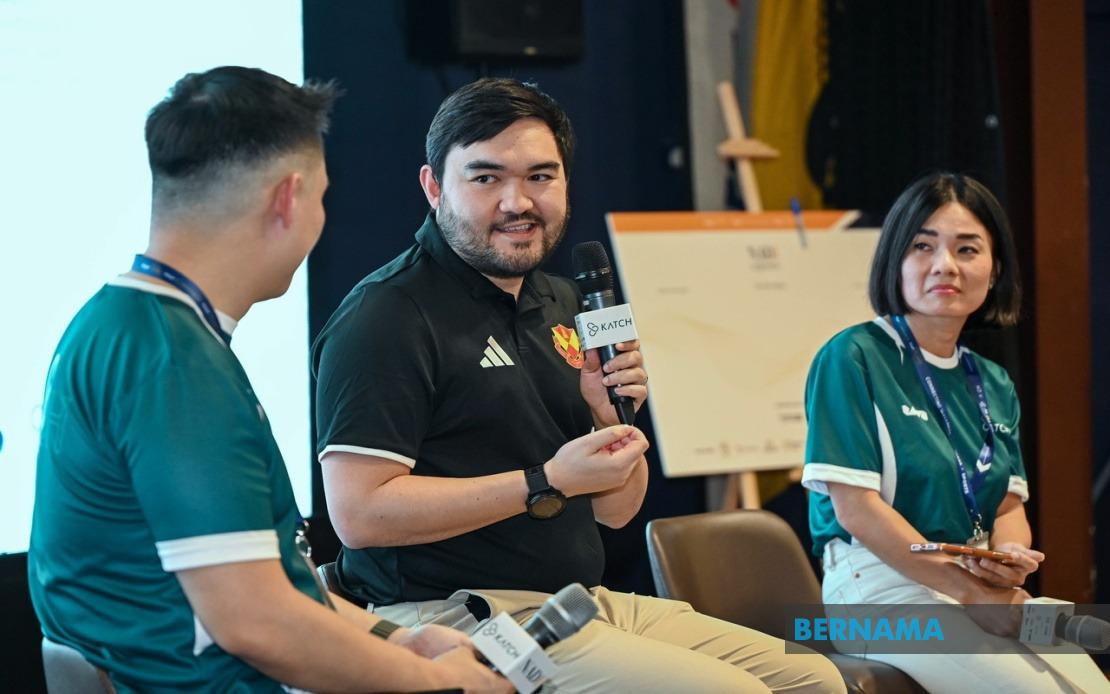
The Raja Muda of Selangor, Tengku Amir Shah Sultan Sharafuddin Idris Shah, has underscored the importance of establishing regular competitive platforms for young athletes as a logical next step following Selangor's commanding showing at the Malaysia Games 2026. Speaking at the NADI Connecting Wellness, Fitness and Sports With RMS event in Petaling Jaya on August 27, he contended that Selangor's status as overall champions must translate into concrete action to fortify the foundation upon which elite performance ultimately rests. The state's haul of 101 gold, 73 silver and 71 bronze medals represents not merely a sporting triumph but an opportunity to interrogate how such success can be institutionalised through systematic investment in community-level engagement.
Tengku Amir Shah articulated a philosophy grounded in the principle that sustained athletic development requires consistent engagement rather than sporadic intervention. He stressed that young competitors benefit profoundly from having regular weekend tournaments to train towards, arguing that this rhythm creates structure and motivation throughout the week. Without such touchpoints, he suggested, even talented individuals risk losing focus and momentum. The implication for Malaysian sports administrators is clear: excellence at national and regional competitions depends fundamentally on the quality and consistency of grassroots infrastructure—the hundreds of small competitions where athletes first learn to compete, to handle pressure, and to internalise the disciplines that separate champions from others.
The Raja Muda's own trajectory illustrates this perspective. His earlier involvement in establishing the Selangor Champions League before his more intensive engagement with the Football Association of Selangor provided him with practical understanding of how community-level tournaments can identify emerging talent and elevate competitive standards. The league functioned as a connecting mechanism, drawing together active social football teams across Selangor into a coherent structure where merit and performance determined outcomes. This model, he indicated, has proven sufficiently robust to warrant expansion beyond football into disciplines gaining popularity among Malaysian communities.
Among sports ripe for such expansion are pickleball and chess—disciplines that have witnessed surging participation in Malaysia in recent years. Pickleball's explosive growth reflects broader demographic shifts, particularly among middle-class urbanites and retirees seeking accessible yet competitive pursuits. Chess, meanwhile, has experienced a renaissance globally following renewed cultural interest and strategic recognition of its cognitive benefits. By applying the Selangor Champions League template to these sports, Malaysian administrators could channel grassroots enthusiasm into structured pathways where talent identification becomes almost organic—emerging naturally from competitive ecosystems rather than requiring costly, centralised talent searches.
The strategic calculus underlying Tengku Amir Shah's remarks extends beyond individual sport disciplines. Regular competitions at the community level serve multiple functions simultaneously: they retain young people in organised sporting environments, they generate data about talent distribution across the state, they build networks of coaches and administrators, and they create the narrative momentum that sustains public interest. In the Malaysian context, where resources for sports development remain constrained relative to demand, grassroots competitions represent remarkably efficient investments—they leverage existing community enthusiasm and existing networks of active participants.
Selangor's selection of sports for SUKMA 2026 competition garnered Tengku Amir Shah's approval as a decision reflecting strategic thinking about diversification and opportunity. By competing across multiple disciplines rather than concentrating resources narrowly, the state created visibility for sports beyond traditional strongholds like athletics and aquatics. This approach signals to young Malaysians across diverse communities that pathways to sporting recognition exist in their chosen disciplines, encouraging participation rather than discouraging it through competitive concentration.
The emphasis on developing a competitive mindset represents another analytical dimension worthy of attention. Tengku Amir Shah specifically identified goal-oriented thinking and winning mentality as outputs of regular competition—characteristics that extend beyond sports into professional and civic life. Malaysian educational and developmental philosophy has increasingly recognised that competitive sports provide pedagogical value beyond physical fitness. The discipline required to train consistently, the resilience required to handle defeat, the humility required to learn from superior competitors—these constitute character development mechanisms. When communities host regular competitions, they effectively establish schools of resilience and strategic thinking accessible to any young person with interest.
The governance structure implied by Tengku Amir Shah's vision differs subtly but importantly from top-down sports administration models. Rather than waiting for state or national bodies to design and deliver competition opportunities, communities can become agents of their own sports development. The role of government and state authorities shifts toward enabling these initiatives through modest infrastructure support, coordination, and recognition rather than direct provision. This subsidiary principle—allocating functions to the most local level capable of performing them effectively—has proven successful in other Malaysian policy domains and may represent an underexploited approach in sports development.
For Southeast Asian readers more broadly, Selangor's experience carries instructive implications. Regional competitors including Thailand, Vietnam, and Indonesia have similarly grappled with questions about how to translate occasional championship successes into systematic talent pipelines. The challenge transcends any single country—it reflects the structural difficulty of sustaining athletic excellence in middle-income contexts where resources, while growing, remain limited relative to the ambitions of national sporting institutions. Solutions emphasising community mobilisation and regular competition rather than centralised, state-directed programmes align with both resource constraints and democratic principles of broad participation.
Tengku Amir Shah's intervention occurred against the backdrop of broader Malaysian conversations about sports investment and national competitiveness at regional and international levels. The country has experienced inconsistent performances at successive Southeast Asian Games, prompting periodic reviews and restructuring initiatives. His emphasis on foundations rather than summits—on the breadth and depth of grassroots engagement rather than the heights of elite preparation—offers a corrective perspective often absent from crisis-driven sports policy discussions. Sustainable international competitiveness, his remarks suggest, emerges from thousands of community competitions rather than from impressive facilities in capital cities.
The participation of approximately fifty wellness, fitness and sports leaders at the NADI event demonstrates institutional appetite for Tengku Amir Shah's vision. The gathering itself functioned as a coalition-building exercise, connecting voices across the Malaysian sports ecosystem and establishing preliminary consensus around certain developmental priorities. Such convenings, when productive, facilitate subsequent action by creating networks of shared understanding among individuals positioned to influence resource allocation and institutional direction.
Moving forward, the operationalisation of Tengku Amir Shah's recommendations requires deliberate attention to several implementation dimensions. Resource allocation mechanisms must favour regular, recurring competitions rather than one-off spectacles. Coach development becomes critical—community competitions require sufficient coaching capacity to ensure quality instruction and safe practices. Governance structures must balance central coordination with local autonomy, preventing the paralysis that can accompany excessive bureaucracy while ensuring minimum standards. These represent not insuperable obstacles but rather typical challenges of scaling successful initiatives.
The conversation initiated at the NADI event, taken seriously and implemented thoughtfully, could catalyse transformation in how Malaysian communities approach athletic development. By systematising what Tengku Amir Shah termed the essential connection between regular competition and sustained improvement, Selangor and potentially other states could establish competitive advantages that compound over years and decades. Young Malaysians might then encounter not occasional opportunities to compete but regular pathways through which talent emerges, develops, and ultimately reaches national and international representation.

