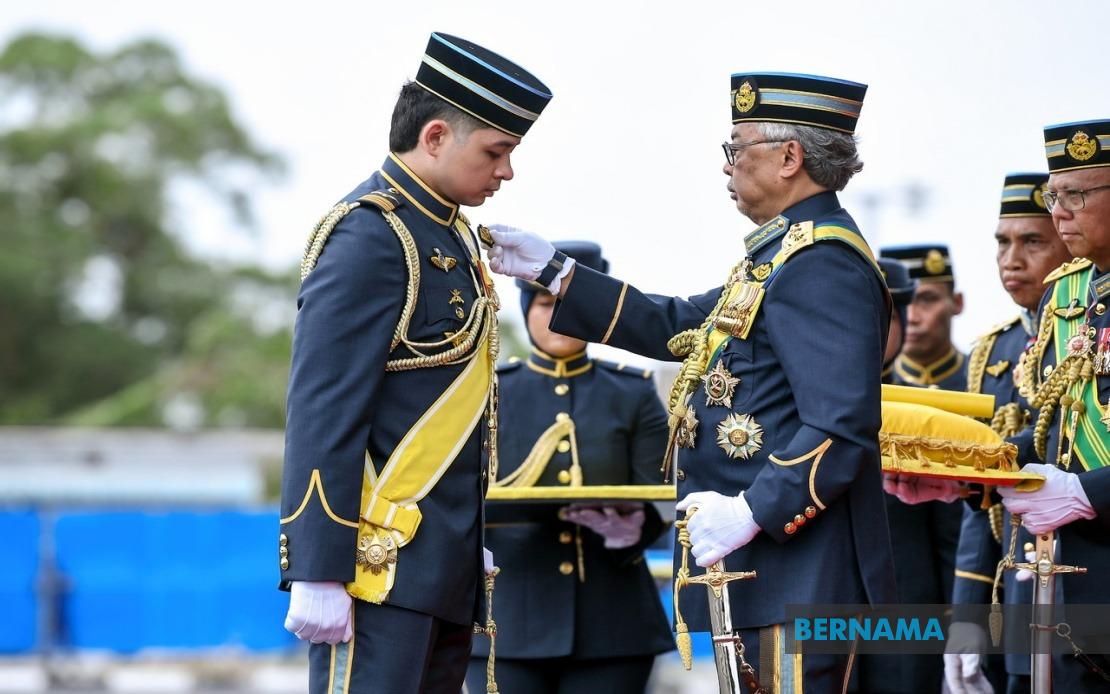
Tengku Hassanal Ibrahim Alam Shah Ibni Al-Sultan Abdullah Ri'ayatuddin Al-Mustafa Billah Shah has etched his name into aviation history by becoming the first member of the Malaysian royal family to successfully complete helicopter pilot training and receive his Royal Malaysian Air Force flying credentials. The milestone was marked during a formal presentation ceremony at the RMAF Air College in Alor Setar on August 15, when the Tengku Mahkota joined 39 other military graduates in receiving their coveted Flying Wings from his father, the Sultan of Pahang, Al-Sultan Abdullah Ri'ayatuddin Al-Mustafa Billah Shah, who holds the position of Colonel-in-Chief of the RMAF.
The achievement carries particular significance given the rigorous nature of military aviation training and the demanding standards maintained by the RMAF's pilot development programme. The Tengku Mahkota undertook his helicopter instruction between June 2 and July 31, operating the EC120B Colibri aircraft through a comprehensive curriculum designed to produce operationally ready aviators. His progression through the course demonstrated mastery across all critical competency areas, as evidenced by his successful completion of four demanding assessment modules: the Basic Handling Test evaluating fundamental aircraft control, the Instrument Flying Test requiring proficiency in navigating by instruments alone, the Final Navigation Test assessing cross-country flying capability, and the Final Handling Test confirming overall readiness for operational duties.
The broader ceremony recognized 40 individuals across multiple aviation specializations, reflecting the depth of Malaysia's military aviation training capability. Beyond helicopter pilots like the Tengku Mahkota, the graduating cohort included fixed-wing pilot trainees and two weapon systems officers whose expertise extends to radar and weapons management. The diversity of specializations underscores how modern air forces require technical expertise beyond traditional piloting skills, with systems officers playing increasingly critical roles in contemporary aerial operations. The four separate flying courses represented in the ceremony, spanning helicopter instruction, basic fixed-wing training, and weapons systems officer development, collectively demonstrate the RMAF's commitment to building a multi-skilled aviation workforce.
For Malaysia's military establishment, the Tengku Mahkota's accomplishment carries implications beyond the individual achievement. The royal family's engagement with armed forces training and operations has historically reinforced public perception of institutional commitment and national security consciousness at the highest levels of the state. By participating in the same rigorous training pipeline that produces serving officers, a member of the royal family sends a powerful symbolic message about the legitimacy and importance of military service within Malaysian society's value hierarchy. This hands-on participation contrasts with purely ceremonial royal engagement, potentially strengthening bonds between the monarchy and defence institutions.
Air Force Chief General Tan Sri Muhamad Norazlan Aris used the occasion to emphasize the qualities that distinguish successful military aviators. His remarks centred on perseverance, fighting spirit, mental resilience, and discipline as foundational attributes cultivated through intensive training regimens. These qualities, he suggested, transcend individual achievement and reflect the character development that military institutions foster in their personnel. The acknowledgement of family support systems proved particularly noteworthy, recognizing that military training success depends not solely on individual motivation but also on sustained encouragement from relatives who endure the extended periods of separation and stress that accompany aviation courses. This recognition of family sacrifice reflects a more holistic understanding of military achievement within the Malaysian context.
The transition from training completion to operational service represented a central theme in the Air Force Chief's address. His statement that the Flying Wings presentation marked a beginning rather than an endpoint emphasized that earning credentials constitutes entry into a phase of greater responsibility and accountability. Wearing the wings brings with it representation of national interests and institutional honour, a burden that extends beyond personal accomplishment to encompass broader obligations to the service and the nation. This framing positions qualified aviators as custodians of public trust rather than merely certified professionals, embedding within the military aviation community a sense of purpose and duty extending beyond technical competence.
For Malaysia's defence sector, the successful training of 40 new aviators across multiple specializations indicates sustained capacity in military education and operational readiness. The continued operation of sophisticated training programmes using modern aircraft like the EC120B reflects Malaysia's commitment to maintaining aviation capabilities in line with contemporary regional security requirements. Southeast Asia's increasingly complex security environment, characterized by evolving maritime challenges and aerial surveillance needs, demands that nations maintain robust pilot training pipelines. Malaysia's evident ability to cycle cohorts through demanding curricula and produce certified aviators suggests institutional confidence in meeting these regional demands.
The ceremony also distributed recognition awards to exceptional graduates, institutionalizing the identification and celebration of high achievers within the aviation training community. By formally recognizing excellence across flying performance, academic achievement, discipline, and leadership qualities, the RMAF reinforces the multidimensional competencies required of modern military aviators. This structured approach to identifying talent pools potential future leaders and specialized practitioners, ensuring that high-performing graduates receive early attention and mentorship that could shape their career trajectories and command potential. The emphasis on leadership as an evaluation criterion suggests that the RMAF prioritizes developing aviators capable of assuming command responsibilities in future years.
For Malaysian readers and defence observers, the Tengku Mahkota's accomplishment offers broader implications about institutional professionalism within the armed forces. The willingness of royal family members to subject themselves to standardized military training processes, rather than receiving honorary positions, demonstrates that institutional meritocracy and professional standards remain respected within Malaysia's security architecture. This stands as a counterweight to broader regional patterns where military training sometimes becomes perfunctory for members of political or royal elites. The Tengku Mahkota's participation in identical training, facing identical assessment standards, and earning credentials through demonstrated competence rather than prerogative strengthens public confidence in the integrity of military institutions and their commitment to excellence.
Looking forward, the integration of the Tengku Mahkota and his cohort into operational air force units will provide fresh perspectives and capabilities to Malaysia's aviation community. Helicopter operations span diverse functions from transport and medical evacuation to search and rescue and coastal patrol, all essential capabilities for a maritime nation. The new graduates' potential contributions across these domains could enhance the RMAF's operational capacity during a period when defence resource constraints frequently limit operational tempos. Furthermore, the Tengku Mahkota's future service, whatever form it ultimately takes, will create a continuing link between Malaysia's political leadership and defence institution operations, potentially fostering deeper mutual understanding between civilian and military spheres.

