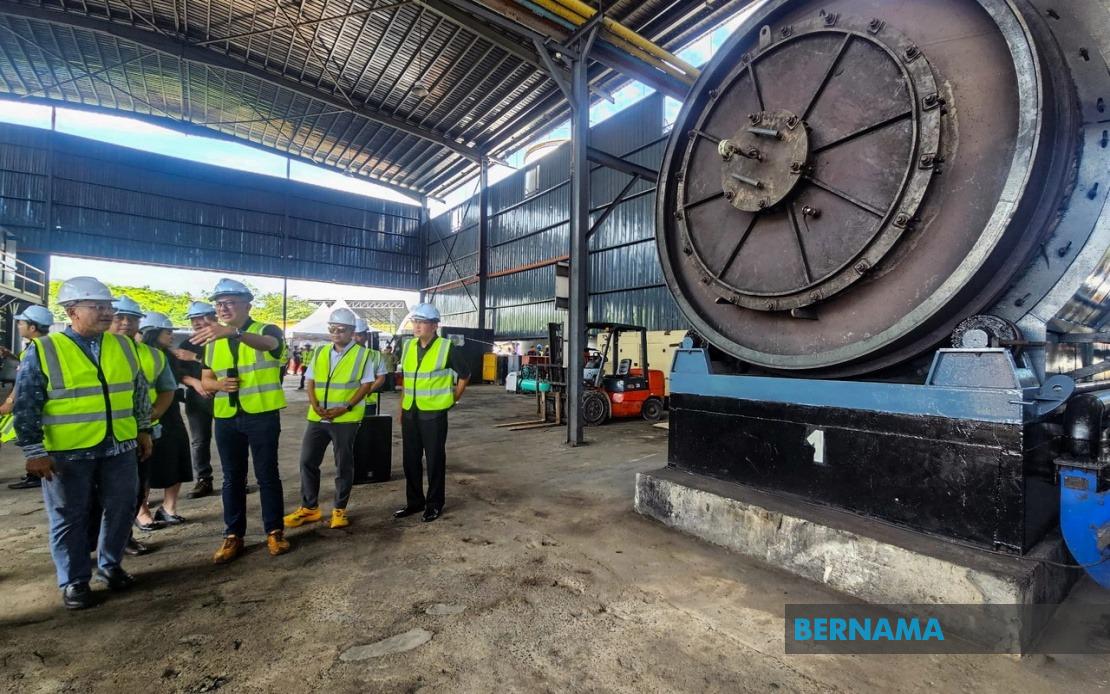
Terengganu's state government is moving decisively to unlock economic potential at six East Coast Rail Link stations as the project approaches its accelerated Phase 1 launch this December—three months ahead of its original January 2027 schedule. Menteri Besar Datuk Seri Dr Ahmad Samsuri Mokhtar outlined the state's commitment to transit-oriented development (TOD) during a press conference at the Bukit Gelugor waste facility near Kerteh, signalling that the shortened timeline demands immediate action to ready surrounding infrastructure and commercial spaces.
The advancement of the ECRL's operational debut represents a significant shift in Malaysia's east coast connectivity landscape. Rather than allowing stations to sit idle once trains begin running, Terengganu is proactively designing mixed-use precincts that integrate residential, commercial, and industrial activities around transport hubs. This approach reflects international best practices in maximising the economic ripple effects of major infrastructure investment, ensuring that communities capture value from proximity to the rail network. For Malaysia, where previous major projects have sometimes underperformed commercially due to weak surrounding development, this coordinated strategy carries strategic importance.
Ahmad Samsuri acknowledged that planning work has advanced considerably through consultations between the state, Malaysia Rail Link Sdn Bhd, related contractors, and private stakeholders. The government has developed conceptual designs and frameworks for station-area facilities but recognises that full implementation requires private capital and operational expertise. Rather than bearing the entire development cost—an approach that would strain state finances—Terengganu is positioning itself as the enabler of basic infrastructure provision. This means roads, electricity networks, and water systems will receive government investment, while commercial and residential components are pursued through public-private partnerships being orchestrated by MRL and Terengganu Incorporated.
The state's strategy deliberately targets local entrepreneurs, recognising that ECRL stations must benefit ordinary Terengganu residents and small business owners, not merely property developers from outside the state. By opening opportunities for hawkers, retailers, and service providers to establish supporting businesses, the government seeks to distribute economic gains throughout the community rather than concentrating them among large operators. This inclusive approach has political and social dimensions—it demonstrates to constituents that infrastructure spending translates into tangible livelihood improvements. Menteri Besar Mokhtar specifically urged Terengganu's business community to capitalise on the opportunity, framing the ECRL not merely as a passenger convenience but as a catalyst for goods movement and commerce.
Cargo operations represent a particularly significant dimension of Terengganu's ECRL vision. The state government is actively encouraging companies to utilise ECRL freight services, recognising that passenger revenue alone will not justify the rail system's economic impact. Manufacturing and resource-based industries operating in Terengganu can reduce logistics costs by shifting goods movement from congested roads to dedicated rail corridors. This becomes especially relevant given the state's industrial base and its strategic position in the regional supply chain. Companies in petrochemicals, palm oil processing, and port-related activities could substantially benefit from reliable, cost-effective rail freight access.
The planned connection to Kemaman Port provides another crucial economic dimension. This coastal facility serves as a gateway for Terengganu's resource exports and imports, and direct rail access from the ECRL network dramatically enhances its competitive positioning. The alignment to Kemaman Port will facilitate faster, cheaper cargo handling and reduce bottlenecks that currently plague truck-dependent logistics. State-owned Eastern Pacific Industrial Corporation (EPIC) Berhad and other port operators stand to capture significant efficiency gains once rail integration is operational. For regional supply chains involving Thailand, the Indochina Peninsula, and East Asian manufacturing centres, improved Kemaman Port connectivity via the ECRL presents meaningful opportunities.
The December operational target remains contingent on successful testing and commissioning protocols. Transport Minister Anthony Loke has indicated that System Integration Testing and Fault-Free Run procedures must proceed flawlessly, with no safety compromises acceptable to accelerate the timeline. This conditional framing reflects the gravity of managing a modern rail network—any operational failures or safety incidents would severely damage public confidence and potentially delay services for extended periods. Terengganu and federal authorities are clearly committed to delivering a functioning system by year-end, but legitimately cannot force completion if technical issues emerge during testing phases.
The compressed development timeline creates challenges for coordinating TOD implementation across six stations simultaneously. Municipal planning, land acquisition, utility coordination, and investor recruitment typically unfold over extended periods. Terengganu must expedite tender processes, negotiate with multiple private parties, and harmonise development plans across geographic distances. However, the urgency also creates focus—stakeholders cannot endlessly deliberate, and deadlines concentrate minds toward concrete outcomes. Private investors and entrepreneurs who move swiftly will position themselves advantageously as the state accelerates TOD approvals.
For Malaysia's broader infrastructure strategy, Terengganu's TOD acceleration demonstrates how state governments can extract maximum development value from federally-funded projects. Rather than treating major infrastructure as standalone investments, coordinated land-use planning, commercial development, and operational optimisation create multiplier effects. The ECRL's success ultimately depends not on trains running on schedule, but on whether the broader economic ecosystem—ports, industrial facilities, local businesses, freight operators—utilises the new connectivity to enhance productivity and growth. Terengganu's proactive approach acknowledges this reality and positions the state to capture outsized returns from the December launch.
Looking forward, the convergence of transport infrastructure, port facility improvements, and coordinated station-area development creates conditions for meaningful regional economic transformation. If successfully executed, Terengganu's ECRL development model could provide a template for other states managing their sections of the network. The state's emphasis on local participation and cargo-focused operations rather than pure passenger convenience reflects pragmatic understanding that sustainable infrastructure projects require deep integration with existing economic structures. As December approaches, both the technical readiness of the rail system and the commercial readiness of surrounding developments will determine whether Terengganu's accelerated timeline delivers transformative outcomes or becomes merely a symbolic achievement.

