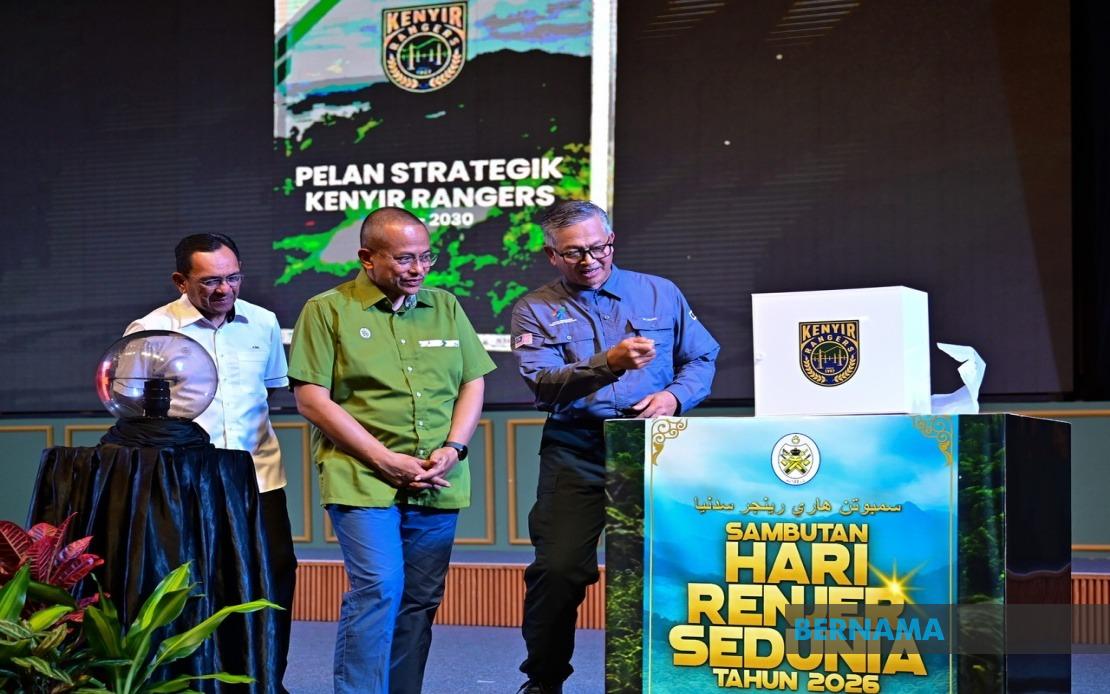
Terengganu Menteri Besar Datuk Seri Dr Ahmad Samsuri Mokhtar has stressed the pressing need for improved coordination among government agencies and relevant stakeholders to address the escalating problem of human-wildlife conflicts in the state, particularly incidents involving elephants crossing or roaming near highways and expressways. Speaking during the inauguration of the state-level World Ranger Day 2026 celebration at Wisma Darul Iman in Kuala Terengganu on August 10, Ahmad Samsuri highlighted that tackling this multifaceted issue requires a unified approach that brings together the Wildlife and National Parks Department, the Malaysian Highway Authority, and other pertinent bodies to implement comprehensive mitigation strategies.
The menteri besar's call comes against the backdrop of a tragic incident that unfolded on August 5 along the East Coast Expressway 2 (LPT2), when a herd of elephants crossed the highway near the Cheneh Toll Plaza, resulting in a collision with a Toyota Estima. The accident, which occurred at kilometre 274.6 between the toll plaza and Kuala Terengganu, left both occupants of the vehicle injured, underscoring the very real and ongoing dangers that both wildlife and motorists face on Malaysia's road network. This incident has reignited discussions about the adequacy of current safety measures and the need for more proactive intervention strategies along routes known to intersect with elephant habitats and migration corridors.
Among the concrete measures being considered is the implementation of enhanced patrol operations at identified wildlife crossover points and hotspots where human-wildlife encounters are most likely to occur. Ahmad Samsuri suggested that such patrols should be intensified during the monsoon season, when heavy rainfall drives animals out of their natural habitats in search of shelter and sustenance, thereby increasing the likelihood of road crossings and resultant traffic incidents. The strengthening of highway surveillance during these vulnerable periods could provide critical opportunities for early detection and intervention before dangerous encounters materialise.
Electric fencing along stretches of highway adjacent to wildlife habitats and established animal migration routes emerged as another key proposal under consideration by state authorities. While acknowledging the substantial financial implications of installing such barriers across the entire length of Malaysia's expressway network, Ahmad Samsuri indicated that selective deployment in strategically important zones could represent a pragmatic middle ground. The technology, he noted, has proven effective in other jurisdictions and could be adapted to Malaysian conditions, though careful assessment of cost-effectiveness and environmental impact would be necessary before widespread implementation.
Beyond physical infrastructure, the menteri besar emphasised the importance of leveraging technological innovation to create an early warning system capable of detecting wildlife movements in real time and alerting highway users and authorities to potential danger zones. Such a system could integrate satellite tracking, thermal imaging, and ground-based sensors positioned at key locations to provide advance notification of large animal movements across or near expressway corridors. This long-term technological solution, Ahmad Samsuri suggested, could dramatically reduce reaction time and prevent collisions before they occur, though further research and development would be required to identify the most suitable and cost-effective approach.
The Terengganu leader's remarks place the human-wildlife conflict issue firmly within the broader context of balancing economic development and environmental conservation in Malaysia. The state sits at the intersection of expanding transport infrastructure and significant wildlife populations, including Asian elephants, making it particularly vulnerable to the negative externalities of rapid highway expansion. The East Coast Expressway itself, while crucial for regional connectivity and economic development, has effectively fragmented elephant habitats and created dangerous pressure points where these large animals must cross or navigate human-dominated spaces.
The scale of the challenge should not be underestimated. Malaysia's elephant population, estimated at around 1,800 individuals, faces increasing habitat loss and fragmentation due to agricultural expansion, urban development, and the proliferation of transportation infrastructure. As their traditional ranges shrink and become increasingly cut off by roads and settlements, elephants are forced into closer proximity with human populations, dramatically increasing the frequency of dangerous encounters. Recent years have witnessed a notable uptick in both elephant fatalities and injuries to human road users in collision incidents across multiple states.
Coordination between the Wildlife and National Parks Department and the Malaysian Highway Authority represents a critical first step in addressing this issue, though experts suggest that efforts should extend to include local government authorities, plantation operators, and agricultural departments whose land management practices influence wildlife movement patterns. Creating a dedicated inter-agency task force with dedicated funding and clear accountability measures could help ensure that wildlife safety considerations are integrated into highway planning, maintenance, and operation protocols rather than treated as an afterthought. Such institutionalisation of cooperation would likely yield more sustained and effective results than ad hoc responses to individual incidents.
The World Ranger Day 2026 celebration, which provided the platform for Ahmad Samsuri's remarks, underscores the critical role that frontline conservation personnel play in managing human-wildlife interactions and protecting both species. Rangers working across Terengganu's protected areas and wildlife corridors possess invaluable ground-level knowledge about animal behaviour, migration patterns, and hotspot locations, making them indispensable partners in any coordinated response effort. Investing in ranger training, equipment, and infrastructure would enhance their capacity to monitor wildlife movements and provide real-time intelligence to highway authorities.
For Malaysian motorists and the transport industry, the implications are substantial. Enhanced safety measures on expressways frequented by wildlife should reduce accident rates and associated injury risks, while potentially improving overall traffic flow by reducing major incidents. However, implementation of some proposed measures, particularly electric fencing installation, may entail temporary disruptions and require carefully planned implementation schedules that minimise impact on highway operations. Public awareness campaigns educating drivers about wildlife-prone zones and appropriate cautionary measures would complement physical interventions.
The Terengganu menteri besar's appeal for greater cooperation represents an important acknowledgment that human-wildlife conflicts cannot be resolved through isolated, single-agency interventions. As Malaysia continues to expand and modernise its transportation infrastructure, integrating wildlife safety considerations from the outset of planning processes, rather than addressing them reactively after incidents occur, offers the most promising path forward. The August 5 collision, while tragic, may yet catalyse the systemic changes necessary to prevent similar incidents and ensure that economic development and wildlife conservation can coexist more harmoniously across the state.

