Terengganu's government has committed RM3.78 million toward developing Kenyir Geopark across 2024 and beyond, reflecting a strategic push to elevate the sprawling Hulu Terengganu reserve onto the international tourism and conservation stage. The allocation, made available through the Hulu Terengganu District Office, signals the state administration's determination to fortify the geopark's existing National Geopark status while establishing a pathway toward the coveted UNESCO Global Geopark designation—a credential that would position Terengganu as a custodian of globally significant geological landscapes.
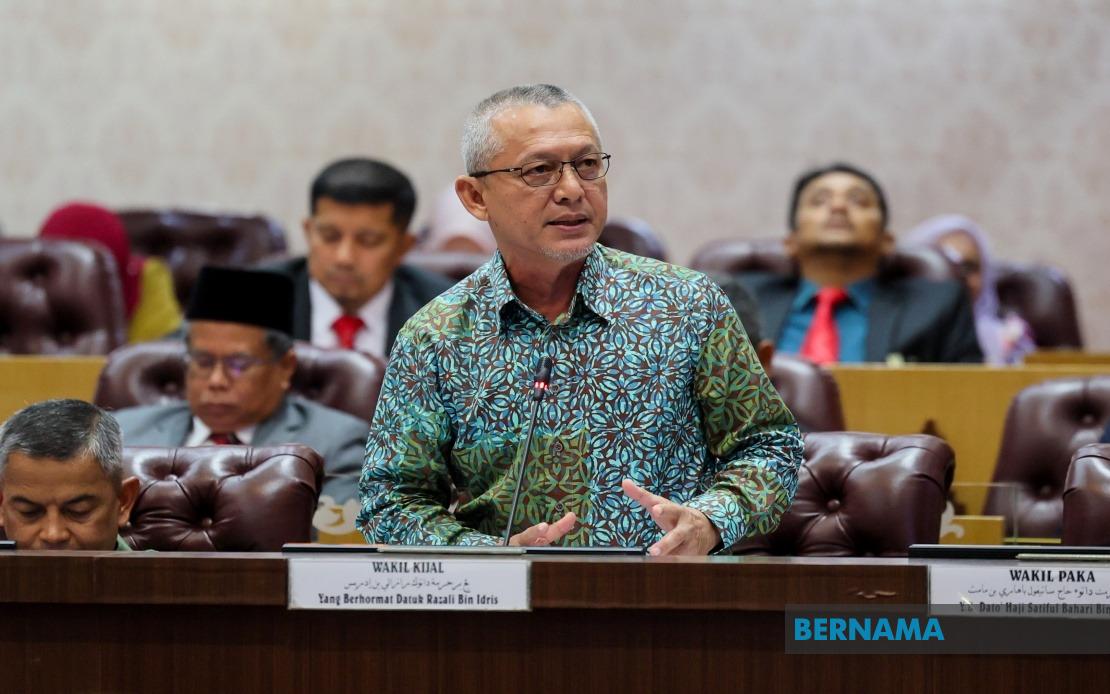
Datuk Razali Idris, chairman of the State Tourism, Culture, Environment and Climate Change Committee, outlined the scope of the investment during a legislative assembly session. The funding brackets multiple operational streams spanning the conservation of irreplaceable geological formations, the creation and marketing of geotourism experiences, infrastructure development for visitor engagement, community education initiatives, and training programmes aimed at building local capacity. This multi-layered approach recognises that achieving and maintaining international geopark status demands more than physical infrastructure; it requires genuine community participation, scientific rigour, and sustainable management frameworks that balance economic opportunity against environmental stewardship.
The Kenyir Geopark covers approximately 244,900 hectares of Hulu Terengganu, encompassing a remarkable inventory of natural and cultural assets. The reserve currently incorporates 15 formally designated geosites, 10 biosites reflecting the region's ecological diversity, 11 cultural heritage locations, and a singular geo-archaeological site. This assemblage represents not merely tourist attractions but authentic scientific repositories where geological timescales, biodiversity patterns, and human settlement histories intersect across a landscape shaped by millions of years of tectonic and climatic transformation.
Conservation efforts centre on protecting geosites of exceptional scientific importance, including Gua Bewah, Gua Taat, and Batu Bersurat. These locations contain geological records and archaeological evidence that illuminate Southeast Asia's distant past, from evidence of ancient human habitation to visible stratigraphic sequences documenting regional environmental change. By systematically conserving these sites rather than allowing them to degrade through neglect or uncontrolled access, Terengganu preserves information that cannot be replaced once destroyed, alongside maintaining their value as educational resources and carefully managed visitor experiences.
The financial commitment reflects broader recognition that geoparks serve multiple societal functions extending far beyond conventional national park designations. Unlike protected areas focused primarily on biodiversity conservation, geoparks explicitly weave together geological science, environmental education, sustainable tourism development, and local economic revitalisation. The UNESCO Global Geopark network emphasises that communities neighbouring these reserves should benefit directly from their protection, whether through employment in tourism infrastructure, capacity building in hospitality and guiding services, or opportunities to market local crafts and cultural experiences to international visitors seeking authentic engagement with landscapes.
Terengganu's commitment to capacity building within Hulu Terengganu communities addresses this philosophy directly. Training programmes equip residents with skills relevant to geopark operations and tourism services, creating pathways toward meaningful employment while ensuring that external revenue streams generated through visitor fees and tourism spending circulate through local economies rather than accruing entirely to distant corporations. This approach transforms conservation from an extractive exercise imposed upon communities into a collaborative enterprise where residents become stewards and beneficiaries simultaneously.
The geopark's visitor trajectory demonstrates the commercial potential underlying these investments. Arrivals surged to 454,765 in 2024 from 218,157 in 2023, representing growth exceeding 108 percent year-on-year. This doubling of visitor numbers within a single year suggests that Kenyir Geopark has begun capturing meaningful tourism market share, whether through improved marketing, enhanced infrastructure, or growing international awareness of the reserve's distinctiveness. For a state government seeking revenue diversification amid broader economic transitions, such momentum validates the rationale for continued investment.
However, rapid visitor growth introduces management challenges that the Terengganu allocation attempts to address preemptively. Increased foot traffic threatens delicate geosites and biosites unless carefully regulated through constructed pathways, visitor quotas, and interpretive signage that educates guests about conservation imperatives. The RM3.78 million presumably funds precisely these protective measures—infrastructure designed to accommodate growing numbers whilst preventing the site degradation that commonly accompanies tourism expansion in developing destinations. Geotourism products require sophisticated conception, moving beyond mere access toward curated experiences that educate visitors about geological processes, biodiversity relationships, and cultural heritage whilst generating sufficient economic surplus to justify continued conservation expenditure.
Terengganu's pursuit of UNESCO Global Geopark status places the state within an international movement reshaping how developing countries monetise and protect geological heritage. The UNESCO network currently encompasses over 200 geoparks across more than 70 countries, creating a competitive market where destinations differentiate themselves through distinctive geological narratives and visitor experiences. Achieving global designation enhances international marketing reach, attracts specialty tourism segments, and signals to investors that the government provides stable management frameworks—advantages that compound over time as global geopark networks facilitate knowledge exchange and cross-promotion.
For Malaysian regional development policy, Kenyir Geopark represents a model potentially replicable across Peninsular Malaysia and East Malaysia. Numerous locations possess significant geological and archaeological significance yet lack dedicated development frameworks or funding mechanisms. Terengganu's approach—integrating conservation science with community economic development, coupling international recognition targets with concrete visitor experience development—offers a template for other states considering how to leverage natural heritage as sustainable development platforms.
The allocation's span from 2024 into subsequent years indicates governance thinking that extends beyond short-term election cycles. Geopark development requires sustained commitment across electoral periods, with institutions and infrastructure built gradually as visitor confidence grows and management systems mature. Whether Terengganu maintains this multiyear commitment through inevitable government transitions will substantially influence whether Kenyir Geopark achieves UNESCO designation or remains a promising but incompletely realised conservation initiative.
Ultimately, Terengganu's investment in Kenyir Geopark reflects a geographical imperative. Hulu Terengganu's remoteness historically positioned it as peripheral within state economic strategies dominated by coastal commerce and manufacturing corridors. Geopark development transforms remoteness into distinctiveness, converting physical isolation into market advantage for tourists seeking authentic natural and cultural experiences distant from urbanised attractions. If successfully executed, this strategy could provide Hulu Terengganu with sustainable prosperity grounded in geological heritage rather than extractive resource industries, benefiting local communities whilst advancing global conservation objectives.

