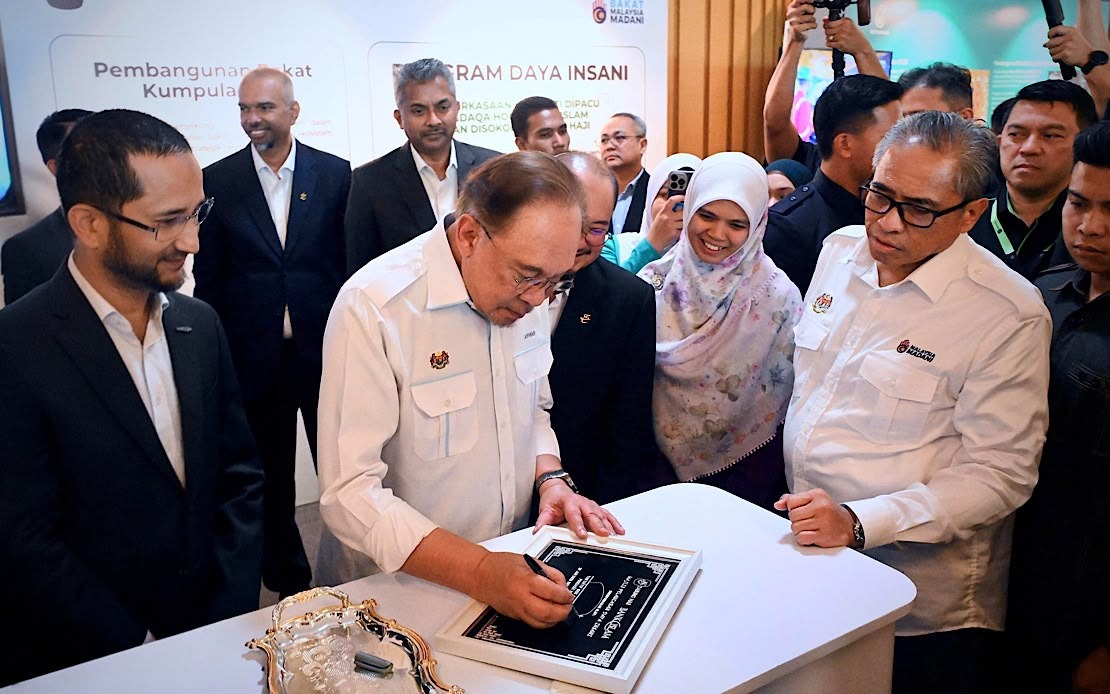
Tabung Haji (TH) and Bank Islam Malaysia Berhad have joined forces to establish a comprehensive youth development initiative aimed at transforming economic prospects for disadvantaged young people. The Asnaf Youth Development Programme for Inclusive and Sustainable Empowerment, branded as DAYA INSANI, commenced with initial capitalisation of RM1 million channelled through Bank Islam's social finance arm, Sadaqa House. The programme's launch coincided with Prime Minister Datuk Seri Anwar Ibrahim's introduction of the broader MADANI Talent initiative in Sendayan, Negeri Sembilan, signalling government-wide commitment to youth economic empowerment.
The initiative targets over 100 asnaf—a term in Islamic tradition referring to those eligible for zakat assistance—including orphans and other economically vulnerable youth. Rather than providing passive financial support, DAYA INSANI adopts an integrated approach combining structured skills development, hands-on industry exposure, and facilitated job placement with pre-identified employers. This design recognises that employment readiness requires more than training alone; it demands bridge-building between educational institutions and hiring organisations willing to invest in workforce development for marginalised communities.
The programme's architecture reveals sophisticated partnership strategy across multiple sectors. The Kulim Hi-Tech Park Skills Centre will develop technical workers for advanced manufacturing and technology sectors. Kolej Universiti Bestari and Kumpulan Medic Iman Sdn Bhd collaborate to train professional nurses, addressing persistent healthcare workforce shortages in Malaysian regions beyond major urban centres. The Malaysian Professional Accountancy Centre provides accounting qualifications, while Showme Education specialises in therapy professional training. This breadth reflects recognition that asnaf youth possess diverse aptitudes and interests; the programme avoids channelling all participants toward identical career paths.
Existing initiatives demonstrate measurable progress. The nursing diploma programme with UCB and KMI Healthcare, which commenced in 2024, already enrolled 19 students with one graduate successfully transitioning to employment—a critical indicator of programme credibility and employer confidence. The technical training cohort at Kulim Hi-Tech Park, which began operations in June with 13 participants, plans to scale significantly, targeting 100 trainees in coming months. These intermediate outcomes validate the partnership model before major expansion occurs.
Tabung Haji's involvement carries particular significance given the institution's traditional role managing hajj savings for Malaysian Muslims. By deploying these resources toward youth employment rather than purely religious purposes, TH signals evolving institutional priorities. According to TH Group Managing Director and Chief Executive Officer Mustakim Mohamad, the initiative embodies conviction that human capital investment represents the most consequential contribution to long-term community prosperity. His statement that "the best investment for the future of the ummah is investment in human capital development" articulates a values-based rationale extending beyond conventional corporate social responsibility frameworks.
Bank Islam's participation through Sadaqa House—its dedicated social finance vehicle—represents Islamic banking's expansion into workforce development. Bank Islam Group Chief Executive Officer Raja Datin Paduka Teh Maimunah Raja Abdul Aziz emphasised the institution's conviction that potential exists widely among disadvantaged youth, requiring catalytic support to activate. This positioning aligns with Islamic finance principles emphasising community welfare and equitable economic participation, though also reflects growing recognition within Malaysian banking that demographic and labour market dynamics demand innovative talent pipelines.
The programme explicitly welcomes contributions from corporate entities, institutions, and individuals, transforming the initial RM1 million into a potentially larger ecosystem. This crowdfunding dimension could prove significant if Malaysian businesses recognise practical benefit in participating. Companies struggling to recruit semi-skilled and professional workers in tight labour markets may view DAYA INSANI as providing reliable, pre-vetted candidates with sector-specific preparation. The arrangement potentially converts corporate social responsibility budgets into strategic human resource solutions.
For Malaysia's broader talent development agenda, DAYA INSANI addresses critical gaps in conventional educational pathways. Many asnaf youth either lack means to pursue formal tertiary education or cannot sustain extended study periods due to financial pressures requiring immediate income generation. By compressing skill acquisition timelines while maintaining quality standards through industry partnerships, the programme creates viable alternatives to traditional university routes. This matters particularly in technical and vocational domains where Malaysian employers increasingly report shortages despite healthy unemployment rates—indicating skill mismatches rather than labour surplus.
The initiative's alignment with the MADANI framework signals government commitment to inclusive growth beyond traditional policy instruments. MADANI's emphasis on shared prosperity and social mobility finds operational expression through TH and Bank Islam's apparatus. This integration of government development objectives with Islamic financial institution capacity demonstrates potential for Malaysia's broader institutional ecosystem to address youth unemployment and underemployment through coordinated effort.
Comparative regional context underscores relevance. Throughout Southeast Asia, youth unemployment and underemployment persist despite economic growth, reflecting persistent gaps between labour market demands and educational system outputs. Singapore's sustained focus on skills development and continuous retraining has enabled low unemployment despite high wage costs. Thailand's technical education expansion demonstrates commitment to non-university pathways. Malaysia's DAYA INSANI initiative positions the country competitively within regional talent development discourse, though scale and sustainability remain to be demonstrated.
The programme's success metrics extend beyond placement numbers. Quality of employment—whether positions offer genuine career progression, adequate compensation, and skill development continuity—will determine whether DAYA INSANI merely shifts people between unemployment and precarious work or genuinely expands economic opportunity. Longitudinal tracking of programme graduates' wage trajectories, employer retention rates, and subsequent career advancement will reveal whether initial job placement success translates into sustained economic mobility for participants.
Future expansion depends partly on corporate sector responsiveness to contribution solicitation and employer partnership opportunities. Malaysian businesses increasingly recognise acute difficulties recruiting middle-skilled workers in competitive labour markets. If DAYA INSANI demonstrates ability to produce job-ready candidates aligned with employer specifications, private sector participation could accelerate substantially. Conversely, if employer engagement remains limited, scaling faces constraints despite strong initial funding and institutional commitment.

