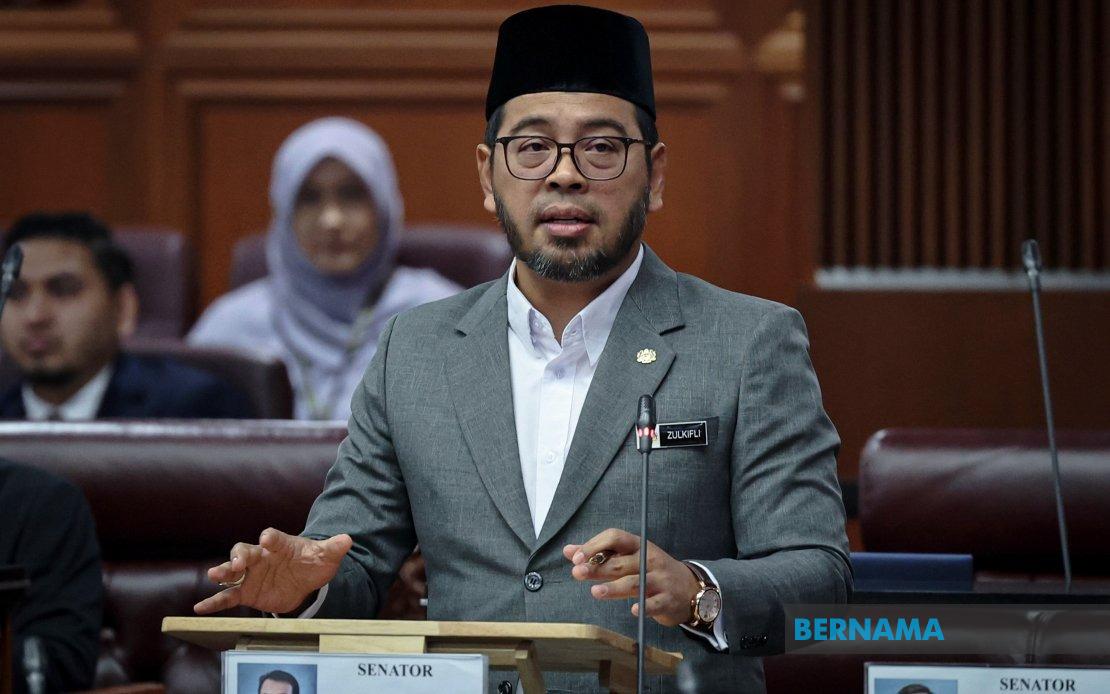
Tabung Haji depositors can rest assured that their zakat obligations have been properly discharged in full compliance with Islamic principles, according to Minister in the Prime Minister's Department (Religious Affairs) Dr Zulkifli Hasan. The reassurance comes as Parliament deliberated on implementation of recommendations from a comprehensive inquiry into the troubled hajj savings institution, which had faced significant financial and governance challenges in recent years.
The minister's statement, delivered during a special parliamentary sitting, directly addressed lingering questions about the validity and propriety of zakat collections that TH had remitted on behalf of its millions of depositors. At the core of this issue lies a fundamental question about whether TH, as an institution managing pooled funds, had correctly interpreted its zakat responsibilities under Islamic law. Zulkifli confirmed that TH's own Syariah Advisory Committee had meticulously examined historical zakat payments and determined that collections made prior to 2019, before the institution introduced a new contractual framework known as wakalah, remained entirely valid and Syariah-compliant.
This validation carries particular weight given that it rests on careful jurisprudential analysis. The TH Syariah Advisory Committee's assessment, formally adopted during a September 2020 meeting, examined years of accumulated zakat practices and found them sound. The determination aligns with a foundational 1979 ruling from the National Fatwa Committee for Islamic Religious Affairs Malaysia, which established that while TH itself falls outside the scope of zakat obligation, the institution bears responsibility for calculating and remitting zakat on behalf of individual depositors whose funds are invested through the organisation.
The contractual period spanning 2016 to 2019 presents a more intricate case, as TH employed what is known as the Wadiah Yad Damanah contract during these years. Under this arrangement, the minister explained that zakat calculations took the form of collective business zakat derived from the pooled investment returns on depositors' combined funds. This approach reflects standard Islamic finance practice where zakat is computed on the basis of actual commercial activity generating surplus value, rather than individual contributions in isolation. The distinction matters considerably for depositors seeking to understand how much zakat liability attaches to their personal holdings.
Beyond internal validation, the minister underscored that TH's zakat governance had undergone external scrutiny and received endorsement from the highest Islamic authorities in Malaysia. The National Council for Islamic Religious Affairs' Muzakarah Committee reviewed TH's zakat practices comprehensively and formally endorsed them in June 2024. This recommendation subsequently moved through the constitutional hierarchy, being tabled before the Conference of Rulers at its 267th meeting in October 2024, ensuring that all major institutional stakeholders across the Islamic governance framework had confirmed the propriety of TH's zakat operations.
For Malaysian depositors, particularly the millions of mid-income families who have contributed to TH as a mandatory retirement and hajj savings scheme, this multilayered validation provides crucial peace of mind. Many depositors harbour concerns not merely about the financial security of their savings—a matter addressed through previous government-backed restructuring—but about the religious integrity of zakat deductions from their accounts. The confirmation that systematic oversight by qualified Syariah scholars and Islamic legal bodies has consistently blessed TH's practices should substantially ease apprehensions about whether their religious obligations have been properly fulfilled on their behalf.
The broader context illuminates why these assurances matter. The Royal Commission of Inquiry into TH, whose 211-page report was publicly released on 29 July this year, had identified significant weaknesses spanning the period from 2014 to 2020. The inquiry, initiated in 2021 and formally structured in January 2022, examined governance failures, investment missteps, and operational deficiencies that had eroded public confidence in the institution. Among 25 recommendations generated by the RCI, three-quarters had been implemented by TH as of the end of July, indicating responsiveness to the investigation's findings. However, the inquiry's recommendations concerning zakat practices specifically directed that such matters be referred to the National Council for Islamic Religious Affairs for further Muzakarah deliberation, suggesting that even experienced investigators recognised the need for specialist Islamic legal assessment.
Zulkifli's statement confirmed that this referral had indeed occurred and been resolved. The minister characterised TH's entire zakat apparatus as operating under robust governance frameworks, with the institution's Syariah Advisory Committee—composed of recognised Syariah scholars and Islamic finance specialists—providing continuous monitoring and guidance. This institutional architecture theoretically insulates zakat operations from the commercial miscalculations or governance lapses that characterised other aspects of TH's management during the problem years.
Looking forward, the minister signalled that TH management is advancing operational improvements in other critical domains, particularly the hajj pilgrimage programme. The RCI had also identified concerns regarding eligibility criteria and waiting periods for prospective pilgrims, as TH manages one of the world's largest hajj schemes outside Saudi Arabia's direct administration. The institution is now finalising policy refinements that would establish clearer, more orderly hajj planning in line with the Islamic principle of istito'ah, meaning genuine financial capacity. Enhanced preparedness mechanisms are simultaneously being implemented, addressing a long-standing source of depositor frustration whereby hajj assignments sometimes arrived with minimal notice, creating logistical hardship.
For Southeast Asian context, TH's challenges and subsequent recovery efforts hold instructive lessons. The institution serves as a quasi-governmental savings and pilgrimage facilitation vehicle, operating at the intersection of religious obligation, financial intermediation, and public trust. The comprehensive inquiry process and transparent resolution of zakat compliance questions demonstrate how Malaysia's dual governance structures—combining civil legal authority with Islamic jurisprudential institutions—can collaborate to rebuild institutional credibility following governance failures. The emphasis on independent Syariah validation, rather than executive assurance alone, reflects a sophisticated understanding that religious legitimacy cannot be administratively decreed but must be anchored in established Islamic legal methodology.
Depositors of all backgrounds should also note that this clarity regarding zakat does not address the broader financial security of deposits themselves, which remains protected through separate governmental undertakings following the institution's earlier restructuring. The zakat validation represents one component of restoring institutional integrity, addressing the religious dimension of what depositors entrust to TH's stewardship. As the institution implements further recommendations from the inquiry, this pattern of transparent assessment and jurisprudential validation will likely prove essential to rebuilding the confidence that enabled TH to accumulate more than 300 billion ringgit in deposits from millions of ordinary Malaysians seeking to harmonise savings discipline with religious observance.

