Parliament's discussion of the Royal Commission of Inquiry findings into Lembaga Tabung Haji (TH) must place its emphasis squarely on safeguarding the Islamic fund manager from political meddling and ensuring its operations remain in the hands of capable administrators free from party-political influence, according to a leading business scholar. The debate, scheduled for tomorrow in the Dewan Rakyat, represents a critical moment for addressing systemic governance failures that have come to light through the RCI's comprehensive investigation.
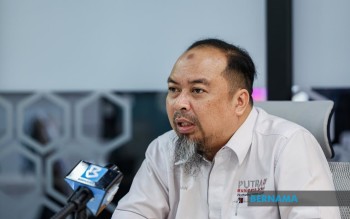
Prof Dr Ahmed Razman Abdul Latiff, who heads the MBA programme at Putra Business School, outlined his perspective during an appearance on Bernama TV's 'Apa Khabar Malaysia' programme, which examined the implications of the RCI's recently published findings. His intervention reflects growing concern among governance experts that the parliamentary discourse must transcend partisan politics and concentrate instead on practical institutional reform. The academic emphasised that maintaining TH's integrity depends fundamentally on extracting political considerations from appointment decisions to its board and from day-to-day administrative choices.
The RCI investigation uncovered a catalogue of serious governance lapses encompassing substantial financial losses, unauthorised bonus distributions to senior management, conflicts of interest that went unchecked, and poorly performing investment decisions that drained resources. These revelations demand that parliament use the debate to articulate clear standards for future conduct, Ahmed Razman argued. Rather than treating the inquiry's conclusions as ammunition for political point-scoring, legislators should view them as a blueprint for structural changes that protect depositors and restore institutional credibility. The academic stressed that deriving genuine lessons from these failures and embedding them into TH's systems represents the debate's central purpose.
Crucially, Ahmed Razman called for parliament to commit unambiguously to eliminating political appointments to TH's leadership structure, which has historically been a source of conflict and poor decision-making. The practice of assigning board positions as rewards for party loyalty or ministerial patronage has contributed materially to the problems now requiring remediation. A deliberate shift toward recruiting directors solely on merit, with transparent selection processes and demonstrated expertise in Islamic finance and fund management, would represent genuine reform. Such a transition would signal to the global Islamic finance community that TH is serious about professionalisation and would restore confidence among the millions of Malaysian pilgrims who depend on the institution.
The manner in which parliament conducts the debate itself carries significant weight for public perception and institutional recovery. Ahmed Razman urged parliamentarians to ground their contributions in factual analysis rather than using the forum to advance competing political narratives that might sow unfounded anxiety among TH's depositors and stakeholders. A temperate, evidence-based discussion focused on solutions would serve the national interest far more effectively than partisan recriminations that weaponise the RCI's findings. The academic acknowledged that some individuals identified during the inquiry period may warrant further investigation, but he insisted that any subsequent action be conducted with complete transparency to preclude perceptions of selective accountability or preferential treatment for politically well-connected figures.
Public concern about TH's stability and the security of accumulated savings has risen following the RCI's revelations, but Ahmed Razman sought to reassure depositors about their fundamental protection. Unlike commercial bank deposits, which benefit only from regulatory guarantee schemes with defined limits, TH savings enjoy comprehensive government backing under existing legislation. This distinction should be clearly communicated during parliamentary proceedings to prevent unnecessary panic withdrawal movements that could themselves destabilise the institution. The academic's emphasis on this point reflects recognition that public confidence represents a fragile asset that can be damaged through alarmist rhetoric or perceptions of institutional vulnerability.
Encouragingly, Ahmed Razman noted that TH's management has already moved to implement more than three-quarters of the RCI's recommended improvements, suggesting the institution possesses both the capability and commitment to chart a recovery course. This progress demonstrates that the leadership recognises the gravity of the situation and understands what corrective action is required. The parliamentary debate should acknowledge and build upon these efforts rather than treating TH as a failed entity requiring wholesale reconstruction. By highlighting what has already been achieved and clarifying the remaining work, parliament can reinforce confidence that the institution is moving toward a healthier operational model.
The special sitting will commence with a comprehensive briefing from Dr Zulkifli Hasan, the Minister in the Prime Minister's Department (Religious Affairs), who will outline the government's perspective on the RCI conclusions and outline policy responses. This presentation will be followed by questioning and speeches from members of parliament drawn from across the political spectrum, and the session will conclude with remarks from the minister. The structure provides multiple opportunities for constructive input, provided parliamentarians approach the discussion with a clear commitment to institutional reform rather than factional advantage.
For Malaysian policymakers and the broader financial sector, the TH RCI debate exemplifies a crucial inflection point in how governance failures are addressed in the region. The outcomes reached in parliament will signal whether Malaysia's institutions can respond to scrutiny with genuine systemic change or whether political considerations continue to trump professional standards and public interest. The decision to eliminate political interference in TH's operations would represent a meaningful step forward in elevating standards across government-linked companies and statutory bodies throughout Southeast Asia, where similar governance challenges often persist. Ahmed Razman's call for principled parliamentary engagement reflects a broader imperative to rebuild institutional credibility through sustained commitment to professional excellence and transparent accountability.

