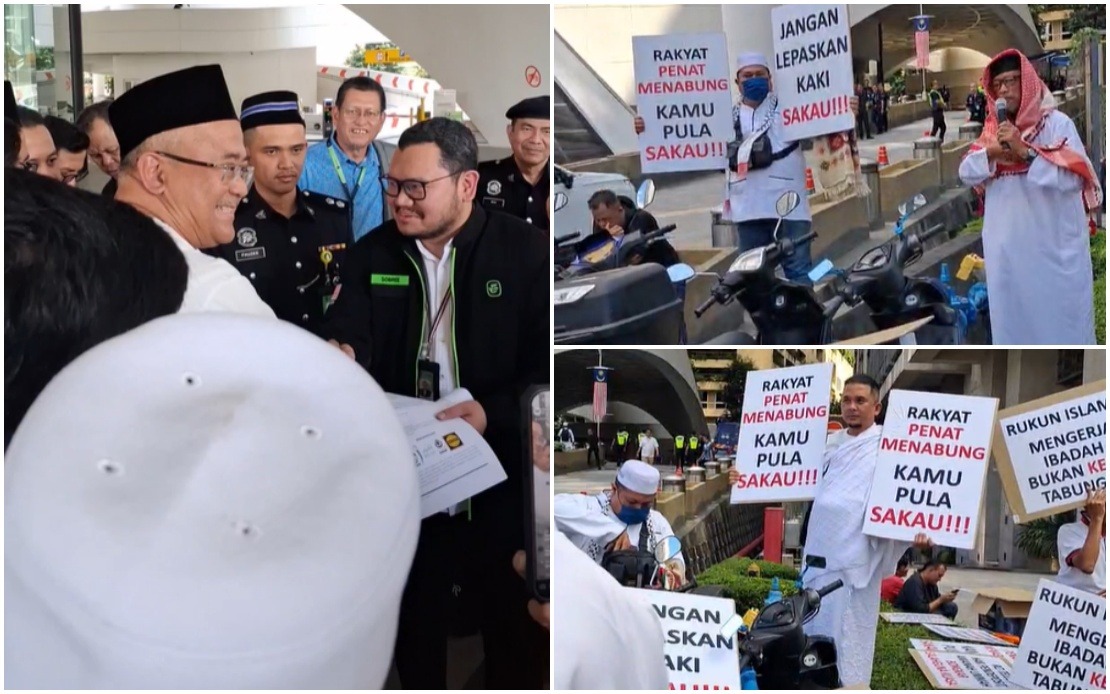
The investigation into findings from the Royal Commission of Inquiry into Lembaga Tabung Haji must unfold with complete transparency and immunity from any form of external pressure or interference, according to MADANI coalition leadership. Amir Zuhair Abdull Khalid, chairman of the MADANI political coalition, made this position clear during a solidarity gathering at Menara TH in Kuala Lumpur, underscoring that the integrity of the process depends entirely on authorities being permitted to conduct their work without obstruction or political manipulation.
The RCI report, which examined TH's operations spanning the period from 2014 through 2020, has uncovered findings that demand resolution through established legal channels and proper procedural safeguards. Rather than allowing commentary or pressure from political actors, Amir Zuhair stressed that the Prime Minister's commitment to pursuing action must be accompanied by a commitment to non-interference from all quarters, including from political leadership itself. This nuanced position recognizes that while political figures may support accountability, they must simultaneously recuse themselves from influencing how that accountability is pursued.
Amir Zuhair specifically cautioned all stakeholders against attempting to influence the Malaysian Anti-Corruption Commission, which bears responsibility for conducting the investigation. The call for restraint extends beyond mere procedural fairness; it reflects a broader concern that TH's management failures represent a breach of public trust affecting millions of Muslim depositors whose savings are held within the institution. When such vast sums and such fundamental trust are at stake, the legitimacy of any resulting accountability rests heavily on whether the investigative and judicial processes are seen as genuinely independent and insulated from political considerations.
The distinction between supporting accountability and interfering with its pursuit emerged as central to MADANI's messaging. Amir Zuhair acknowledged that those under investigation will naturally maintain their innocence until proven otherwise, which is their legal right. However, he emphasized that determinations of guilt or innocence cannot be made in the court of public opinion or through political declarations. These determinations can only emerge through rigorous court proceedings where evidence is properly presented, tested, and evaluated according to legal standards. This approach treats the judicial system as the appropriate and indeed the only legitimate arbiter of culpability.
Beyond the immediate investigation, the RCI's examination revealed troubling patterns of alleged political interference in governance structures and in the selection of board members during the period under review. These findings themselves underscore why the investigation must now proceed without similar interference. The very dysfunction that the RCI documented—the intrusion of political considerations into institutional decision-making—represents precisely what must be avoided as investigations and prosecutions move forward. Repeating those patterns would compound the original damage and would suggest that institutional reform is merely superficial.
The MADANI coalition's position reflects broader regional concerns about institutional independence in Southeast Asian democracies. As Malaysia seeks to strengthen its reputation for combating corruption and maintaining institutional integrity, the manner in which it handles high-profile cases becomes consequential for investor confidence, public trust, and the credibility of anti-corruption institutions. Regional observers and international stakeholders increasingly view how governments manage such investigations as a barometer of genuine commitment to accountability versus performative gestures.
Simultaneously, the Malaysian Islamic Movement Coalition (HIKAM), alongside a network of Islamic civil society organizations, has submitted a comprehensive set of ten demands to ensure that the RCI's findings translate into concrete action. These demands encompass immediate legal proceedings, systematic recovery of losses and misappropriated assets, full implementation of the RCI's recommendations, and continued governance reforms under the present MADANI government administration. The coalition behind these demands—comprising organizations such as WADAH, IKRAM, HALUAN, and ABIM—represents substantial constituencies within Malaysia's Islamic civil society and indicates that pressure for accountability emanates from grassroots organizations rather than merely from political elites.
The demand for asset recovery reflects recognition that investigations and prosecutions, while essential, do not automatically restore funds to their rightful place. TH's depositors have already suffered losses during the period under scrutiny, and the recovery process requires deliberate and systematic action to trace, locate, and repatriate misappropriated or mismanaged assets. This dimension of accountability extends beyond criminal liability into civil remedies and financial restitution, adding another layer of complexity to the institutional response required.
Implementation of the RCI's specific recommendations represents another crucial dimension that extends beyond prosecution of individuals. The commission presumably identified systemic weaknesses, governance gaps, and institutional vulnerabilities that permitted the problems documented in its report. Addressing these structural deficiencies requires changes to oversight mechanisms, clarification of responsibilities, enhancement of transparency requirements, and potentially revision of TH's operational frameworks. Without such institutional reform, prosecuting individuals becomes merely treating symptoms while leaving the disease untouched.
The governance reform agenda under the MADANI government takes on heightened importance given that the very period examined by the RCI—2014 to 2020—preceded the current administration. This temporal distinction creates an opportunity for the government to distinguish itself through commitment to genuine structural change rather than allowing the issue to be framed as merely holding predecessors accountable. Credible governance reform would demonstrate that the current administration is serious about preventing recurrence of similar problems.
For Malaysian depositors and the broader Muslim financial community in Southeast Asia, these developments carry significant implications. TH functions as a cornerstone institution for Hajj savings and Islamic financial management, serving constituents across Malaysia's diverse Muslim populations. Public confidence in the institution depends on transparent resolution of past failures and demonstrable commitment to preventing future ones. The investigation process itself thus serves multiple purposes: it addresses past wrongs, signals commitment to accountability, and rebuilds confidence in institutional structures that remain vital to many Malaysians' financial planning and religious obligations.
The MADANI coalition's emphasis on investigative independence and non-interference, coupled with civil society's comprehensive demands for action, suggests that Malaysian society has moved beyond accepting surface-level responses to institutional failures. The combination of legal accountability, asset recovery, governance reform, and continued institutional oversight represents a holistic approach to addressing not merely individual wrongdoing but systemic dysfunction. Whether these various pressures for accountability translate into sustained, substantial action will likely influence how similar crises in other Malaysian institutions are addressed in coming years.

