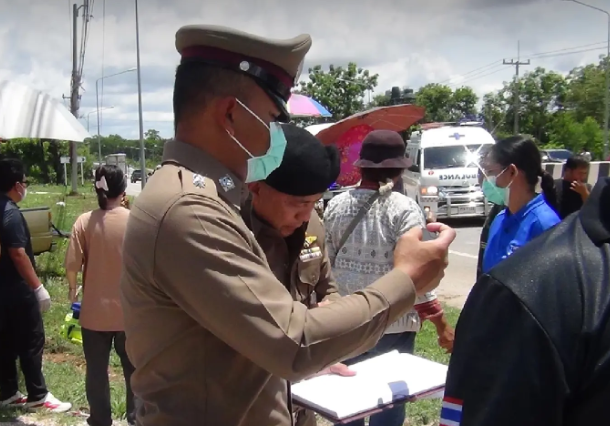
A devastating collision during a Buddhist pilgrimage in Thailand's northeast has resulted in the deaths of 10 monks, with authorities confirming the grim toll on Friday following Thursday's incident in Mukdahan province. The tragedy unfolded when a pickup truck veered into a group of 35 monks and five lay followers walking along a roadside, leaving the religious community reeling from one of the most significant losses in recent years. Ten additional people sustained injuries, two of whom remain in critical condition at Mukdahan Hospital, while eight others receive treatment for various injuries.
Authorities have identified the driver as an 11-year-old boy who had taken his parents' vehicle without permission. The child, whose identity has not been disclosed, remains unable to provide a formal statement to police. Mukdahan City Police Chief Prayut Ruanthongkam confirmed that the boy has been referred to child welfare authorities for comprehensive assessment, accompanied by his mother throughout the process. This referral marks the beginning of a welfare-focused investigation rather than a criminal prosecution, reflecting Thailand's legal framework that grants immunity from criminal liability to children under 12 years of age.
The immediate aftermath proved catastrophic for the procession participants. Five monks were pronounced dead at the scene, their lives extinguished in the immediate impact of the collision. An additional five monks succumbed to their injuries while receiving hospital care, underscoring the severity of the vehicle strike and the extent of injuries sustained during the incident. The monks were engaged in a religious pilgrimage when the accident occurred, a common and cherished spiritual practice within Thai Buddhism that typically draws widespread community support and respect.
The investigation into the collision proceeded with investigative officers gathering witness statements from surviving monks who experienced the traumatic event firsthand. These accounts would prove essential in understanding the exact circumstances that led to the tragedy, including details about the truck's approach, the speed at which it struck the group, and any factors that may have contributed to the driver losing control of the vehicle. Police have also begun examining whether mechanical failure, environmental conditions, or human error played a role in the disaster.
In Thai society, Buddhist monks occupy an exceptionally venerated position, deeply respected as custodians and transmitters of the Buddha's teachings across generations. The monastic community forms the spiritual backbone of the nation, with monks serving as guides for dharma practice and moral instruction. The loss of ten monks represents not merely a numerical tragedy but a profound cultural and spiritual blow to communities that depend upon their guidance and presence. Public processions featuring monks are iconic scenes throughout Thailand, with ordinary citizens frequently offering alms and receiving blessings, reflecting the symbiotic relationship between the lay and monastic communities.
Wat Roi Phra Phutthabat Phu Manorom, a prominent hilltop temple in Mukdahan, has emerged as a centre of care and recovery following the disaster. The temple's administration immediately took responsibility for sheltering surviving and recuperating monks from the procession, alongside other followers who participated in the pilgrimage and were affected by the incident. This response demonstrates the solidarity that characterises the Buddhist monastic community during times of crisis, with established temples providing sanctuary and support networks for their members.
The incident raises significant questions about vehicular access to roadside areas where public gatherings and religious processions regularly occur. Thailand has experienced numerous traffic-related tragedies, and the involvement of a child driver adds another dimension to ongoing conversations about vehicle security and supervision in households. While the legal system may shield the young driver from criminal consequences due to age, the psychological and emotional weight of causing such a loss will undoubtedly affect him profoundly.
For Malaysian readers, this tragedy offers sobering perspective on road safety alongside spiritual considerations. Southeast Asia continues to grapple with high rates of traffic accidents, particularly involving vulnerable groups such as pedestrians and those engaged in public activities. The incident also underscores the importance of childproofing vehicle access and establishing secure mechanisms that prevent unauthorised use of family automobiles, issues that transcend national borders and affect families throughout the region.
The broader implications for Thailand's tourism and religious tourism sectors remain to be seen, though similar incidents typically do not significantly deter pilgrimage participation or visiting of temples. Religious processions will likely continue as integral elements of Buddhist practice, though communities may implement additional safety measures or work with local authorities to establish protocols for protecting participants during public religious observances. The incident represents a tragedy that will be commemorated within the Thai Buddhist community for years to come.

