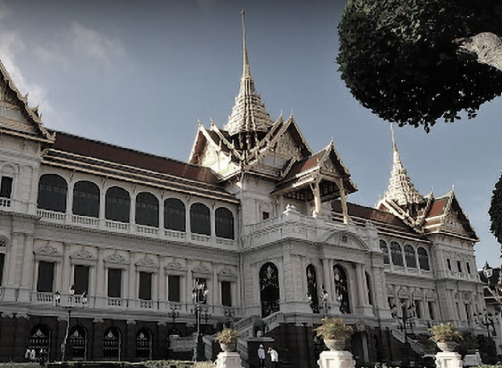
Thailand's Criminal Court has handed down an 18-month prison sentence to a 43-year-old man for royal defamation stemming from a comment he made in a private Facebook group, according to reports released on Friday. The case underscores the continued enforcement of one of the world's most restrictive laws protecting monarchies from criticism, a legal tool that rights advocates contend has become a mechanism for suppressing legitimate discourse and political dissent.
The convicted man had posted his comment in the "Royalist Marketplace" Facebook group, a private forum with over 2.2 million members that was founded by Pavin Chachavalpongpun, an exiled Thai scholar and royal critic. This group represents a significant departure from traditional Thai discourse, having emerged as a platform where members could openly discuss and debate issues related to the monarchy—a development that would have been virtually unthinkable in Thai society prior to recent years. The existence and growth of such a space reflected the changing attitudes among segments of Thai society, particularly younger generations seeking more open dialogue about institutions previously considered beyond public scrutiny.
Thailand's lese-majeste statute, codified under Article 112 of the Criminal Code, carries potential penalties of up to 15 years imprisonment for each offence. The actual sentence imposed in this case represented a significant reduction from the original three-year term, as the defendant received a 50 percent reduction following his guilty plea—a common practice in the Thai justice system that incentivises early admission of wrongdoing. The man was subsequently granted bail of 100,000 baht (approximately US$3,043) pending his appeal, according to Noppol Achamas, an information officer with Thai Lawyers for Human Rights.
The "Royalist Marketplace" group emerged during the unprecedented youth-led protest movement of 2020 and 2021, when large segments of Thai society, particularly students and young activists, publicly challenged the status quo and demanded comprehensive reforms to the monarchy's institutional structure and constitutional role. Protesters during this period made explicit calls for amendments to the royal defamation law, viewing it as an impediment to democratic expression and accountability. The group functioned as a virtual gathering space where citizens could express viewpoints and engage in discussions that would have exposed them to serious legal jeopardy in offline settings.
However, the momentum behind these reform efforts has substantially diminished in subsequent years as the government and judicial system responded with aggressive prosecutions. Many of the activists and participants who drove the movement forward have faced charges not only under the lese-majeste statute but also under various other criminal provisions, creating a chilling effect on political participation and public discourse. The combination of legal threats, prosecutions, and convictions has gradually silenced the voices that once demanded constitutional and institutional change.
Data compiled by Thai Lawyers for Human Rights reveals the scale of prosecutorial activity under the royal defamation law. A total of 291 individuals have been charged under this statute since 2020 alone, indicating a significant uptick in enforcement coinciding with and following the protest movements. Among these cases, at least 17 prosecutions have specifically targeted individuals for comments they posted within the "Royalist Marketplace" Facebook group, suggesting that authorities have focused particular attention on this digital space as a source of alleged offences.
The conviction in this case demonstrates that even private online forums are not insulated from prosecution under Thailand's lese-majeste law, provided that comments can be characterised as insulting or defamatory toward the royal institution. The fact that the group was created expressly as a forum for discussing monarchy-related issues does not provide its members with legal protection, as the statute contains no exception for speech made in contexts explicitly dedicated to public debate or academic discourse.
For regional observers and those concerned with freedom of expression in Southeast Asia, Thailand's continuing reliance on the lese-majeste law represents a significant challenge to open democratic participation. The application of the statute to online speech and private social media groups indicates that even the relative anonymity and privacy of digital platforms offer limited sanctuary from legal consequences. This pattern of enforcement sends a clear message to potential speakers that criticism or unflattering commentary regarding the monarchy carries substantial personal and legal risks regardless of the forum or medium in which it occurs.
The case also illustrates broader questions about the compatibility of such laws with contemporary understandings of freedom of expression and democratic governance. International human rights organisations have repeatedly criticised Thailand's use of the lese-majeste statute, arguing that it exceeds reasonable bounds for protecting institutional dignity and instead functions as a tool for suppressing political opposition and social critique. The law's existence and active enforcement remain areas of significant contention between the Thai government and international human rights bodies, particularly regarding Thailand's adherence to international conventions on civil liberties.
The reduction of the original sentence through the defendant's guilty plea highlights a tension within the Thai legal system: while confessions are rewarded through mitigation, they also serve to suppress appeals and full judicial examination of the evidence and circumstances. This incentive structure may lead individuals facing serious charges to accept reduced sentences rather than contest potentially questionable characterisations of their speech as defamatory or insulting.
Looking forward, the trajectory of prosecution under Thailand's lese-majeste law will likely continue to shape the landscape of public discourse and political participation in the country. As long as the law remains in effect with such broad scope and significant penalties, citizens and residents face constraints on expressing views about fundamental governmental and institutional structures, constraints that stand in contrast to international norms favouring robust public debate in democratic societies.
%22%2F%3E%3C%2Fpattern%3E%3C%2Fdefs%3E%3Crect%20width%3D%22100%25%22%20height%3D%22100%25%22%20fill%3D%22url(%23ph4n81lg)%22%2F%3E%3Crect%20width%3D%22100%25%22%20height%3D%22100%25%22%20fill%3D%22url(%23ph4n81lp)%22%2F%3E%3Ctext%20x%3D%2250%25%22%20y%3D%2250%25%22%20text-anchor%3D%22middle%22%20dominant-baseline%3D%22central%22%20fill%3D%22rgba(255%2C255%2C255%2C0.95)%22%20font-family%3D%22Georgia%2C%20'Times%20New%20Roman'%2C%20serif%22%20font-weight%3D%22700%22%20font-size%3D%22272%22%20letter-spacing%3D%22-0.02em%22%3EAnwar%3C%2Ftext%3E%3C%2Fsvg%3E)