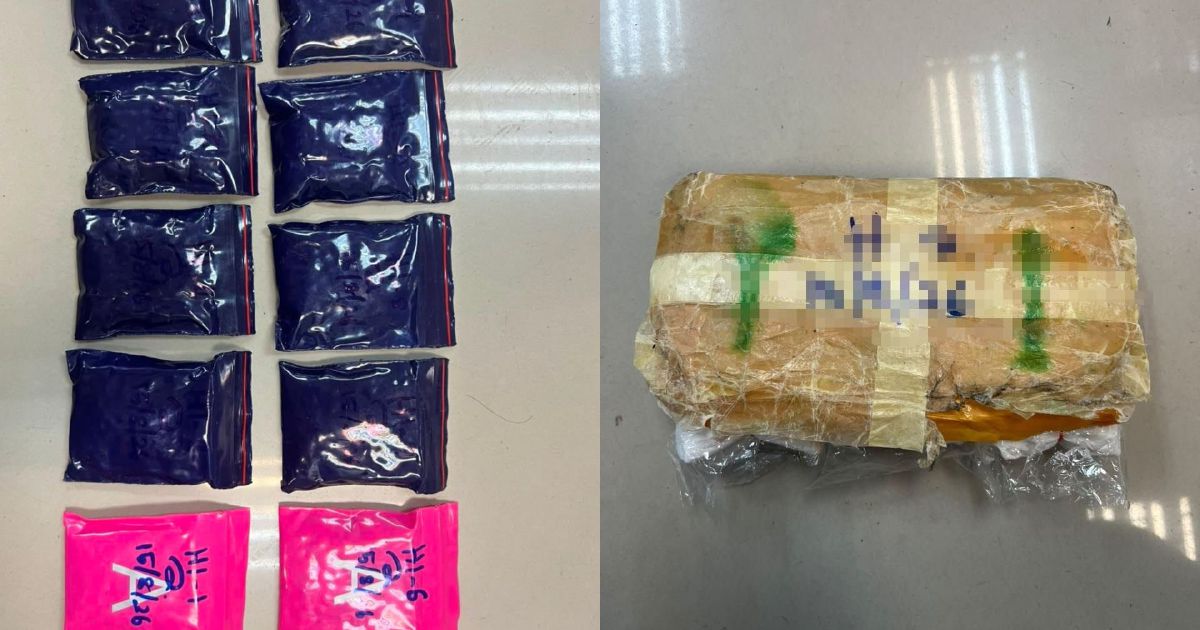
A 45-year-old Thai national faces drug charges following his detention during a narcotics operation in Pasir Mas, Kelantan. Police recovered 6,000 yaba pills—methamphetamine tablets typically associated with trafficking from the Golden Triangle—during the enforcement action at Kampung Rahmat near Rantau Panjang. The estimated street value of the seizure stands at around RM60,000, underscoring the lucrative scale of amphetamine smuggling across Malaysia's northern frontier.
The arrest reflects ongoing challenges faced by border enforcement agencies combating synthetic drug flows into the country. Yaba, colloquially termed "crazy medicine" in Southeast Asian drug markets, represents a particularly intractable problem for Malaysian authorities. Its production in clandestine labs across neighbouring Thailand and Myanmar, combined with high demand among younger consumers, has established established trafficking routes through the northern states. The geographical proximity of Pasir Mas to Rantau Panjang—a known smuggling corridor—suggests the seized consignment was destined for distribution networks rather than personal consumption.
The scale of this single operation illustrates the volume of contraband passing through Kelantan's borders. While seizures of this magnitude generate headlines, law enforcement officials acknowledge they represent merely a fraction of overall trafficking flows. Intelligence analysts estimate that interdicted narcotics represent perhaps five to ten percent of actual supply entering Malaysian markets, implying substantially larger volumes evade detection. The profitability calculations driving such operations remain compelling for traffickers, particularly given the price differential between production costs in northern Myanmar and retail valuations in Malaysian urban centres.
Yaba pills typically sell for RM15 to RM25 per unit in Malaysian drug markets, making a 6,000-unit haul commercially significant. The decision to concentrate so many tablets in a single consignment suggests either a major distribution attempt or a vehicle designed to supply multiple retail networks. Thai nationals figure prominently in cross-border trafficking operations, reflecting both geographical proximity and established criminal networks spanning the Mekong region. Cooperation between Thai and Malaysian law enforcement has intensified in recent years, though jurisdictional complications and resource constraints continue limiting effectiveness.
The Rantau Panjang entry point remains strategically important for traffickers due to its accessibility and the volume of legitimate cross-border commerce that can obscure illicit movements. During peak trading hours, authorities face substantial challenges conducting thorough vehicle inspections without disrupting bilateral trade flows. Smugglers exploit these operational constraints, timing runs to coincide with congested periods. Enhanced screening technologies at land borders have improved detection capabilities, yet determined traffickers continue developing countermeasures to evade identification.
Kelantan's position along Malaysia's northern perimeter has transformed it into a critical battleground in the government's war on drugs. State authorities work alongside federal narcotics units to address trafficking, though resource allocation remains chronically insufficient relative to the scale of the problem. Community-based intervention programmes targeting young people vulnerable to amphetamine dependency represent longer-term strategic responses, yet their impact remains difficult to quantify against the steady stream of new seizures.
The detention of the Thai national will proceed through Malaysia's drug trafficking framework, which carries stringent penalties. Possession of 6,000 yaba pills exceeds thresholds for presumed trafficking rather than personal use, exposing the suspect to extended custodial sentences. Extradition complications may arise depending on diplomatic arrangements, though cross-border criminal cooperation has generally improved bilaterally. Whether this individual represents a mid-level distributor or simply a courier transporting goods on behalf of larger syndicates remains a matter for investigative follow-up.
This seizure arrives amid broader regional scrutiny of methamphetamine production and trafficking. The United Nations Office on Drugs and Crime has documented unprecedented yaba production across Myanmar, with criminal organisations exploiting ungoverned territories to establish manufacturing capacity. The resulting regional surge in supply has depressed street prices, making consumption economically accessible to lower-income populations throughout Southeast Asia. Malaysia, as a regional economic hub with substantial purchasing power, represents an attractive target market for traffickers seeking to distribute excess production capacity.
International cooperation mechanisms, including INTERPOL coordination and regional intelligence sharing, have attempted to address the structural drivers of amphetamine trafficking. However, enforcement authorities acknowledge the fundamental asymmetry confronting drug suppression efforts: supply-side interventions remain resource-intensive and episodically effective, while demand-side drivers—poverty, limited economic opportunity, and psychological vulnerability—persist across target demographics. Border interdiction, though necessary, cannot succeed without parallel investments in addiction treatment, youth employment programmes, and socioeconomic development in vulnerable communities.

