The arrest of a Thai female airline crew member by Australian authorities has prompted a significant cross-border investigation, with Thai narcotics officials now revealing crucial details about how the drug shipment was ingeniously concealed. According to the Office of the Narcotics Control Board (ONCB), the heroin was hidden using a sophisticated concealment technique involving only two of the twelve bags found within a single parcel. When Australian authorities examined one of these bags, they discovered approximately 900 grams of suspected heroin, though Thai officials believe the combined total in both bags does not exceed 2 kilograms pending full laboratory confirmation from Australian authorities.
The revelation showcases the evolving methods employed by transnational drug networks operating across Southeast Asia and beyond. Police Major Suriya Singhakamol, secretary-general of the ONCB, explained that the perpetrators had deliberately distributed the contraband across a large shipment to reduce the likelihood of detection. The strategy of mixing legitimate items with drug-laden goods represents a standard practice among sophisticated trafficking operations seeking to exploit customs vulnerabilities and overwhelm screening processes. This approach underscores why authorities across the region must continually adapt their interdiction methods and personnel training to identify such concealment techniques.
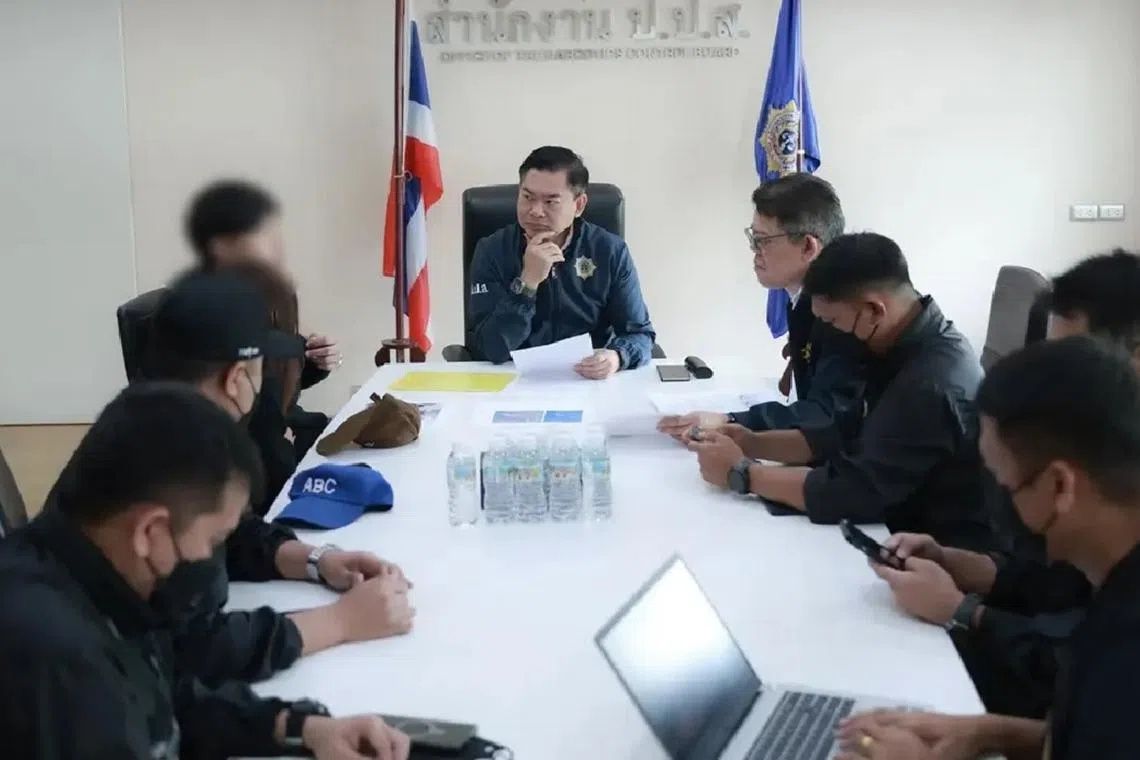
Thailand's collaboration with Australian authorities has expanded significantly since the initial arrest, with both nations committed to dismantling the entire trafficking network rather than prosecuting only individual couriers or low-level operatives. The ONCB has integrated its investigation with multiple domestic agencies, creating a joint task force called Task Force Storm that includes the Customs Department, the Department of Special Investigation, and the Australian Federal Police. High-level officials from these organizations met on July 1 to exchange detailed information and coordinate their investigative strategies, indicating the seriousness with which both governments view the case.
A critical element of the ongoing investigation involves identifying the delivery rider responsible for transporting the parcel into Thailand. Initial confusion clouded the case when a delivery worker voluntarily came forward to declare his innocence after learning of the police inquiry. Thai investigators meticulously examined CCTV footage and compared available evidence, ultimately confirming that this individual was not the person who delivered the drug-laden parcel. The distinctions were sufficiently clear to eliminate him from suspicion: the suspicious parcel arrived on June 22 at noon in a large brown cardboard box via a rider wearing a black helmet, whereas the cooperating delivery worker had transported a black plastic box on June 23 at approximately 5 p.m. while wearing a yellow shirt and white helmet.
The investigators' careful approach in clearing an innocent party demonstrates the procedural rigor necessary in transnational cases where mistaken identity could undermine cooperation with private sector workers. The ONCB formally recorded the rider's statement and publicly acknowledged his voluntary cooperation, a gesture that may encourage others with relevant information to come forward without fear of being automatically implicated in criminal activity. However, the search for the actual courier continues, with authorities examining delivery records, vehicle tracking data, and additional surveillance footage to narrow the scope of potential suspects.
Equally important to locating the delivery rider is identifying the individual who arranged the shipment through a Facebook account operating under the name "Rose". This online coordinator recruited the courier through a Facebook group and orchestrated the delivery logistics, making them a crucial link in the trafficking chain. The ONCB has emphasized that it is not relying solely on the Facebook profile information when tracing this individual, recognizing that such accounts are frequently operated through proxies, borrowed identities, or shared access arrangements. Law enforcement officials are pursuing complementary investigative avenues, including financial transaction analysis, digital forensics, and cross-border intelligence sharing to uncover the true identity behind the account.
The source of the heroin itself remains a significant component of the investigation, with Suriya noting that crystal methamphetamine, heroin, and methamphetamine pills are not manufactured within Thailand but rather smuggled into the kingdom from the Golden Triangle region spanning Myanmar, Laos, and Cambodia. However, the sophisticated packaging and concealment process—specifically embedding drugs within the fabric of bags—could have occurred either in a neighbouring production area or within Thai territory by specialized operatives. Determining where this preparation took place will help authorities identify whether the network operates distribution hubs in Thailand or relies entirely on external processing facilities, information that would shape preventive strategies.
The case highlights vulnerabilities in international courier and air cargo systems that criminal networks continue to exploit with considerable success. The use of airline crew members as unwitting or complicit couriers represents a particularly insidious variant of smuggling, as these individuals benefit from reduced screening at certain checkpoints due to their employment status and frequent travel patterns. The Thai authorities have not publicly disclosed whether the arrested crew member knowingly transported the drugs or was deceived into carrying the parcel, a distinction that significantly affects both legal culpability and the network's operational security measures.
For Malaysia and other Southeast Asian nations, this case carries urgent implications regarding drug transit routes and trafficking methodologies that may be simultaneously targeting or transiting through their territories. The involvement of online recruitment through social media platforms and the utilization of regular delivery services indicate that drug networks are increasingly integrating themselves into legitimate commercial infrastructure. Customs agencies and postal services across the region must heighten vigilance for similar concealment techniques and suspicious patterns in parcel routing. The cross-border coordination demonstrated by Thai and Australian authorities provides a model that regional countries should consider replicating through enhanced information-sharing agreements and joint task forces focused on specific trafficking corridors.
As investigators continue pursuing multiple leads simultaneously—tracking the delivery rider, identifying the Facebook account operator, and mapping the supply chain—the case demonstrates that disrupting transnational drug networks requires sustained effort across multiple jurisdictions and investigative disciplines. The ONCB's integration with customs, special investigation departments, and international partners reflects recognition that no single agency possesses sufficient resources or jurisdictional reach to address modern trafficking operations independently. The investigation's expansion to identify major network figures suggests authorities are prioritizing the dismantling of organizational structures rather than accepting quick prosecutions of individual mules, a strategic approach more likely to produce lasting impact on regional drug availability and criminal enterprise viability.

