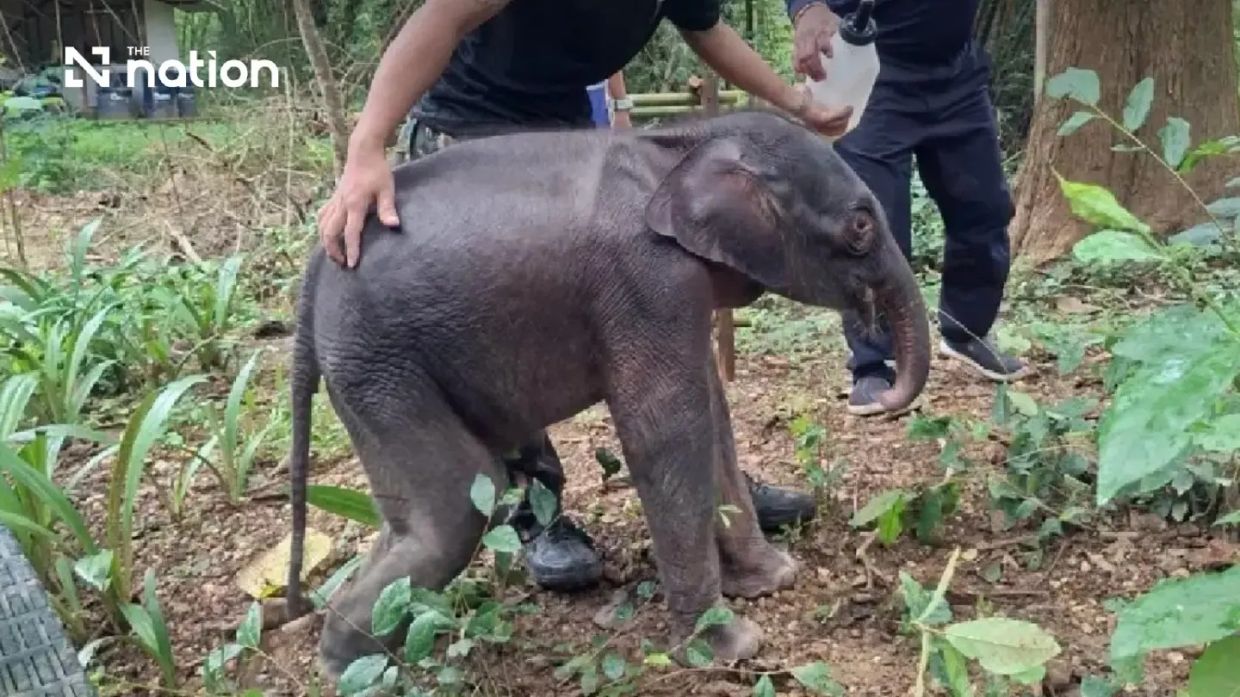
A critically ill elephant calf discovered alone and severely malnourished on a riverbank in Sai Yok National Park, Kanchanaburi province, has prompted an urgent rescue and medical response from Thai wildlife authorities. The young male, estimated at no more than two weeks old and weighing approximately 40 kilogrammes, was found separated from its herd after apparently becoming swept downstream during heavy monsoon flooding.
Villagers from Ban Mae Nam Noi first spotted the distressed animal on July 30, 2026, lying weak and confined to a narrow 1.5-metre strip of riverbank wedged between steep terrain and the Huai Mae Nam Noi river. Officers from Sai Yok National Park's Protection Unit No. 5 reached the location only after a hazardous one-to-two hour boat journey through challenging access routes. Upon arrival, they discovered the calf had likely been abandoned or separated for approximately two days, its periodic calls for its mother going unanswered as the herd had apparently crossed the swollen waterway.
The condition presented by veterinary teams from Protected Areas Regional Office 3 proved deeply concerning. Beyond severe dehydration evidenced by dark reddish urine, the calf exhibited multiple infections and injuries typical of prolonged exposure and malnutrition. Ulcer-like lesions the size of a Thai 10-baht coin covered its mouth, preventing proper feeding and causing intense pain when attempting to consume milk offered by rescue personnel. The animal's trunk displayed blistered wounds with areas of necrotic tissue, whilst a navel wound indicated potential bacterial exposure during its crucial early development phase.
Complicated by eye infections caused by insect colonisation and loose, foul-smelling stools suggesting gastrointestinal disturbance, the calf presented a clinical picture of an animal in genuine peril. The veterinary assessment flagged heightened risk of elephant endotheliotropic herpesvirus (EEHV), a devastating viral pathogen responsible for sudden death in young elephants across Southeast Asia. This concern has prompted comprehensive disease screening protocols as part of ongoing intensive care.
Minister of Natural Resources and Environment Suchart Chomklin responded swiftly, publicly commending rescue personnel and mobilising specialist veterinary resources. He emphasised the critical importance of round-the-clock monitoring and comprehensive treatment protocols, recognising that juvenile elephants separated from maternal care face exponential health deterioration within days. His intervention signals political commitment to wildlife conservation efforts that frequently operate in hazardous field conditions.
Department of National Parks, Wildlife and Plant Conservation director-general Attapol Charoenchansa detailed the challenging operational environment rescue teams navigated. Incessant rainfall over preceding days had elevated river levels dramatically, creating flash-flood risks that complicated medical assessment procedures. The boat-dependent access meant veterinarians required four hours simply in transit to provide even initial evaluation, highlighting the remote nature of Thailand's protected forest zones and the logistical constraints rangers face during wildlife emergencies.
Recovery prospects for the calf depend substantially on preventing secondary infections whilst addressing underlying dehydration and nutritional deficiency. The navel wound presents particular concern—in young ungulates, such injuries represent principal entry points for septic bacterial invasion. Mouth lesions complicate the fundamental requirement of sustained nutritional intake, as pain prevents adequate milk consumption necessary for growth and immune function development. Coordinated veterinary attention aims to stabilise these immediate physiological crises before pursuing longer-term rehabilitation.
The incident exemplifies broader conservation challenges confronting mainland Southeast Asia as climate intensification produces more severe weather events. Monsoon flooding increasingly separates elephant family units, with young calves particularly vulnerable to separation-induced mortality. Thai authorities' capacity to mount rapid responses in remote terrain demonstrates institutional commitment, yet raises broader questions regarding whether expanded infrastructure and personnel allocation can adequately address escalating wildlife emergencies arising from environmental pressures.
For the region's wildlife management practitioners, the case underscores the precarious position of wild elephant populations despite legal protection. Herd separation incidents occur with increasing frequency, whilst the technical sophistication required for neonatal elephant medical intervention remains concentrated in specialised centres. The calf's survival will depend on multidisciplinary veterinary expertise, adequate pharmaceutical resources, and sustained commitment over weeks or months of intensive care—resources not uniformly available across Southeast Asian national park systems.
Thailand's response mobilisation, whilst commendable, also illustrates resource limitations. Specialised elephant veterinarians remain scarce across the region, and the expense of intensive care for individual animals competes against broader conservation programming. Successful recovery would represent a meaningful conservation victory, yet resource allocation patterns suggest that institutional capacity for such intensive intervention may face constraints as wildlife emergency frequency increases across climatically vulnerable Southeast Asian ecosystems.

