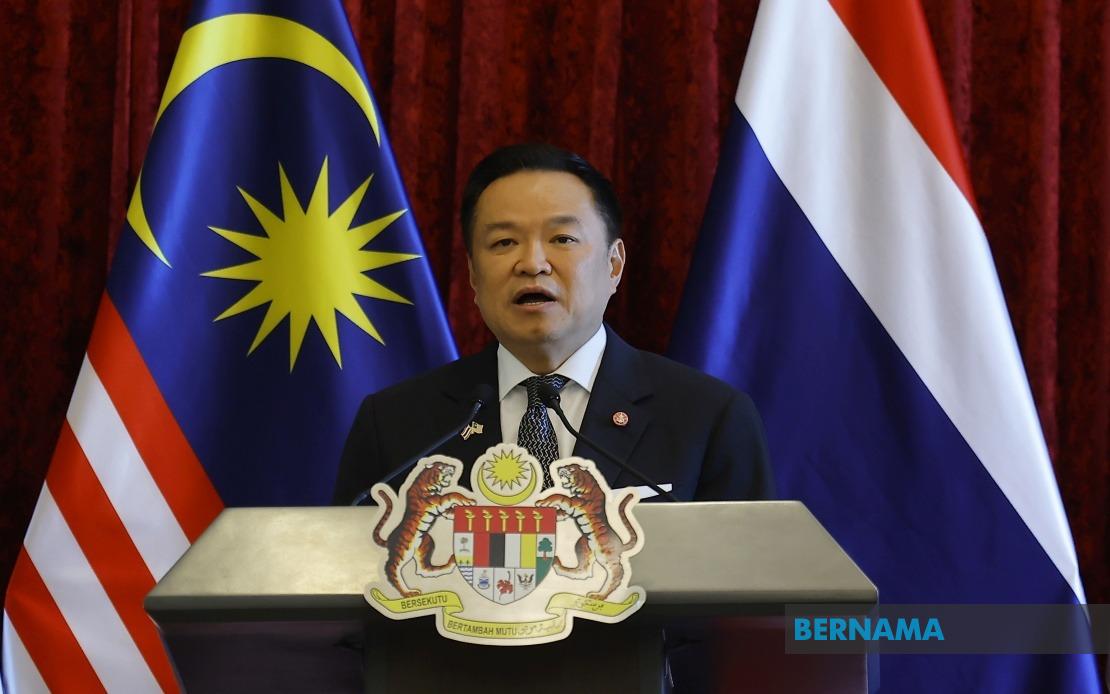
Thai Prime Minister Anutin Charnvirakul has underscored his government's commitment to ending violence and addressing the complex challenges facing Thailand's southern border provinces, stating these issues rank among his administration's foremost concerns. Speaking alongside Malaysian Prime Minister Datuk Seri Anwar Ibrahim during a joint press conference in Putrajaya on Thursday, Anutin outlined a vision where peace and development reinforce each other across the troubled region that has endured decades of instability.
The Thai premier articulated a straightforward philosophy guiding bilateral efforts: peaceful conditions create the necessary foundation for economic development, while sustainable development in turn strengthens the foundations for enduring peace. This framework reflects the broader strategic thinking that has come to define approaches to the southern Thailand conflict, where military solutions alone have proven insufficient without accompanying investment in communities and livelihoods.
Central to the dialogue between the two leaders was Thailand's recognition of Malaysia's pivotal role in facilitating the Southern Thailand Peace Dialogue process. This mediation function represents a significant diplomatic responsibility, reflecting the deep interconnections between the two neighbours and Malaysia's stake in regional stability. Anutin's appreciation for this role signals Thailand's openness to continuing multilateral engagement mechanisms that have gradually shifted the conflict dynamics over recent years.
The Malaysian government has positioned itself as an honest broker in these talks, a position that carries considerable weight given Malaysia's geographic proximity and the cross-border dimensions of the insurgency. Prime Minister Anwar provided assurances that Malaysia unequivocally rejects violence as a means of political expression and remains firmly committed to cooperating with Bangkok to identify and prosecute those responsible for attacks and destabilisation.
The peace dialogue framework involves substantive engagement between the Thai government and various stakeholder groups, most notably the Barisan Revolusi Nasional (BRN), a key armed faction that has negotiated sporadically with Bangkok over the past decade. The architecture of these negotiations requires skilled diplomatic management and sustained commitment from both sides, with clear objectives and genuine willingness to address underlying grievances that have fuelled the conflict.
Leading the Malaysian negotiating team is Datuk Mohd Rabin Basir, a seasoned security official who previously served as director-general of the National Security Council before his appointment on July 1, 2024. His background in national security affairs provides credibility and institutional knowledge essential for navigating the sensitive discussions. Counterparts from Thailand include Thanat Suwannanont, who directs the National Intelligence Agency (NIA) and serves as Bangkok's chief negotiator, bringing intelligence community perspectives to the discussions.
The pairing of these two negotiators reflects a pragmatic approach that combines security intelligence expertise with formal diplomatic channels. Such arrangements acknowledge that resolving conflicts in border regions requires understanding clandestine networks and insurgent structures while simultaneously pursuing political dialogue aimed at comprehensive settlements. The involvement of intelligence agencies alongside traditional diplomatic channels has become standard practice in contemporary peace processes affecting Southeast Asia.
For Malaysia, hosting and facilitating these discussions carries broader implications beyond bilateral relations with Thailand. The southern Thailand insurgency has historically sent ripples across the Malaysian border, with militant networks utilising Malaysian territory for logistics, recruitment, and sanctuary. Successful conflict resolution in southern Thailand thus directly benefits Malaysian security interests and allows both countries to redirect resources toward development and counter-terrorism efforts targeting transnational threats.
The emphasis on sustained cooperation between Bangkok and Kuala Lumpur signals that both governments view this challenge through a long-term lens. Previous cycles of dialogue have stalled or produced limited results, making the current commitment to continuous engagement noteworthy. The statements from both prime ministers suggest recognition that seasonal negotiations or episodic talks have not yielded sufficient progress, necessitating more institutionalised cooperation mechanisms.
The southern Thailand provinces of Pattani, Yala, and Narathiwat have experienced considerable violence since 2004, when the latest phase of the insurgency intensified. Thousands have been killed in clashes between security forces and various armed groups, alongside civilian casualties from bomb attacks and targeted assassinations. Beyond the human toll, the violence has devastated local economies, disrupted education, displaced communities, and created an environment of fear that impedes normal commerce and governance.
Development initiatives in these provinces remain constrained by security concerns, yet security cannot be achieved without addressing the socioeconomic drivers that fuel recruitment into insurgent movements. This chicken-and-egg dynamic underscores why both Thai and Malaysian leaders increasingly invoke integrated approaches combining security operations with genuine economic investment and political inclusion of affected communities.
The role of Malaysia as facilitator reflects broader patterns in Southeast Asian diplomacy, where major regional powers often leverage their diplomatic weight and geographic position to mediate intra-regional conflicts. ASEAN principles of non-interference have gradually yielded to recognition that some transnational challenges require collaborative solutions, with Thailand and Malaysia increasingly moving toward this pragmatic consensus.
Looking ahead, the success of these initiatives will largely depend on whether Bangkok can translate dialogue commitments into concrete political arrangements addressing nationalist aspirations in the southern provinces, while simultaneously maintaining the military pressure necessary to prevent insurgent groups from believing they can achieve their objectives through armed struggle. Malaysia's sustained involvement provides both countries with a neutral arbiter and demonstrates to international observers that serious progress toward conflict resolution remains possible even in difficult circumstances.

