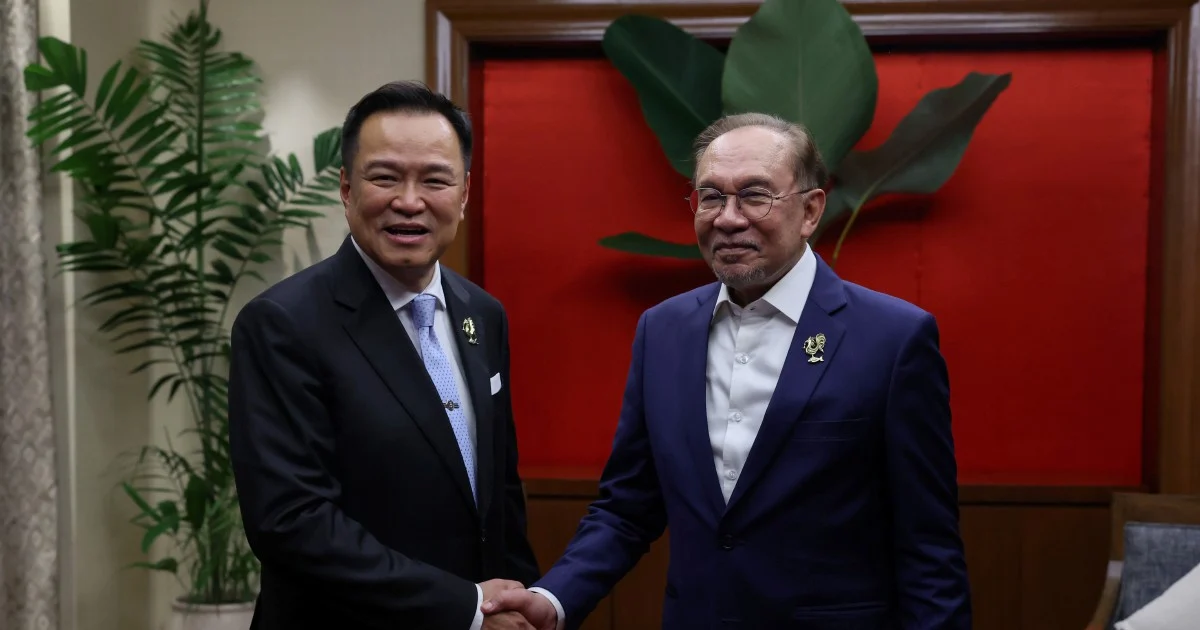
Thai Prime Minister Anutin Charnvirakul will travel to Malaysia on July 9 and 10 for high-level discussions with Prime Minister Datuk Seri Anwar Ibrahim, marking another significant engagement between the two Southeast Asian neighbours. The visit underscores the growing importance both countries place on deepening their relationship across multiple strategic domains, particularly as regional challenges continue to reshape bilateral priorities.
Border security is anticipated to emerge as a central topic during the bilateral meetings. The Thailand-Malaysia border region has long presented complex security challenges, ranging from smuggling networks to armed separatist movements, issues that require coordinated responses from both governments. Cross-border movement of illicit goods, human trafficking, and the activities of militant groups have periodically strained local communities and tested the effectiveness of existing security arrangements. Enhanced intelligence sharing and joint operations represent potential outcomes that could strengthen the security architecture between Bangkok and Kuala Lumpur.
Economic cooperation forms the other pillar of expected discussions. Thailand and Malaysia maintain substantial trade relationships spanning manufacturing, agriculture, tourism, and technology sectors. Bilateral trade volumes have fluctuated with regional economic conditions, yet both nations recognise the untapped potential for deeper integration. Supply chain vulnerabilities exposed during recent global disruptions have prompted Southeast Asian governments to reconsider their trade dependencies and explore stronger regional partnerships. The visit offers an opportunity to discuss tariff frameworks, investment incentives, and sectoral collaboration that could benefit businesses on both sides of the border.
Anwar Ibrahim's administration has signalled strong commitment to strengthening Malaysia's relationships across Southeast Asia while simultaneously pursuing economic revitalisation at home. Thailand, as Malaysia's northern neighbour and a fellow ASEAN member, holds particular strategic importance in this broader regional strategy. The timing of this visit reflects deliberate diplomatic scheduling aimed at maintaining momentum in bilateral ties and demonstrating responsiveness to shared challenges.
Tourist flows between the two countries have historically been substantial, with millions of Thais visiting Malaysian destinations annually and vice versa. Recovery and growth in this sector depend partly on streamlined border procedures and confidence in cross-border safety. Discussions may address facilitation measures that encourage legitimate travel while maintaining security vigilance, balancing commercial interests with national protection mandates.
The technology and digital economy sectors represent emerging areas where collaboration could yield significant benefits. Both nations are investing in digital infrastructure and innovation hubs, and deeper cooperation in cybersecurity, data governance, and fintech could position the region more competitively against global competitors. Malaysian companies have established footholds in Thailand's market, while Thai enterprises have similarly expanded into Malaysia, creating natural interdependencies that mutual support policies could strengthen further.
Regional stability considerations loom large over bilateral relations. As Myanmar's political instability continues generating refugee flows and cross-border complications, Thailand and Malaysia face shared responsibilities in managing humanitarian and security consequences. Coordinated approaches to addressing refugee populations, preventing weapons smuggling, and combating transnational crime serve mutual interests and contribute to broader ASEAN stability objectives.
The visit also carries symbolic weight as a demonstration of ASEAN cohesion at a time when external powers seek greater influence in Southeast Asia. Through regular high-level exchanges and substantive engagement, Thailand and Malaysia reinforce intra-regional cooperation mechanisms and demonstrate commitment to resolving issues through dialogue rather than confrontation. Such engagement strengthens ASEAN's collective voice in addressing international challenges.
Infrastructure development linking the two countries presents another avenue for discussion. Road and rail connectivity improvements, port facility enhancements, and logistics corridor development could facilitate smoother trade flows and regional integration. Joint infrastructure projects require careful planning and significant capital commitment, making these discussions important for identifying viable opportunities that serve strategic objectives while remaining economically sustainable.
Anwar Ibrahim's government has emphasised transparency and merit-based governance in its initial tenure, principles that could extend to bilateral dealings with Thailand. Establishing trust through open communication channels and clear commitment to honouring agreements helps build the foundation necessary for more ambitious joint initiatives.
The brewing energy sector cooperation, including potential natural gas trade and renewable energy development, may also feature in discussions. Both nations face energy security challenges and climate commitments that could create synergies in pursuing sustainable development pathways. Collaboration in this domain could demonstrate regional leadership in addressing climate concerns while securing energy independence.
Longer-term, the success of this visit will be measured not merely by the statements released but by the implementation of any agreements reached. Follow-up mechanisms and institutional arrangements that ensure regular coordination between relevant agencies on both sides strengthen the durability of bilateral undertakings. Malaysia and Thailand stand positioned to benefit substantially from deepened cooperation, provided both governments maintain political will and commit adequate resources to translating diplomatic pledges into tangible outcomes benefiting their populations.

