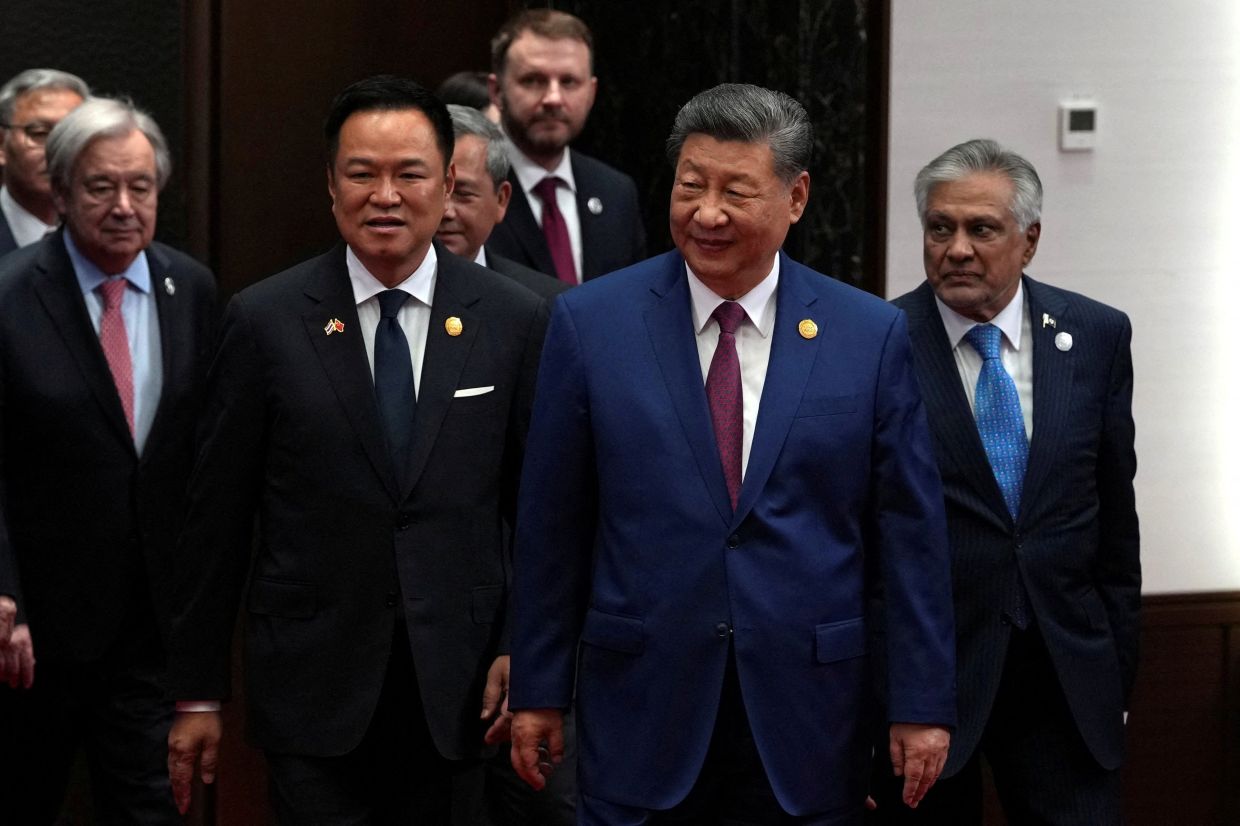
Thai Prime Minister Anutin Charnvirakul has adopted an unusual diplomatic strategy in recent weeks, deploying his musical talents as a tool for regional engagement. During a formal state lunch with Chinese Premier Li Qiang in Beijing on Monday, the Thai leader took centre stage with a microphone to perform a beloved Teresa Teng composition, transforming what could have been a conventional bilateral meeting into an unexpectedly intimate cultural exchange. Video footage released by Anutin's office captured the moment as Li and other assembled dignitaries, positioned before flags of both nations, provided an appreciative audience, their applause accompanying piano accompaniment in the background.
This Beijing performance represents merely the latest instalment in what has become an unmistakable pattern of musical statecraft. Just days earlier, Anutin had picked up a saxophone at a gathering with Malaysian Prime Minister Anwar Ibrahim, performing alongside his counterpart who provided vocals for "My Way", the iconic Frank Sinatra standard. The previous month brought another such moment in Hanoi, where Anutin demonstrated his proficiency with traditional Vietnamese instruments during a performance with local musicians before Prime Minister Le Minh Hung. Taken together, these performances sketch the portrait of a leader who has deliberately chosen to conduct diplomacy through cultural expression rather than conventional protocol alone.
Anutin's embrace of musical diplomacy carries particular significance given his background and the political context in which he operates. The Thai Prime Minister, who assumed office in September 2024 before securing electoral vindication in February 2025, emerges from a prominent construction industry family with substantial wealth and influence. Yet he has cultivated a deliberately populist persona that contrasts sharply with traditional elite expectations, a strategy that appears carefully calibrated to appeal to Thailand's still fundamentally conservative population. His willingness to perform publicly across multiple genres and instruments suggests a leader comfortable with calculated informality, using cultural engagement to soften the often-rigid formality that characterises senior government interactions.
The breadth of Anutin's musical competence itself warrants attention. Beyond the impromptu performances of popular standards, he maintains serious proficiency as a pianist and Thai flute player. His accomplishments extend beyond the musical realm—he holds an amateur pilot's license and evidently pursues aviation as a personal passion project. This constellation of interests and hobbies, carefully publicised through official channels, contributes to a carefully constructed image of a leader who transcends stereotypical political boundaries. The distinction between authentic personal interests and strategic image-making remains deliberately opaque, allowing observers to interpret his actions through competing lenses.
The cultural dimension of this diplomatic approach merits closer examination. By selecting recognised popular compositions—a Taiwanese standard, a Sinatra classic—Anutin demonstrates cross-cultural fluency and an understanding of shared cultural touchstones that resonate across generational and national boundaries. His performances appear designed not to showcase technical virtuosity but rather to create moments of genuine human connection amidst formal state functions. For counterparts like Li Qiang and Anwar Ibrahim, receiving such personal attention from a sitting prime minister signals respect and a desire to move beyond transactional diplomacy into something more personally engaged.
For Southeast Asian observers, particularly Malaysian audiences, Anutin's evolving diplomatic style offers interesting contrasts and comparisons. Thailand and Malaysia, as neighbouring Association of Southeast Asian Nations members, engage regularly on matters ranging from border management to regional security arrangements. Anutin's cultivation of a more personable, accessible public image represents a deliberate departure from traditional Thai governance norms, where hierarchy and formal distance have historically characterised elite interactions. His apparent comfort performing publicly with peer leaders suggests confidence in his political position and a willingness to experiment with unconventional relationship-building strategies.
The timing of these performances also deserves consideration. Anutin's February electoral victory provided him with a fresh mandate and presumably reduced his vulnerability to domestic political challenges. With such electoral legitimacy in hand, he appears emboldened to pursue diplomatic initiatives that might have seemed risky or undignified to predecessors operating under greater political constraint. The musical performances, rather than constituting distractions from serious statecraft, appear instead to reflect a deliberate strategy of personal diplomacy designed to build goodwill and foster positive personal relationships with regional and international counterparts.
Recently, Anutin has extended his musical engagements beyond formal state occasions, performing alongside a Thai teenager whose saxophonist performance captured international attention through the television programme America's Got Talent. This willingness to share the spotlight with younger talent suggests an attempt to position himself as a bridge between traditional authority and contemporary cultural expression. Such performances carry domestic political benefits, signalling that Anutin remains connected to contemporary Thai society and youth culture rather than embodying the staid formality often associated with government leadership.
For policymakers and observers tracking Southeast Asian leadership styles, Anutin's approach to public diplomacy represents a notable evolution in how senior officials present themselves and conduct international relations. His strategy acknowledges that in an interconnected world where images circulate globally within hours, calculated informality and demonstrated cultural engagement carry diplomatic value. Whether this approach yields substantive policy benefits or functions primarily as sophisticated public relations remains an open question that time and concrete diplomatic outcomes will ultimately answer.

