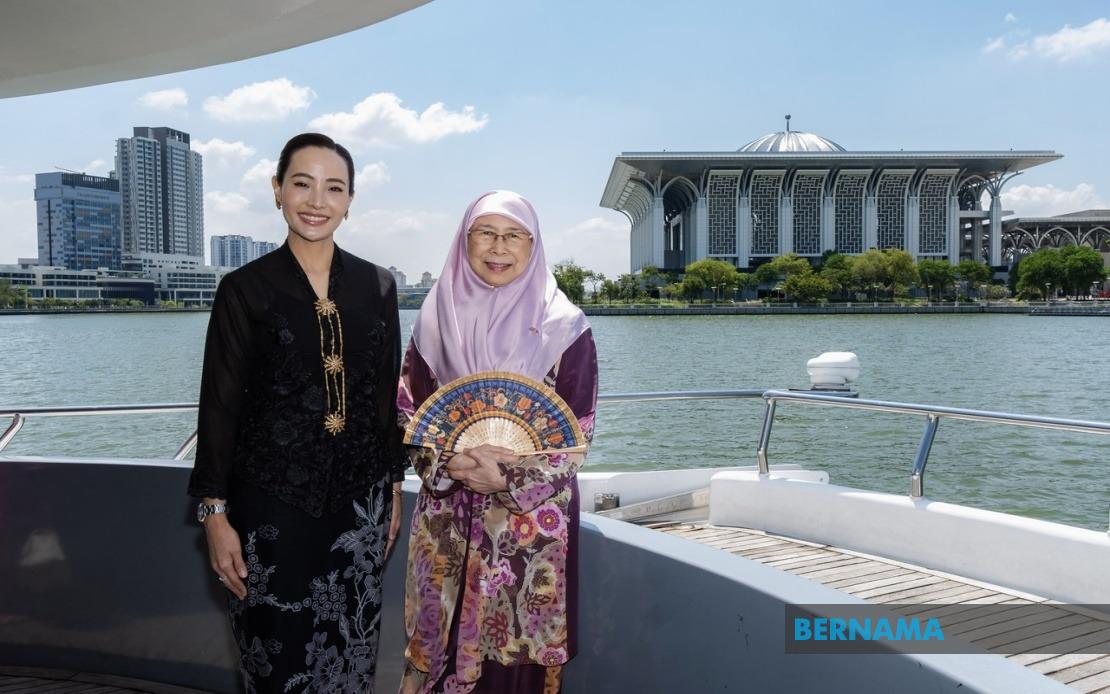
Thailand's Prime Minister Anutin Charnvirakul and his wife Thananon Charnvirakul arrived in Malaysia this week for a two-day official state visit, marking his first trip abroad since returning to the premiership in March 2026. The visit underscores both nations' commitment to elevating their historical partnership and exploring fresh opportunities for collaboration across sectors of mutual benefit. Anutin was formally welcomed at Kuala Lumpur International Airport's Bunga Raya Complex on Thursday with full ceremonial honours befitting a visiting head of government.
A centrepiece of the itinerary brought Thananon to Malaysia's purpose-built administrative heartland of Putrajaya, where she embarked on a scenic boat journey across Tasik Putrajaya. The 45-minute cruise offered panoramic perspectives of the capital's celebrated architectural and landscaping achievements, which have become internationally recognised symbols of Malaysian urban planning and modern governance. The lake itself, an integral feature of Putrajaya's design, provides both functional flood management and leisurely recreational value for visitors and residents alike.
Thananon's reception reflected the high status accorded to the visiting delegation. Upon her arrival at approximately 12.10 pm, she was greeted by Datuk Seri Dr Wan Azizah Wan Ismail, wife of Prime Minister Datuk Seri Anwar Ibrahim, establishing an immediate personal connection between the two first ladies. The presence of Hannah Yeoh, Minister in the Prime Minister's Department overseeing Federal Territories, further underscored official recognition of the occasion and the importance placed on diplomatic hospitality.
During the cruise across the tranquil waters, Thananon and Dr Wan Azizah engaged in extended conversation, allowing both women to develop personal rapport while surrounded by Putrajaya's distinctive landmarks. These structures—ranging from government administrative buildings to cultural and religious institutions—showcase Malaysia's architectural ambitions and reflect decades of visionary planning. The lakeside vantage points provided during the boat journey offered unobstructed views of these monuments, making the experience both informative and memorable for the Thai delegation.
Putrajaya itself has grown into a significant symbol of Malaysian administrative modernity since its inception in the 1990s. The carefully designed layout, featuring grand public buildings, manicured gardens, and this central lake, presents a stark contrast to older Malaysian capitals and demonstrates the nation's capacity for large-scale urban development. For international visitors, particularly those from neighbouring countries, touring Putrajaya has become a routine diplomatic engagement that communicates Malaysia's achievements in governance infrastructure and forward-thinking urban design.
The broader context of this visit reflects the consistent pattern of high-level engagement between Malaysia and Thailand. Both nations share significant historical, cultural, and economic ties spanning centuries, and contemporary governmental relations remain robust despite occasional policy differences. Thai Prime Minister Anutin's presence in Malaysia, coupled with ceremonial airport welcomes and curated tours of national symbols, signals renewed emphasis on strengthening these connections at the leadership level.
For Malaysia, hosting such visits provides opportunity to showcase institutional competence and national development achievements. The careful choreography of official visits—from airport protocols to sightseeing itineraries—communicates messages about the stability, prosperity, and international standing that Malaysia wishes to project. Putrajaya, as the administrative capital, naturally features prominently in such diplomatic showcases, as it embodies Malaysia's modern aspirations and governance identity.
Thailand-Malaysia relations encompass diverse areas including trade, tourism, security cooperation, and cultural exchange. At the governmental level, both prime ministers maintain regular dialogue channels and coordinate positions on regional issues within frameworks such as ASEAN. Bilateral visits like this one, while sometimes appearing ceremonial on the surface, serve crucial functions in maintaining personal relationships between leaders and in reaffirming mutual commitment to partnership objectives.
The leisure component of diplomatic visits—the boat cruise through Putrajaya—carries subtle significance beyond simple tourism. Such moments of relaxed, informal interaction between high-profile figures often yield deeper understanding and stronger personal connections than formal conference settings might provide. The conversations between Thananon and Dr Wan Azizah, occurring against the backdrop of Malaysia's architectural grandeur, contribute to the intangible relationship-building that underpins effective bilateral diplomacy.
Looking forward, this visit is expected to yield tangible outcomes in areas such as enhanced trade facilitation, closer cooperation on security matters particularly along their shared border regions, and expanded people-to-people exchanges through tourism and education initiatives. Both nations have strong incentives to deepen integration within broader Southeast Asian frameworks, making bilateral strengthening efforts mutually beneficial.

