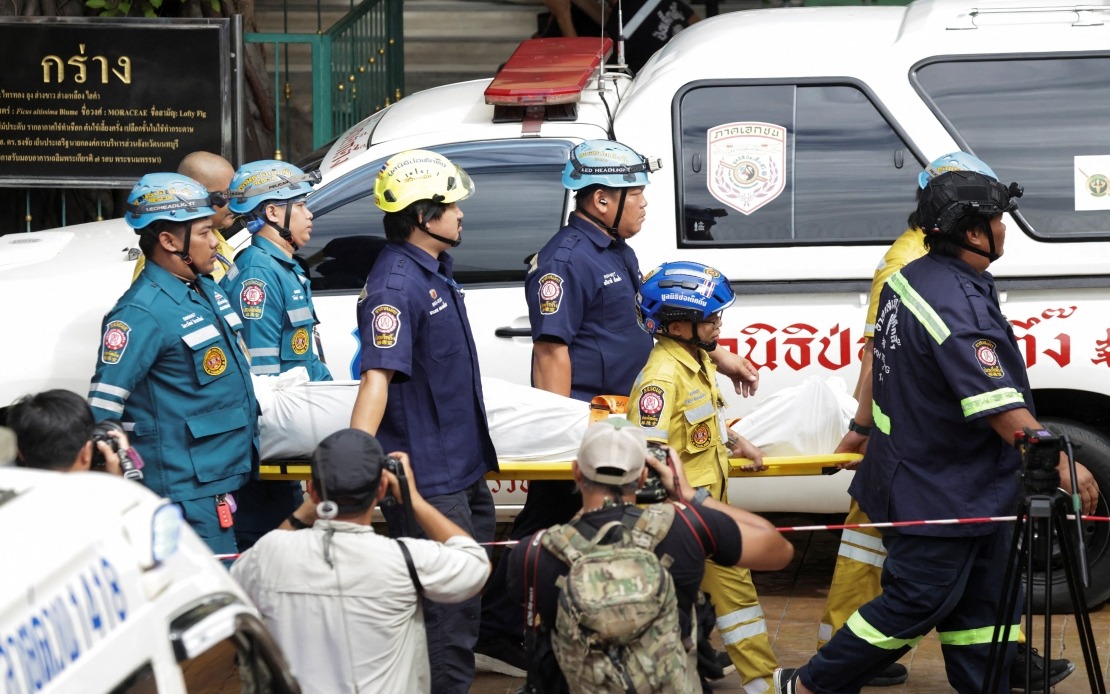
A deadly shooting at a school in Thailand's Nonthaburi province unfolded with shocking brutality on Friday morning, with investigators now confirming that the student gunman first attacked his grandparents at their home in Bang Bua Thong district before proceeding to his school. The sequence of violence claimed the lives of six people at the educational institution and left a further 15 wounded, marking one of Thailand's most serious school shooting incidents in recent times. Authorities say the suspected shooter was also found dead at the school premises.
According to Lieutenant General Trairong Piwpan, Royal Thai Police Deputy Inspector-General and spokesperson, preliminary investigations revealed a disturbing chain of events in which the suspect fired 26 rounds before arriving at Debsirin Nonthaburi School around 10am. When police later conducted a search of the gunman's residence in Bang Bua Thong district, they made a grim discovery: the bodies of both his grandfather and grandmother lay inside the home, each bearing fatal gunshot wounds to the head. The circumstances strongly suggest that the elderly couple were killed in the initial phase of the violence, though authorities cautioned that the precise timing and sequence of events remain under active investigation.
The weapons and ammunition recovered during the police search underscore the extent of preparation involved in the attack. Investigators discovered a 9mm handgun along with 34 additional rounds of ammunition found outside the magazine at the scene. This discovery has prompted authorities to examine the suspect's access to firearms and whether there were any warning signs or irregularities in how the weapon was obtained—a question of particular significance in a country where gun ownership is highly regulated.
The three victims at the school comprised both educators and pupils, representing a tragic loss across the institution's community. The three slain teachers and three student victims represent the core of the school's population, and the 15 individuals injured in the attack are now facing recovery from both physical injuries and profound psychological trauma. Such incidents inevitably raise questions about school safety measures, emergency preparedness, and whether existing protocols are adequate to prevent or mitigate such tragedies.
For neighbouring Malaysia and other Southeast Asian nations, incidents of this magnitude carry sobering implications. While school shootings remain relatively rare in the region compared to some Western countries, the occurrence of such violence highlights the vulnerability of educational institutions and the need for comprehensive discussions around security, mental health resources, and early intervention systems. Malaysian education authorities and school administrators often reference such incidents when reviewing their own safety frameworks and whether additional measures might be warranted.
Lieutenant General Trairong indicated that investigators are still working to establish the underlying motive for the attack and to reconstruct the full sequence of events with precision. Understanding what prompted the student to carry out such violence—whether personal grievances, mental health crises, or other factors—will be crucial not only for closure but also for identifying potential warning signs in future cases. The investigation represents an urgent priority for Thai law enforcement and will likely inform policy discussions about student welfare and threat assessment protocols in schools nationwide.
The incident occurred at approximately 10am, a time when the school would have been fully operational with students and staff present, potentially increasing the toll had the incident lasted longer or spread further. The response time of emergency services and the actions taken by school personnel during the shooting may have prevented additional casualties, though details of the school's response remain limited at this stage.
Thailand has experienced several notable instances of school violence and mass shootings in the past two decades, each sparking renewed national dialogue about safety, access to weapons, and the mental health support systems available to young people. The government and civil society organisations have periodically called for reviews of firearm regulations and school security measures, though implementing comprehensive reforms across Thailand's diverse educational landscape remains challenging.
For the broader Southeast Asian region, incidents like the Nonthaburi shooting serve as reminders of the importance of cross-border dialogue on education safety, mental health resources for young people, and the evaluation of security measures in schools. While each country's political, social, and regulatory context differs, the shared experience of vulnerability to such violence creates opportunities for knowledge-sharing and best-practice discussions among regional neighbours including Malaysia, Singapore, and Indonesia.
As the investigation continues, Thai authorities will be tasked with answering difficult questions about how a student came to possess a firearm, whether there were observable warning signs of distress or intent, and what institutional safeguards might have prevented or intercepted the violence. These answers will likely influence policy conversations at both the national level in Thailand and informally throughout Southeast Asia's education and security communities.

