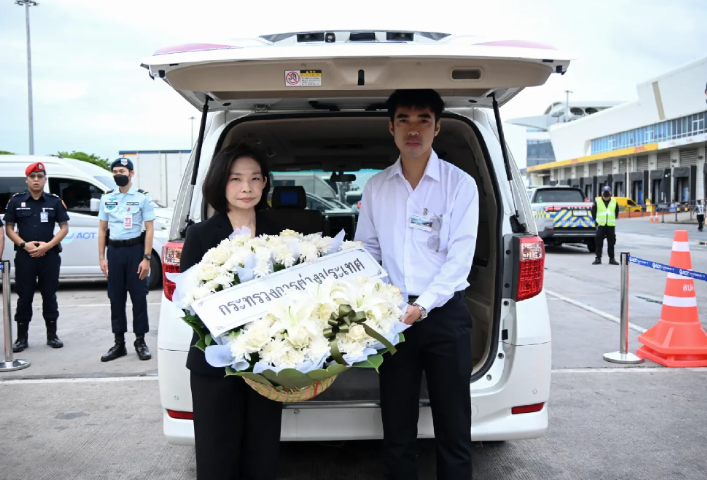
Thailand's Ministry of Foreign Affairs has completed the repatriation of travel content creator Bavorntat Pengsuk, whose online persona 'Hlun Solo' attracted a substantial following across Southeast Asia, following his unexpected death in the Georgian capital Tbilisi on 14 July 2026. The 27-year-old vlogger, who had built a reputation for documenting his journeys across diverse regions, passed away while abroad, prompting immediate diplomatic intervention from Thai authorities to facilitate the return of his remains to his family.
The coordinated repatriation effort underscores the Thai government's commitment to supporting citizens who encounter tragedy while travelling internationally. Deputy Prime Minister and Foreign Minister Sihasak Phuangketkeow designated Prathuangtip Sirivithes, acting director-general of the Department of Consular Affairs, to assume operational responsibility for receiving Bavorntat's remains upon their arrival in Thailand. This high-level appointment reflected the scale of the incident and the need for meticulous handling of the deceased's return home. The Ministry of Foreign Affairs spokesperson Jaithai Upakarnitikaset confirmed these arrangements during a briefing on Thursday, 6 August, providing families of Thai nationals abroad with reassurance regarding official protocols.
Georgian authorities and Thai diplomatic representatives faced initial administrative complications that delayed repatriation procedures. The Royal Thai Embassy in Ankara, which maintains consular jurisdiction over the Caucasus region, maintained sustained engagement with the deceased's family, Georgian officials, and other relevant parties from the moment the incident was reported. Embassy personnel were mobilized and dispatched directly to Tbilisi to accelerate investigations into the circumstances surrounding Bavorntat's death, oversee the intricate repatriation machinery, and address bureaucratic impediments that had emerged during preliminary stages. This proactive diplomatic presence helped cut through potential administrative hurdles and ensured that procedures proceeded without unnecessary delay.
The case highlights both the growing mobility of Thai digital content creators across international borders and the practical challenges families face when tragedy strikes abroad. Young Thais increasingly pursue careers as travel vloggers and content creators, building audiences through documentation of their experiences in unfamiliar locations. However, this globalized work environment also exposes individuals to unforeseen health risks, accidents, and other hazards in countries where they lack established support networks. The circumstances of Bavorntat's death in Georgia remain under investigation, and his family has authorized a comprehensive forensic examination to be conducted in Thailand, which will provide clarity regarding the medical causes and contributing factors.
Once the forensic procedures are completed, Bavorntat's body will be transported to his family's residence in Somdet district, Kalasin province, located in northeastern Thailand. His family has planned traditional religious funeral rites according to Thai Buddhist customs, allowing relatives, friends, and community members to pay their respects and participate in commemorative ceremonies. The arrangement respects local traditions and provides the grieving family with a structured process for mourning and honoring his memory within their cultural and spiritual framework. Somdet district's relatively remote location in the upper Northeast means the funeral will likely attract not only close family but also neighbours and associates who knew Bavorntat during his formative years.
Bavorntat's death represents a sobering reminder of the risks inherent in sustained international travel, particularly for young individuals who may lack comprehensive health insurance, medical history documentation, or emergency support systems in foreign countries. Travel vlogging, while financially rewarding and personally fulfilling for many creators, demands prolonged exposure to unfamiliar environments, irregular routines, variable healthcare access, and potential physiological stressors. The travel content industry in Southeast Asia has expanded dramatically over the past five years, with hundreds of Thai creators generating substantial income through YouTube partnerships, sponsorships, and brand collaborations. Yet the sector lacks standardized safety protocols, wellness guidelines, or crisis management frameworks that might mitigate risks for creators operating independently across multiple jurisdictions.
The repatriation case also reflects broader patterns in Thai-Georgian diplomatic relations and consular service provision. Georgia has become an increasingly popular destination for Southeast Asian travellers seeking relatively affordable accommodation, diverse cultural experiences, and minimal visa restrictions. However, limited bilateral diplomatic infrastructure means that Thai citizens requiring consular assistance in Georgia must often navigate procedures through regional embassy offices. The Ministry of Foreign Affairs' decision to ensure high-level oversight of this repatriation signals recognition that consular cases involving deceased nationals warrant executive-level attention and resource allocation, particularly when administrative delays have already prolonged the family's suffering.
For the broader YouTube and content creation community across Thailand and Southeast Asia, Bavorntat's death introduces uncomfortable questions about duty of care, insurance adequacy, and support systems for independent creators operating internationally. Many travel vloggers work as sole proprietors or under informal arrangements without employment contracts that would provide medical coverage or emergency repatriation insurance. Professional industry associations remain nascent, and content platforms themselves have not established comprehensive welfare protocols for creators engaged in high-risk activities in remote or unfamiliar locations. The tragedy may catalyze discussions among platforms, creators, and industry organizations regarding best practices for mitigating preventable losses.
The Ministry of Foreign Affairs' handling of Bavorntat's repatriation demonstrates procedural competence and diplomatic responsiveness, but the case ultimately underscores the irreplaceable value of advance planning by travelling Thais. Registering with the Thai embassy in the destination country, maintaining current medical records, securing comprehensive international health insurance, and establishing clear communication channels with family members can substantially improve outcomes when emergencies occur abroad. For young creators establishing international careers, these precautions constitute essential professional infrastructure rather than optional formalities.

