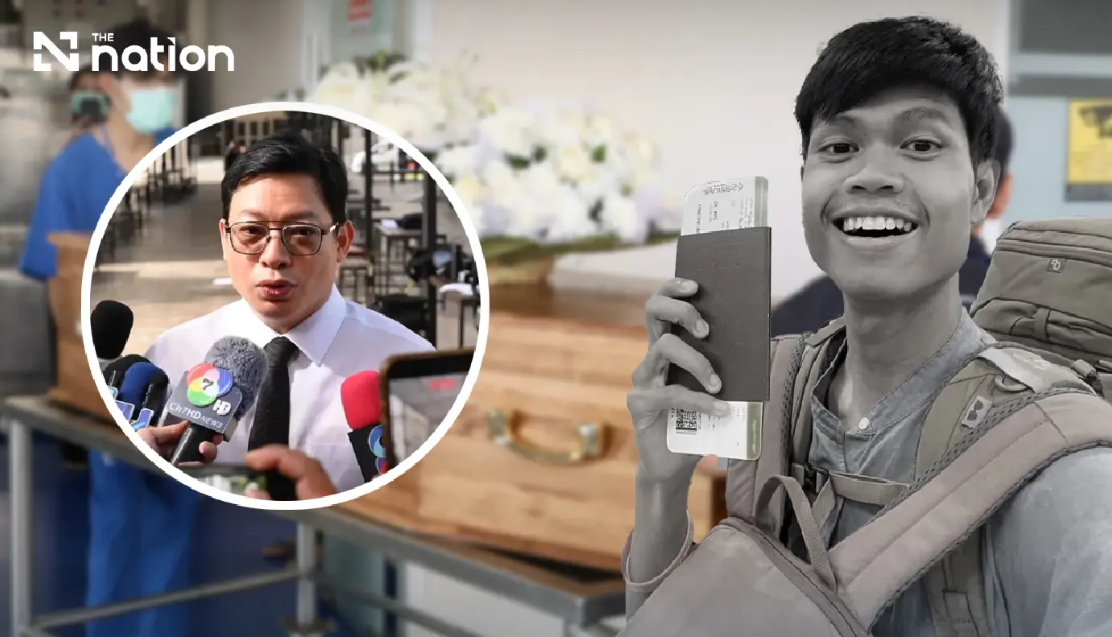
Thai travel content creator Bawornthat "Hlun Solo" Pengsuk died from heart and circulatory system failure according to initial autopsy findings released on Thursday, though forensic investigators have explicitly cautioned that toxins or chemical substances remain under investigation and have not been excluded as contributing factors. Deputy Director Dr Worawee Waiyawut of the Central Institute of Forensic Science, operating under Thailand's Ministry of Justice, disclosed the preliminary conclusion after the vlogger's body was returned from Georgia and subjected to post-mortem examination at the Bangkok facility. The Thai medical assessment came following a family authorisation that permitted the institute to publicly release initial findings, marking a significant step in what has emerged as a complex and ongoing investigative process.
The external examination conducted by Thai forensic specialists detected no signs of physical trauma, bruising, assault, or bone fractures on Pengsuk's remains. Aside from abnormalities in the cardiac system, other organs appeared unremarkable, suggesting that if factors beyond heart failure contributed to his death, they would likely manifest at the cellular or biochemical level rather than through gross anatomical changes. Georgian medical professionals had apparently already completed extensive examinations prior to the body's repatriation, providing preliminary data that informed the Thai team's initial assessment. However, the Georgian death certificate itself contained no specification of the cause of death, leaving significant investigative questions unresolved and creating the circumstances that prompted the family to request Thailand's independent forensic evaluation.
The pathway forward requires sophisticated laboratory analysis that will examine cardiac tissue at the microscopic level and investigate potential genetic predispositions to sudden cardiac events. Investigators must also explore the possibility of Brugada syndrome or other inherited arrhythmia conditions that can trigger unexpected death during sleep—a phenomenon sometimes referred to as sudden unexpected nocturnal death syndrome. Dr Worawee explicitly stated that conclusive determination of whether such conditions contributed to Pengsuk's death cannot occur without these advanced tests, emphasising that the current preliminary findings represent the beginning rather than the conclusion of the forensic investigation. The Ministry of Justice will undertake coordination with Georgian authorities to obtain complete records including their post-mortem examination details and chemical analysis results, a process anticipated to require considerable time given international bureaucratic procedures.
Somsak "Mos" Butsri, Pengsuk's elder brother serving as family spokesperson, explained that the decision to conduct a formal Thai autopsy arose from persistent family questions about the circumstances surrounding the death in Georgia. The family had received minimal substantive information from Georgian authorities—merely a death certificate without explanatory detail—and remained uninformed about the specific purposes for which organ samples and DNA specimens had been retained by Georgian institutions. This informational vacuum prompted the family to engage Thailand's forensic expertise, reflecting broader concerns about transparency and the adequacy of the initial investigation. Somsak indicated that the family harboured particular concerns about possible toxic or chemical involvement in his brother's death, questions that drove their request for comprehensive toxicological screening as part of the Thai examination.
The family's investigative priorities reflect the practical reality that Pengsuk did not consistently discuss his health status with relatives, leaving uncertainty about whether he carried undiagnosed cardiac conditions that might explain sudden death. Somsak acknowledged that initial examinations had revealed no evidence of physical assault or external injury, and he explicitly cautioned against media reports suggesting sudden unexplained nocturnal death syndrome without noting that no official test results had confirmed such speculation. Nevertheless, the family has signalled its determination to pursue justice through available legal mechanisms should evidence emerge indicating that Pengsuk suffered physical assault. The absence of most personal belongings—only his passport was returned with the body—adds to the family's unresolved concerns and their insistence on thorough independent investigation.
For Malaysian and broader Southeast Asian observers, this case illuminates significant gaps in cross-border death investigation procedures and the importance of robust forensic protocols when young citizens die abroad under unclear circumstances. The vlogger's prominence within Thailand's robust content creator community has elevated public attention to these procedural questions, with the family's transparent communication strategy helping to maintain focus on investigative rigour rather than allowing the matter to fade amid bureaucratic processes. The case also underscores how sudden cardiac events can occur in young, apparently healthy individuals, a reality that should prompt broader awareness of cardiac screening among digital content creators and other professionals subjected to irregular schedules and high-stress environments.
The preliminary finding of heart failure as a mechanism of death remains consistent with several possible underlying causes—some natural and potentially undiagnosed, others potentially environmental or toxic. The continued emphasis by forensic authorities and the family alike on toxicological investigation suggests concern that environmental exposure during travels, contaminated substances, or other chemical factors might have triggered or accelerated cardiac failure. This uncertainty has clearly shaped family dynamics and their determination to compare findings from both Georgian and Thai investigations once results become available. The family particularly intends to scrutinise toxicology results from both jurisdictions for discrepancies or complementary findings that might clarify the actual sequence of events.
Somsak indicated that the post-mortem procedure was expected to conclude by Friday, after which the family planned to transport Pengsuk's body to Kalasin Province for traditional funeral rites. The family has deferred decisions regarding cremation until completing initial grief processing and allowing time for relatives to gather. Notably, Pengsuk's elderly grandmother has reportedly maintained composure throughout the process, expressing primary concern that her grandson be brought home to his native province. However, the family remained uncertain how she would psychologically process the reality of viewing her grandson's body, an emotional dimension that contextualises the investigation within the intimate family tragedy underlying these forensic procedures.
The extended timeline for receiving comprehensive test results from both Thai and Georgian institutions means that definitive answers regarding Pengsuk's death may not emerge for several weeks or longer. This protracted investigative period reflects standard forensic practice but also illustrates the challenges families face when seeking clarity about unexpected deaths occurring in foreign jurisdictions with limited direct access to investigation processes. The case has prompted discussion within Thai society about medical screening protocols for content creators and the psychological pressures associated with travel vlogging lifestyles. Somsak's public expressions of gratitude toward those who assisted in repatriating his brother suggest that family support networks and public goodwill have provided crucial emotional scaffolding during this prolonged ordeal, even as forensic science continues methodically pursuing the biological and chemical facts underlying Pengsuk's death.

