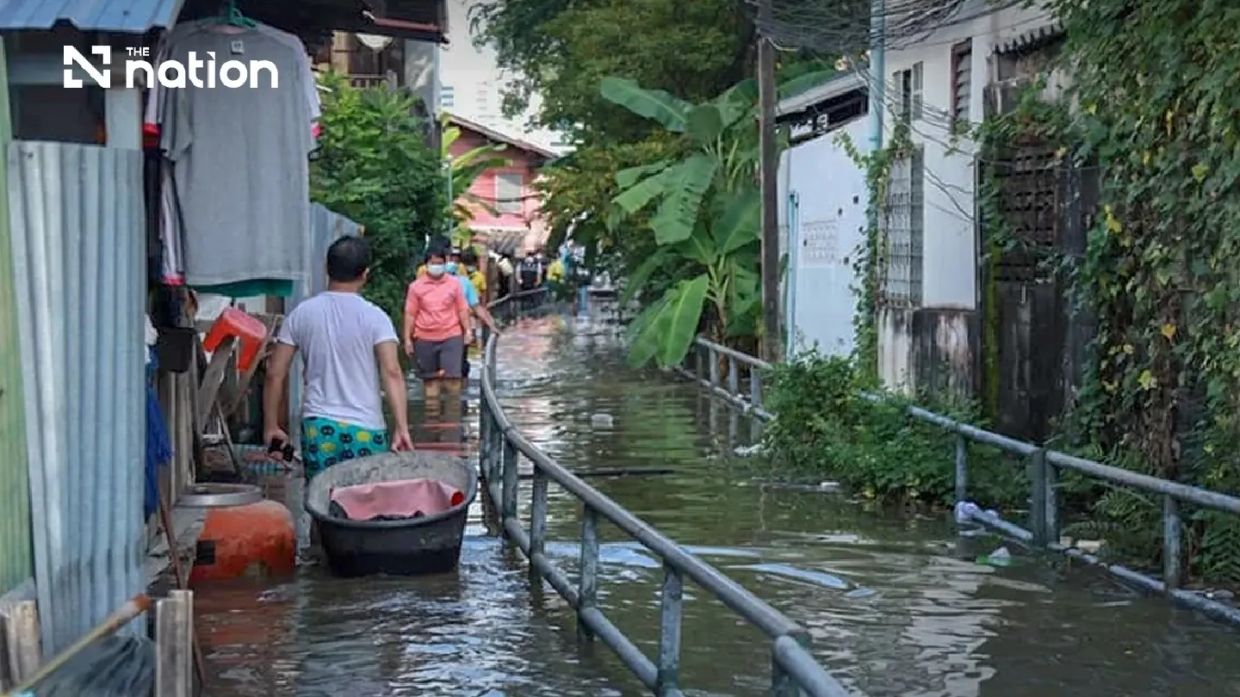
Thailand's Department of Disaster Prevention and Mitigation has mobilised authorities across seven jurisdictions to prepare for an extended period of elevated water levels that threatens to inundate vulnerable communities along the country's central river systems. The alert covers Pathum Thani, Nonthaburi, Nakhon Pathom, Samut Sakhon, Samut Songkhram and Samut Prakan, alongside Bangkok, with warnings set to remain in effect from Monday, July 13 through Sunday, July 19. Officials are particularly concerned about the nightly window between 6pm and 10pm, when sea levels are projected to reach their highest points, creating conditions ripe for significant overflow events.
Theerapat Kachamat, the department's director-general, briefed the public on Saturday, July 11 regarding findings compiled jointly with the Royal Thai Navy's Hydrographic Department. The collaboration between civilian disaster management authorities and military hydrographic specialists underscores the seriousness with which officials view the threat, reflecting Thailand's experience with devastating flood events in recent years. Data from the monitoring stations stationed near Phra Chulachomklao Fort and surrounding observation points along the Chao Phraya River have been analysed to forecast water behaviour throughout the week ahead, providing government agencies with enough lead time to marshal resources and communicate risks to affected populations.
The geographic scope of the warning reflects the interconnected nature of Thailand's central waterway system. In Pathum Thani, authorities have identified Mueang Pathum Thani and Sam Khok districts as particularly vulnerable, while Nonthaburi's Mueang Nonthaburi, Pak Kret and Bang Kruai districts face comparable hazards. Across the Chao Phraya's lower reaches, Nakhon Pathom's Bang Len, Nakhon Chai Si and Sam Phran districts all warrant close observation. Samut Songkhram, situated at the convergence of multiple waterways, faces province-wide risk, whereas Samut Prakan's danger zones concentrate in Mueang Samut Prakan, Phra Samut Chedi, Phra Pradaeng and Bang Bo districts. This distribution illustrates how high-tide events propagate upstream and across interconnected canal networks that characterise the Bangkok metropolitan region's hydrological infrastructure.
The Central Disaster Prevention and Mitigation Command has directed provincial governors to intensify public communications efforts, ensuring that businesses and residents understand both the timing and severity of anticipated water level rises. Communications must target specific populations including those occupying riverside properties, operators of floating restaurants that depend on waterway navigation, construction firms engaged in riverbank protection projects, and communities residing outside formal flood barrier systems. This multi-stakeholder approach recognises that modern Thai flood risk involves not merely residential exposure but also economic interests invested in riverine commerce and tourism infrastructure.
Those living in low-lying areas without permanent flood defences face particularly acute risks during the forecast period. Unlike residents protected by engineered structures or those residing on elevated terrain, these populations depend almost entirely upon timely evacuation and advance warning to minimise property damage and personal injury. Historical patterns show that such communities often lack adequate drainage infrastructure, meaning that high water levels can persist for extended periods once established, creating humanitarian challenges beyond the initial inundation event.
The warning system deployed to reach Malaysian and regional readers covers multiple channels reflecting Thailand's ongoing modernisation of disaster communication. The THAI DISASTER ALERT mobile application provides real-time notifications and detailed hydrological data accessible to any citizen with smartphone access. For those seeking immediate assistance or reporting flood-related emergencies, the LINE-based reporting system using ID @1784DDPM offers rapid contact with authorities, while the continuously staffed 1784 safety hotline ensures that language barriers or technological unfamiliarity do not prevent urgent help-seeking.
Southeast Asian water management specialists recognise that the Chao Phraya system exhibits particular vulnerability during seasonal tidal cycles when freshwater discharge from upstream catchments coincides with elevated ocean water levels. This week's forecast combines spring tide conditions—when gravitational interactions between the Sun, Moon and Earth produce exceptionally high and low tides—with the monsoon season's elevated river flows. The compound effect creates precisely the conditions that have historically triggered significant flooding events across central Thailand, making this week's forecast neither routine nor dismissible.
Malaysian readers familiar with their own river management systems will recognise parallels in Thailand's approach. Both nations grapple with rapid urbanisation in flood-prone delta regions, where development has outpaced drainage infrastructure modernisation. Both rely on multi-agency coordination and early warning dissemination to mitigate disaster impacts. Yet Thailand's centralised command structure through the CDPMC represents a different governance model than Malaysia's federal-state arrangements, offering lessons in rapid province-level mobilisation that some regional observers find instructive.
The imperative for vigilance across the affected zone extends beyond mere information consumption to behavioural preparation. Residents should identify evacuation routes, secure moveable property, maintain emergency supply stocks and establish communication protocols with family members. Business operators along waterways should implement contingency plans, relocate vulnerable inventory and consider temporary service suspension if flood predictions intensify. This advance preparation, multiplied across millions of residents and thousands of businesses, represents the practical implementation of Thailand's disaster management philosophy—that early warning coupled with organised community response can substantially reduce human and economic losses from natural hydrological extremes.

