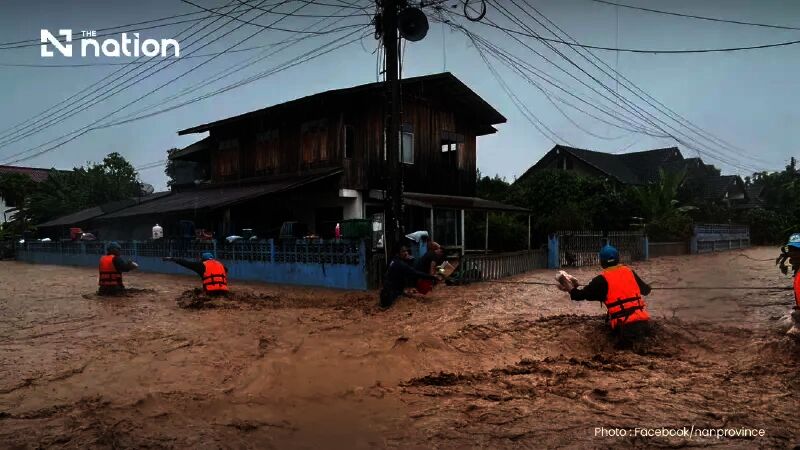
Thailand's government has formally designated Nan province in the north as a disaster zone following intense rainfall and flash flooding that have rendered several roads impassable and necessitated the evacuation of residents from vulnerable areas. The declaration, announced on Wednesday, reflects the escalating severity of weather-related disruptions affecting the kingdom's northern region, a pattern that underscores the recurring challenges posed by monsoon conditions in Southeast Asia.
Prime Minister Anutin Charnvirakul, currently undertaking an official visit to Australia, has directed the national disaster response machinery to mobilise comprehensively across affected areas. Government spokesperson Rachada Dhnadirek conveyed the premier's instructions for all relevant agencies, encompassing military units and civilian authorities, to engage actively in rescue and relief operations. This coordinated approach demonstrates the gravity with which Bangkok is treating the unfolding crisis, even as the prime minister conducts diplomatic engagements overseas.
The government has authorised the deployment of emergency response teams and heavy excavation equipment to zones identified as particularly vulnerable to flooding. These resources will focus on rapid water management, particularly in localities with established patterns of inundation. The strategy reflects lessons learned from previous flood events across Thailand, where delayed drainage compounds damage to infrastructure and homes. Anutin has prioritised the positioning of these assets ahead of incidents, enabling faster intervention when flash floods strike.
Special emphasis has been placed on protecting vulnerable populations within flooded areas. The prime minister's directive explicitly identifies elderly residents, immobilised patients requiring medical care, children, and inhabitants of high-risk zones as populations requiring immediate attention. Concurrent with deployment efforts, authorities have been instructed to conduct rapid assessments of affected communities and maintain close surveillance of rainfall patterns and water-level fluctuations to enable timely public warnings of deteriorating conditions.
The disaster declaration encompasses three provinces, with Nan receiving the most severe classification whilst Phayao and Lamphun have been placed on heightened alert status. This tiered response structure allows for flexible resource allocation across the region, concentrating maximum support where immediate danger is most acute while maintaining readiness in adjacent areas where conditions could rapidly deteriorate. Thai Deputy Prime Minister Yodchayan Wongsawat, responsible for overseeing northern flood mitigation efforts, has issued direct orders to provincial governors in all three affected areas to undertake comprehensive preparedness measures.
Meteorological forecasts issued by Thailand's Meteorological Department anticipate thunderstorms and localised heavy precipitation continuing through the month of August, conditions likely to sustain elevated water levels and perpetuate flooding hazards. The forecasts also warn of strong winds that could exacerbate the situation by disrupting drainage patterns and damaging temporary flood defences. This extended outlook has prompted authorities to extend flood warnings beyond Nan to encompass the broader northern, north-eastern, and central regions of Thailand, with alerts remaining active through Friday.
The hazards identified by meteorologists extend beyond simple inundation. Authorities have specifically warned residents of elevated risks from flash floods occurring in upland areas, sheet runoff flowing across lower-lying terrain, and landslides triggered by soil saturation on steep slopes. These cascading hazards pose particular danger in rural and mountainous districts of the north, where communities may lack rapid evacuation routes and emergency services face geographic constraints in reaching isolated settlements.
The flooding crisis reflects broader climate and hydrological patterns affecting mainland Southeast Asia during the southwest monsoon season. Thailand's northern provinces lie directly in the path of moisture-laden air masses that generate intense rainfall systems, a geographic reality that has produced recurring flood episodes throughout the region's history. Recent years have witnessed intensified precipitation events, prompting Thai authorities to continuously refine disaster response capabilities and early-warning systems.
For Malaysian readers, the Thai flooding situation carries several implications. First, it demonstrates the regional nature of monsoon hazards, as similar weather patterns affect Malaysia's own northern states, particularly Kedah, Perlis, and Kelantan. Second, transboundary water management becomes relevant given that some northern Thai rivers drain into systems shared with Myanmar and Laos. Third, the Thai response mechanisms offer comparative perspective on disaster governance approaches in neighbouring countries. The declaration of disaster zones and mobilisation of military resources represents a comprehensive state response model that contrasts with varying approaches across Southeast Asia, offering potential learning points for regional emergency management practitioners.

