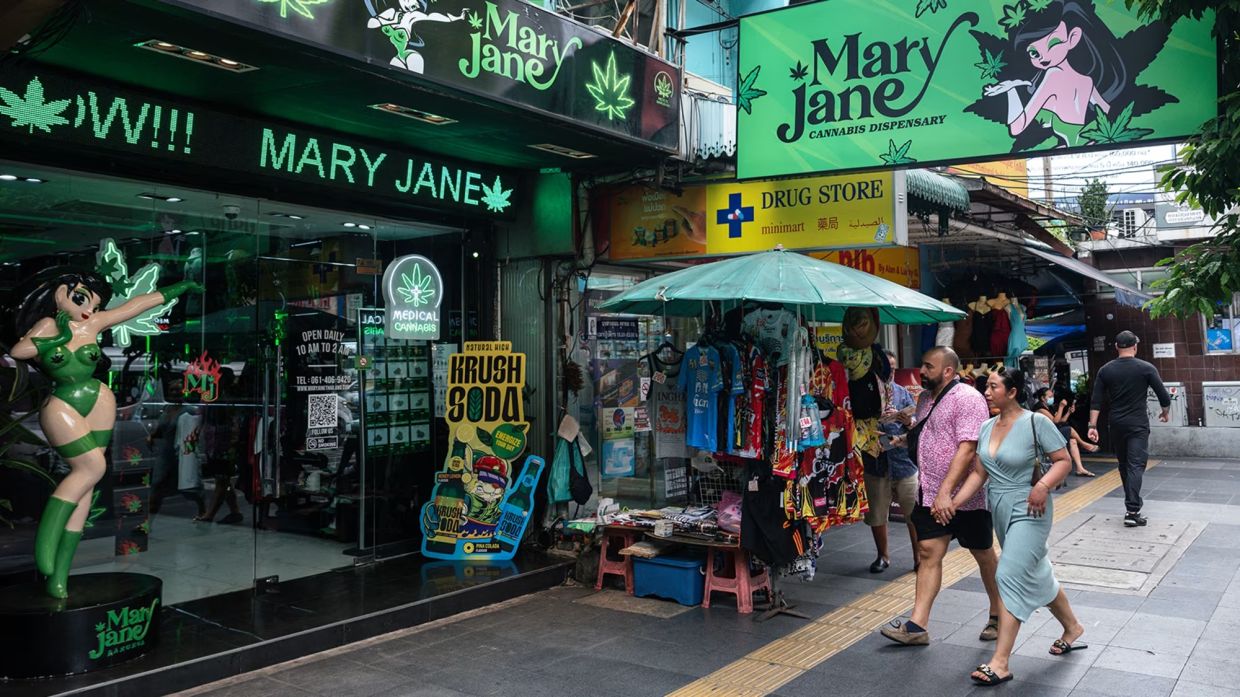
Thailand is facing mounting pressure to overhaul its cannabis regulatory framework as conflicting interests collide over how best to manage the plant since its partial liberalisation three years ago. A significant committee meeting in June has exposed the fundamental tensions between public health authorities, medical professionals, cannabis businesses and farmer advocates—each with sharply differing visions for the country's path forward on a substance that has become increasingly accessible across Thai society.
The House Public Health Committee, led by Sakoltee Phattiyakul, convened stakeholders on June 18 to examine whether cannabis should be reclassified as a controlled narcotic, at least temporarily, pending comprehensive legislation. The discussion brought together officials from the Department of Thai Traditional and Alternative Medicine, the Food and Drug Administration, medical associations, university researchers and civil society organisations focused on drug-related harms. The intensity of the debate underscored how contentious cannabis regulation has become in Thailand, a country that historically maintained strict anti-drug policies but shifted course in June 2022 when cannabis was decriminalised for traditional medicine and research purposes.
The regulatory landscape has grown increasingly complicated since that 2022 liberalisation. Cannabis is currently classified as a controlled herb under the Protection and Promotion of Thai Traditional Medicine Wisdom Act of 1999, overseen by the Department of Thai Traditional and Alternative Medicine. However, cannabis extracts containing more than 0.2 per cent THC remain classified as narcotics. This dual framework has created grey areas that authorities and health professionals argue are being exploited by unscrupulous operators. In June 2025, the Public Health Ministry attempted to impose some order by issuing three regulations governing research, sales, processing and exports in alignment with international standards. Yet observers contend that these measures have proven insufficient to contain the proliferation of unlicensed cultivation and informal sales channels that have emerged across the country.
Medical professionals and public health advocates have emerged as the strongest voice calling for a temporary reclassification of cannabis back onto the narcotics list. Assoc Prof Dr Smith Srisont, representing a coalition of doctors, academics and harm-reduction groups, argues that returning cannabis to narcotics control before a dedicated cannabis law is finalised would be the prudent approach. He points to observable public health impacts already evident in clinical practice, suggesting that the current regulatory vacuum cannot adequately protect vulnerable populations, particularly young people. His coalition questions the original decision to remove cannabis from the Narcotics Code, framing it as a mistake that has created enforcement challenges and facilitated uncontrolled access.
Dr Tewan Thaneerat, deputy director-general of the Department of Thai Traditional and Alternative Medicine, acknowledged persistent concerns since the 2022 liberalisation. The department and its interagency partners—including the FDA, Department of Health Service Support and the Office of the Permanent Secretary for Public Health—have been working on a comprehensive cannabis and hemp bill intended to create a proper legal framework. This draft legislation was submitted to Cabinet under the previous government but never reached Parliament before that administration dissolved. The current Public Health Minister remains committed to advancing the bill. Public hearings on the proposal are expected to conclude by late July, after which the draft will be resubmitted to Cabinet for formal consideration.
Ekkapop Sittiwantana, deputy chairman of the House Public Health Committee from the People's Party, has proposed a pragmatic interim solution: reclassifying cannabis as a narcotic in the short term while the dedicated cannabis law moves through the legislative process. He contends that unregistered cultivation and uncontrolled informal sales have proliferated because existing regulations lack enforcement teeth. His proposal includes a mandatory plant registration system designed to eliminate the loopholes that currently allow grey-market operators to function with minimal scrutiny. This approach would essentially revert to strict controls while Parliament develops a more sophisticated permanent framework.
The FDA presented its current oversight mechanisms to the committee, emphasising that herbal medicines used for disease prevention and treatment remain subject to rigorous supervision. The agency's licensing system addresses three principal categories: production facilities and processing plants, imports, and retail sales through certified shops and approved products. FDA inspections have generally found that most cannabis products meet labelling and raw material standards. However, officials conceded that the most significant problem remains uncontrolled sales channels operating entirely outside the legal system—a shadow market that regulatory licenses and FDA certifications cannot reach. This acknowledgement highlights the fundamental gap between regulatory authority and market reality that has frustrated public health officials.
Cannabis operators and agricultural advocates have mounted a vigorous counterargument, warning that reclassification would devastate legitimate businesses and farmers attempting to comply with existing regulations. The Thai Cannabis Future Network has articulated their position forcefully, arguing that legally authorised operators are being undercut by black market competitors, illegal imports and the persistent legal uncertainty that discourages institutional investment. The network has also raised serious allegations of official misconduct, suggesting that some government personnel are leveraging cannabis licences to extract unofficial payments or benefits from operators. Additionally, they highlight difficulties farmers face in obtaining medical prescriptions required for cultivation, with evidence that such prescriptions are being diverted and traded in non-healthcare contexts—suggesting systemic corruption beyond the operators' control.
The Cannabis Future Network has advocated for a more expansive vision of cannabis regulation that acknowledges the plant's broader cultural, traditional and economic significance beyond pharmaceutical applications. They argue against a framework designed exclusively to serve large-scale investors and multinational interests, calling instead for legislation developed with meaningful public participation and protections for small-scale farmers. This position reflects the genuine tension between Thailand's attempt to modernise its drug policies and the vested interests of communities that have begun investing in cannabis cultivation based on the 2022 liberalisation signals. For many farmers, reclassification would represent a devastating betrayal by the government.
Sakoltee has moved to gather more concrete data to inform the committee's deliberations. He has ordered officials to compile comprehensive registers of all legally licensed cannabis retailers in Bangkok alongside FDA-certified cannabis products. He has also indicated that the committee intends to commission a broader epidemiological survey of cannabis-related harms and affected populations. Notably, Sakoltee emphasised that any future cannabis legislation must include distance requirements between retail outlets and educational institutions—a health protection measure that reflects ongoing concerns about youth access.
The committee has signalled openness to considering multiple legislative proposals, indicating willingness to examine both the Public Health Ministry's cannabis bill and alternative drafts from other government entities. This signals that Thailand's parliamentary process may ultimately produce a more balanced regulatory approach than any single bureaucratic agency would develop independently. The government faces a genuine policy dilemma: maintaining some form of liberalisation that respects the investment and livelihoods of farmers and legitimate operators, while simultaneously protecting public health and preventing the kind of commercialised, youth-oriented cannabis marketing seen in other jurisdictions. How Thailand resolves this tension will likely influence cannabis policy discussions across Southeast Asia, where several countries are similarly reconsidering their drug enforcement approaches.

%22%2F%3E%3C%2Fpattern%3E%3C%2Fdefs%3E%3Crect%20width%3D%22100%25%22%20height%3D%22100%25%22%20fill%3D%22url(%23phf3lfg)%22%2F%3E%3Crect%20width%3D%22100%25%22%20height%3D%22100%25%22%20fill%3D%22url(%23phf3lfp)%22%2F%3E%3Ctext%20x%3D%2250%25%22%20y%3D%2250%25%22%20text-anchor%3D%22middle%22%20dominant-baseline%3D%22central%22%20fill%3D%22rgba(255%2C255%2C255%2C0.95)%22%20font-family%3D%22Georgia%2C%20'Times%20New%20Roman'%2C%20serif%22%20font-weight%3D%22700%22%20font-size%3D%22272%22%20letter-spacing%3D%22-0.02em%22%3EAnwar%3C%2Ftext%3E%3C%2Fsvg%3E)