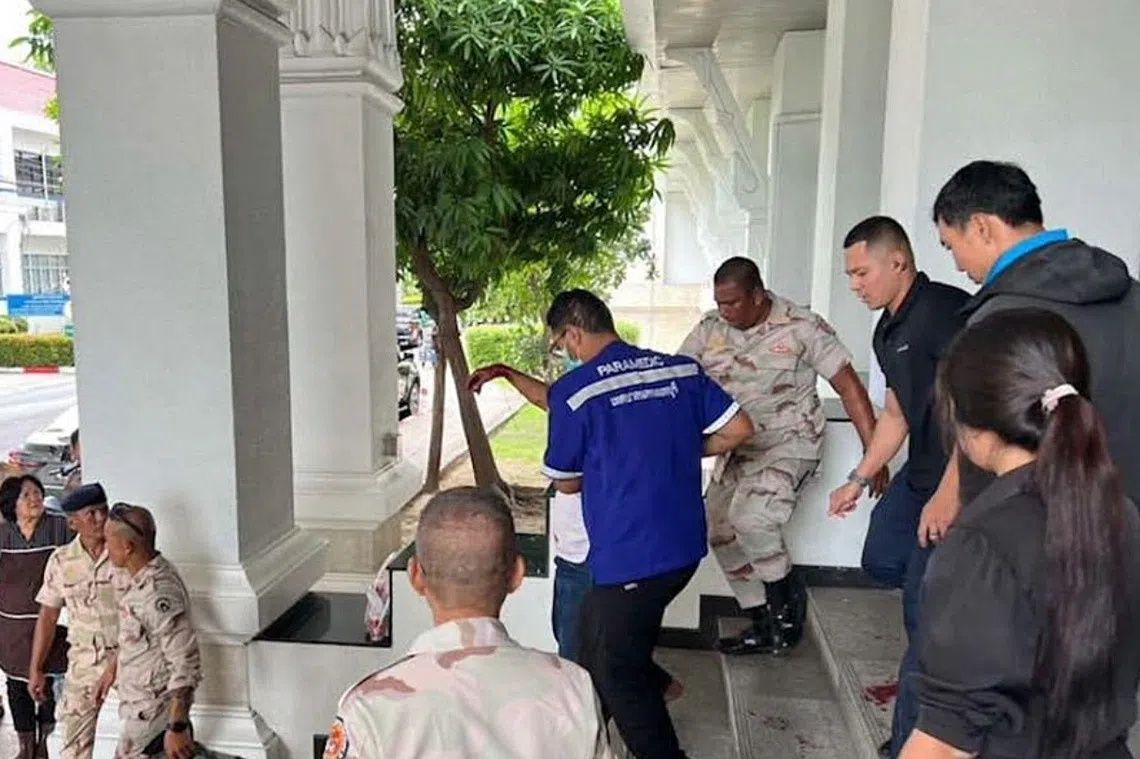
A former lawmaker opened fire at a provincial government office on the outskirts of Bangkok on Monday, leaving two officials wounded and sparking fresh alarm over gun violence in Thailand. The shooting occurred merely days after the nation's deadliest mass shooting in nearly four years, when a teenager killed nine people at a school in the same province. Major General Dejrapee Kongdee, the provincial police commander, confirmed that the suspected gunman had been apprehended following the incident. Both the senior provincial official and his driver were struck during the attack and subsequently hospitalised for treatment, according to police statements.
The timing of this latest incident underscores the severity of Thailand's ongoing struggle with firearm-related violence and the speed with which lethal incidents are recurring. On Friday, a 14-year-old boy shot his grandparents before embarking on a killing spree at Debsirin Nonthaburi School, ultimately taking his own life after the rampage. The school massacre claimed nine lives and left more than twenty others injured, marking Thailand's most catastrophic shooting in the past four years and prompting immediate debate about the nation's firearms regulations.
The incident at the government office has intensified pressure on Thailand's leadership to address the country's gun control framework. Prime Minister Anutin Charnvirakul has reaffirmed his commitment to implementing stricter regulations governing firearm ownership and use, signalling that the government recognises the urgency of the situation. The repeated nature of these attacks within such a compressed timeframe demonstrates that existing safeguards may be insufficient to prevent determined individuals from accessing weapons.
For Malaysian readers, Thailand's struggle with mass shootings carries particular relevance given similarities in Southeast Asian gun ownership patterns and the cross-border nature of security challenges in the region. While Malaysia maintains different licensing requirements and regulations, both nations grapple with balancing legitimate sporting and civilian firearm access against the risks posed by inadequate background checks or enforcement mechanisms. The Thai case illustrates how even countries with established police forces can face difficulties in preventing misuse of legally registered weapons.
The resumption of classes at Thai schools on Monday reflected both the determination to maintain normalcy and heightened security consciousness following the Debsirin Nonthaburi attack. Students and staff encountered enhanced security measures, including metal detectors and additional screening procedures designed to prevent weapons from entering school premises. Such measures represent reactive security approaches, though education experts and policymakers increasingly question whether fortifying schools addresses root causes or merely treats symptoms of a broader societal problem.
The designation of the latest shooter as a former lawmaker introduces an additional troubling dimension to Thailand's gun violence crisis. Individuals with political standing and connections might theoretically possess greater access to weapons or expertise in handling firearms compared to ordinary citizens. This raises questions about whether background investigations adequately screen individuals with previous public service experience or whether such positions might have granted easier access to firearms during their tenure.
Thailand's repeated mass shooting incidents within short intervals have drawn international attention to the country's gun policies and enforcement capacity. The proliferation of weapons among civilians, whether through legal channels or otherwise, creates cascading public safety challenges that extend beyond isolated incidents to affect national security perceptions, tourism, and investor confidence. Southeast Asian nations, including Malaysia, often monitor their regional neighbours' responses to such crises for lessons applicable to their own domestic contexts.
The question of gun control reform now faces practical and political obstacles in Thailand. While Prime Minister Anutin has expressed determination to tighten regulations, implementing new legislation requires legislative support and navigating stakeholder interests spanning sporting organisations, security forces, rural communities dependent on firearms, and gun manufacturers or suppliers. Malaysian policymakers observing this situation may recognise parallel challenges in balancing public safety against entrenched interests resistant to restrictive firearm laws.
The psychological and social dimensions of Thailand's mass shooting pattern warrant examination beyond statistics. Two separate incidents within one week suggest possible contagion effects where increased media attention and public discussion of shooting incidents potentially inspire copycat attacks among vulnerable individuals. Mental health support systems, crisis intervention mechanisms, and threat assessment capabilities therefore constitute critical supplementary measures alongside legislative gun control reforms.
Looking forward, Thailand's response to these consecutive incidents will test the government's capacity for swift policy implementation and inter-agency coordination. Regional security analysts will assess whether the Anutin administration follows through with concrete legislative measures or whether bureaucratic inertia and political compromise dilute initial reform announcements. Malaysia and other ASEAN nations will likely monitor these developments given shared security interests and the possibility of adopting successful interventions or learning from shortcomings in neighbouring countries' approaches.

