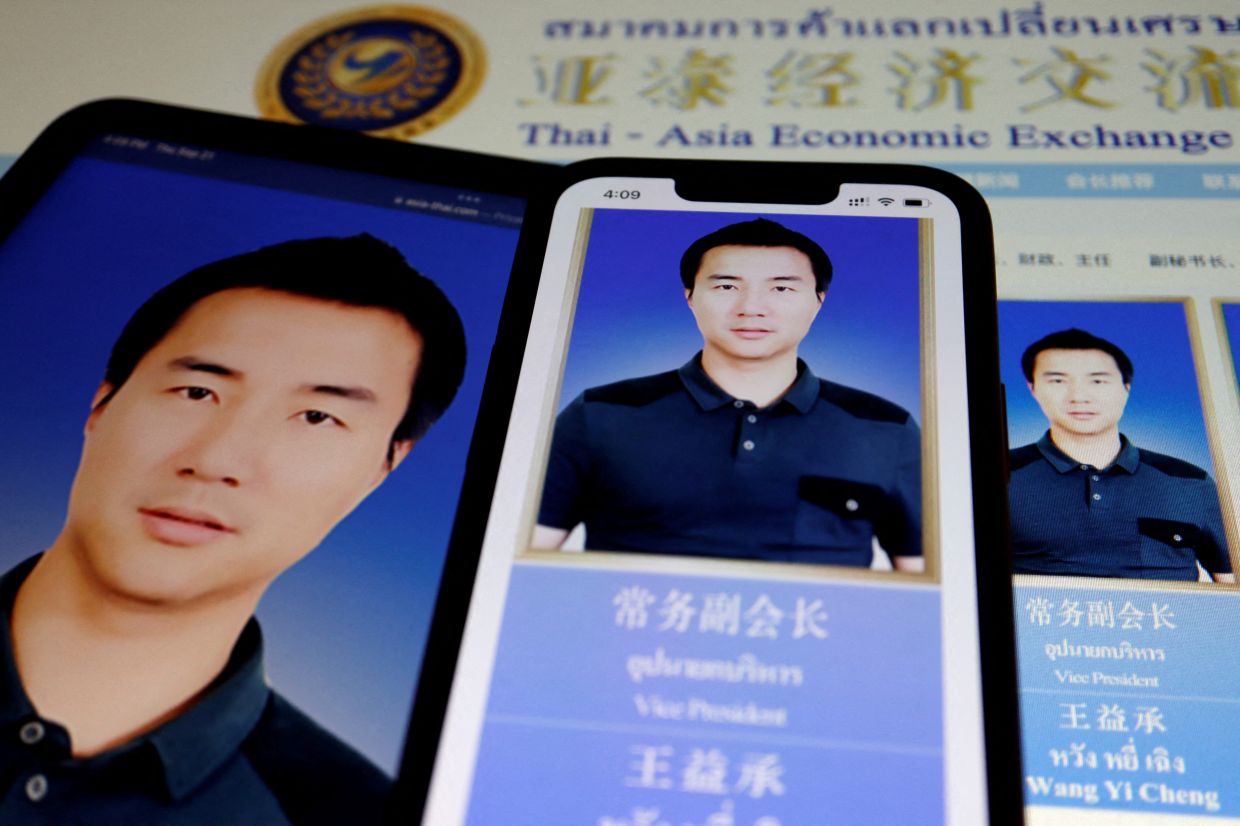
Thai authorities have escalated their pursuit of transnational organised crime by issuing an arrest warrant for Wang Yicheng, a Chinese businessman alleged to be a central figure in a sophisticated money-laundering operation disguised as cryptocurrency mining. The Department of Special Investigation formally charged Wang in November with theft and violations of the Computer Crimes Act, marking a significant step in what investigators describe as one of the largest illegal crypto-mining cases uncovered in the region. Police spokesman Major Woranan Srilam confirmed on Tuesday that Thai officials believe Wang has already departed the country and are coordinating with international law enforcement agencies to apprehend him.
Wang's prominence in the case stems largely from a comprehensive Reuters investigation published in 2023 that exposed his connections to suspicious cryptocurrency flows and his cultivation of relationships with influential Thai political and law enforcement figures. During the period investigated, cryptocurrency wallets bearing Wang's name received at least US$9.1 million between 2021 and 2022 from accounts that blockchain analysis firms, including TRM Labs, directly connected to "pig-butchering" scams. These elaborate confidence schemes trap victims through romantic deceptions online before manipulating them into fraudulent cryptocurrency investments, often resulting in total financial devastation. The investigation traced some of these criminal networks to KK Park, a sprawling industrial complex positioned on the Myanmar-Thailand border that serves as a regional hub for organised crime operations.
The scale of Wang's alleged involvement becomes clearer when examining the electricity theft component of the investigation. The DSI uncovered evidence that the criminal network illicitly consumed approximately US$28 million worth of electricity through clandestine mining operations—a figure that underscores the industrial scope of their enterprise. Thailand and neighbouring Southeast Asian nations have recognised illegal cryptocurrency mining as a critical vulnerability in their financial infrastructure, as organised crime syndicates exploit weak electrical grid oversight to mask their activities while simultaneously laundering vast sums derived from regional scam operations and online gambling rackets. The United Nations has documented that these predominantly Chinese-managed syndicates generate billions of dollars annually, with many facilities staffed partly through human trafficking networks that exploit vulnerable individuals coerced into servitude.
The interconnection between cryptocurrency mining and scam operations reveals a deliberate strategy by transnational criminal organisations to convert illicit proceeds into seemingly legitimate digital assets. According to the DSI's formal assessment, these networks utilise illegal mining infrastructure to simultaneously generate fresh income streams, legitimise stolen funds through the appearance of mining rewards, and sustain broader technology-enabled criminal ecosystems. This multi-purpose approach makes these operations particularly difficult to dismantle through conventional law enforcement methods, as disrupting one component requires identifying and coordinating across multiple jurisdictions and technical domains.
Wang's background provides insight into how criminals embed themselves within legitimate business structures to gain protective legitimacy. He previously served as vice president of the Thai-Asia Economic Exchange Trade Association, an organisation ostensibly dedicated to strengthening commercial ties between Thailand and China, whose leadership cultivated close relationships with senior officials across both nations, including prominent members of Thailand's police establishment. This positioning allowed Wang to operate within circles of influence and potentially utilise official connections to shield his activities from scrutiny. Following the Reuters publication, the trade association moved to distance itself from Wang, announcing his departure from the board and asserting that background checks had revealed no prior criminal history, a claim that appears inconsistent with subsequent law enforcement findings.
US law enforcement agencies have independently identified Wang as a suspect in digital-asset fraud cases, demonstrating that concerns about his activities transcended regional boundaries. In June 2023, American authorities seized approximately US$500,000 in cryptocurrency from an account registered under Wang's name, with investigators tracing the funds to theft victims, including a Massachusetts resident whose savings had been diverted through fraudulent schemes. One documented victim, a 71-year-old California pensioner, lost his entire US$2.7 million life savings after being manipulated by someone posing as a young woman in online communications, a scenario emblematic of the personal devastation inflicted by these transnational operations. The US Department of Justice has declined to elaborate on the case details.
Major bitcoin mining equipment manufacturer Bitmain acknowledged in 2023 that Wang represented a significant commercial customer and strategic partner, insisting that its equipment sales to Wang complied with legal requirements. However, neither Bitmain nor the Thai-Asia Economic Exchange Trade Association has commented on the specific arrest warrant, maintaining silence that may reflect reputational concerns or genuine uncertainty about Wang's current circumstances and the extent of their involvement with his operations. This reluctance to engage publicly contrasts sharply with the organisations' previous willingness to discuss business relationships when questioned during the Reuters investigation.
Thailand's intensified enforcement action against Wang forms part of a broader regional initiative to combat Chinese-managed scam syndicates that have established extensive operational bases throughout Southeast Asia. Neighbouring countries have implemented similar crackdowns, recognising that these criminal enterprises exploit weak governance structures, porous borders, and limited cross-border law enforcement coordination to maintain safe havens. The DSI's recent statement indicates that arrest warrants have been issued for four additional unnamed Chinese nationals and four Myanmar citizens as part of the same investigation, suggesting a networked criminal organisation with multiple layers and distributed leadership.
The pursuit of Wang also highlights a critical vulnerability in how legitimate international business structures can be weaponised by criminals seeking to launder proceeds and cultivate political protection. The apparent proximity between Wang's trade association leadership and senior Thai officials raises uncomfortable questions about due diligence standards and the susceptibility of institutions to infiltration by organised crime actors. Thai authorities have not immediately provided detailed responses regarding the nature and extent of relationships between senior police and government officials with Wang, an omission that may indicate ongoing investigations or institutional reluctance to address potential compromises within official circles.
Whether Wang remains within Thailand, has relocated to another Southeast Asian nation, or has returned to China remains unknown as of the warrant's public announcement. His fugitive status complicates extradition prospects, particularly given the complexity of US-China-Thailand legal cooperation frameworks and the potential involvement of officials who may prefer his disappearance to his prosecution. The case exemplifies how transnational organised crime has evolved to exploit digital technologies and legitimate business facades, creating enforcement challenges that require sustained international cooperation, significant technical expertise, and political will to pursue cases that may implicate powerful domestic actors.

