Thailand's approach to cannabis regulation is entering a more restrictive phase as Public Health Minister Pattana Promphat advances a comprehensive Cannabis and Hemp Control Act designed to confine usage to medical applications exclusively. The legislative push represents a significant tightening of Thailand's stance since cannabis was decriminalised in 2018, shifting from a permissive regulatory environment to one emphasising strict oversight and accountability throughout the supply chain. The draft legislation, which has completed public consultation but awaits parliamentary deliberation, marks a pivotal moment as the government attempts to recalibrate a policy that has spiralled into widespread recreational use and considerable cross-border trafficking concerns.
The new framework addresses critical gaps in existing legislation by extending regulatory authority to the cultivation stage—a void that has allowed uncontrolled production despite downstream sales restrictions. Currently, Thai law relies on the Act on the protection and promotion of herbs supplemented by various ministerial decrees that govern distribution, transfers, and extraction but leave growers essentially unsupervised. This regulatory blind spot has enabled illicit producers to proliferate, fuelling both domestic recreational markets and illegal exports to nations where cannabis remains classified as a controlled narcotic. By bringing cultivation under formal licensing and oversight mechanisms, the government aims to create an traceable system from seed to patient.
A pressing concern driving the legislative urgency involves the international dimension of Thailand's cannabis problem. Although Thailand no longer classifies cannabis as a narcotic domestically, the substance retains that status in most destination countries, creating significant diplomatic and legal complications. Instances of falsified export licenses and smuggling operations have become common enough to warrant enhanced coordination between the Department of Thai Traditional and Alternative Medicine, the Customs Department, and Airports of Thailand. While electronic licensing has introduced an additional verification layer, officials acknowledge that large-scale operations occasionally circumvent detection, highlighting the vulnerability of current enforcement mechanisms.
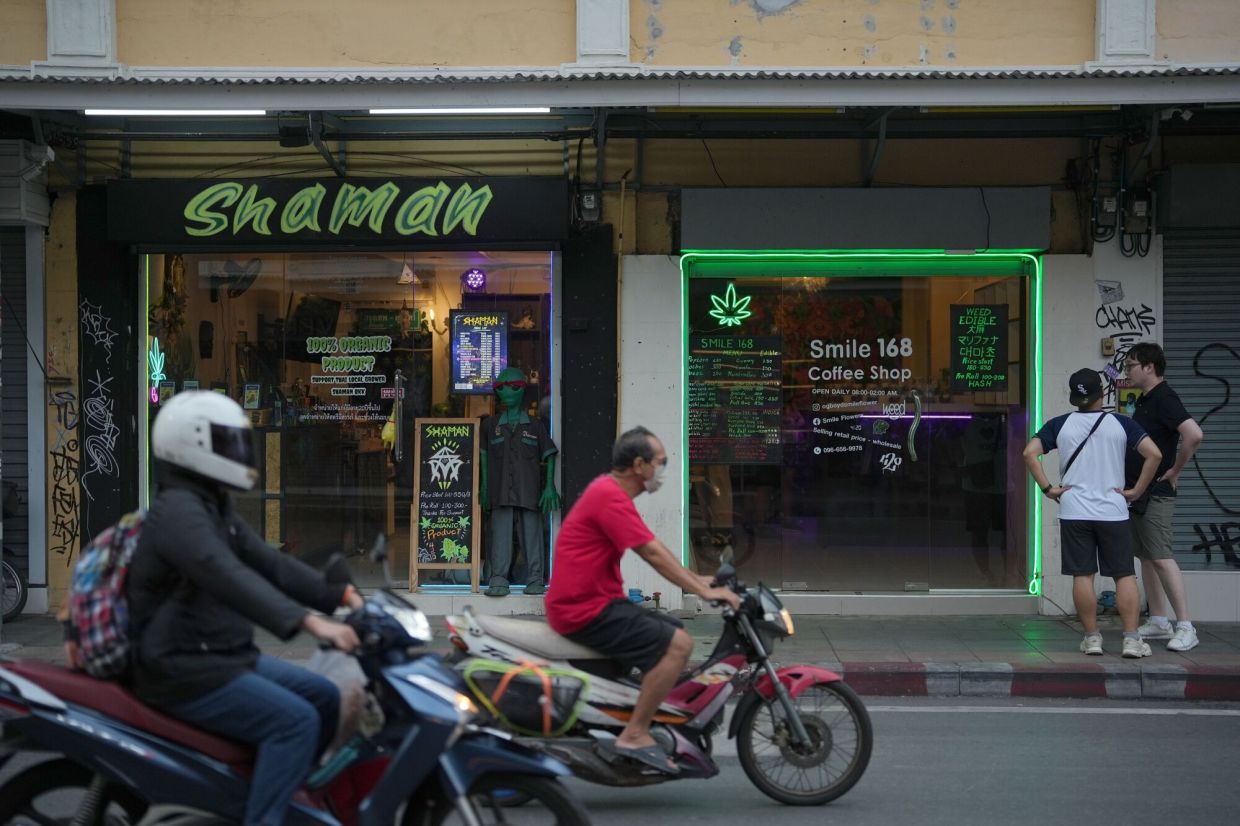
The enforcement challenge extends deeply into the domestic market, where an estimated 18,000 cannabis outlets were operating as of 2023. Of these, approximately 6,000 licences expired at the end of that year, yet fewer than 1,500 outlet operators pursued renewal—a troubling compliance gap suggesting that thousands of illegal retailers continue operations beyond regulatory reach. The licensing structure grants three-year terms, creating cascading expiration cycles with approximately 6,000 additional outlets due for renewal in 2026 and 2027. This staggered system, while theoretically manageable, has created enforcement gaps that illicit operators exploit, proliferating recreational cannabis shops that profit from ambiguous or lapsed regulatory status.
To combat this sprawl, authorities have implemented a GPS-based tracking system that identifies all properly registered outlets on a publicly accessible government website, complete with expiration dates and precise location coordinates. This technological intervention transforms the detection problem fundamentally: any shop not appearing in the official registry is automatically classified as illegally operating and subject to immediate enforcement action. The sophistication of this approach represents a marked departure from traditional compliance monitoring, enabling local authorities and police to verify legitimacy rapidly during routine inspections. By making registration data transparent and verifiable in real time, the system reduces opportunities for operators to claim administrative confusion or good-faith uncertainty about licensing requirements.
The reformed licensing regime imposes additional operational constraints aimed at preventing cannabis outlets from functioning as recreational dispensaries. Licensed retailers must now operate as medical facilities with physicians present to supervise dispensing, fundamentally altering their business model and operational feasibility. This requirement transforms cannabis retailers from retail shops into quasi-clinical settings, significantly increasing compliance costs and reducing profit margins on casual sales. Furthermore, dispensing records must now be monitored for patterns suggesting the same individual receives excessive quantities repeatedly—a control mechanism designed to identify recreational users attempting to circumvent the medical-only restriction. Detection of suspicious dispensing patterns triggers mandatory investigation and potential legal consequences.
The new legislation establishes notably severe penalties for violations, signalling government determination to enforce the medical-only mandate rigorously. These punitive measures apply across all levels of the supply chain, from unlicensed cultivation through illicit retail operations. The severity elevation reflects acknowledgment that existing regulatory frameworks failed to deter widespread violation, necessitating stronger deterrent effects through enhanced criminal sanctions. Pattana emphasised that both the Bhumjaithai Party—the political force that originally championed cannabis decriminalisation—and the broader government have realigned around the medical-only principle, suggesting sustained political consensus regardless of shifting policy priorities.
The government has significantly expanded enforcement capacity to operationalise these new controls, authorising tens of thousands of officers across police, municipal governments, and provincial administrations to conduct inspections and make arrests. This mobilisation represents a substantial commitment of enforcement resources, reflecting the scale of the challenge posed by thousands of illegal outlets and unlicensed producers. The deployment strategy leverages local administrative structures, distributing enforcement responsibilities across decentralised networks rather than concentrating efforts within national police organisations alone. By enabling local authorities to conduct arrests independently, the approach accelerates response times and reduces enforcement bottlenecks that previously allowed illegal operators to evade consequences.
The broader policy context reveals deeper tensions within Thailand's cannabis framework. While Pattana declined to commit definitively to reclassifying cannabis as a narcotic, officials indicated that such a transition would logically fall under narcotics legislation supervised by the Ministry of Justice rather than public health authorities. This jurisdictional consideration suggests that movement toward cannabis recriminalisation remains politically viable but requires coordination across multiple governmental agencies. The possibility that Thailand might reverse course entirely and restore cannabis to full narcotic status underscores how rapidly the policy environment has shifted from the permissive stance that enabled medical cannabis commercialisation initially.
For Malaysian observers, Thailand's regulatory struggles offer instructive lessons about the cascading consequences of rapidly liberalised cannabis policies. Malaysia maintains strict prohibition across medical and recreational domains, but Thailand's experience demonstrates how even explicitly limited frameworks designed for legitimate medical purposes become subject to regulatory capture, illicit expansion, and cross-border trafficking complications. The compliance challenges that plague Thailand's system—proliferation of unlicensed retailers, international smuggling, and difficulty distinguishing medical from recreational consumption—are precisely the complications that informed Malaysia's more cautious approach. As regional dialogue about medicinal cannabis intensifies, Thailand's attempt to recalibrate its framework while containing existing market distortions illustrates the technical and political difficulties inherent in managing liberalised cannabis regimes once they exceed initial regulatory parameters.

