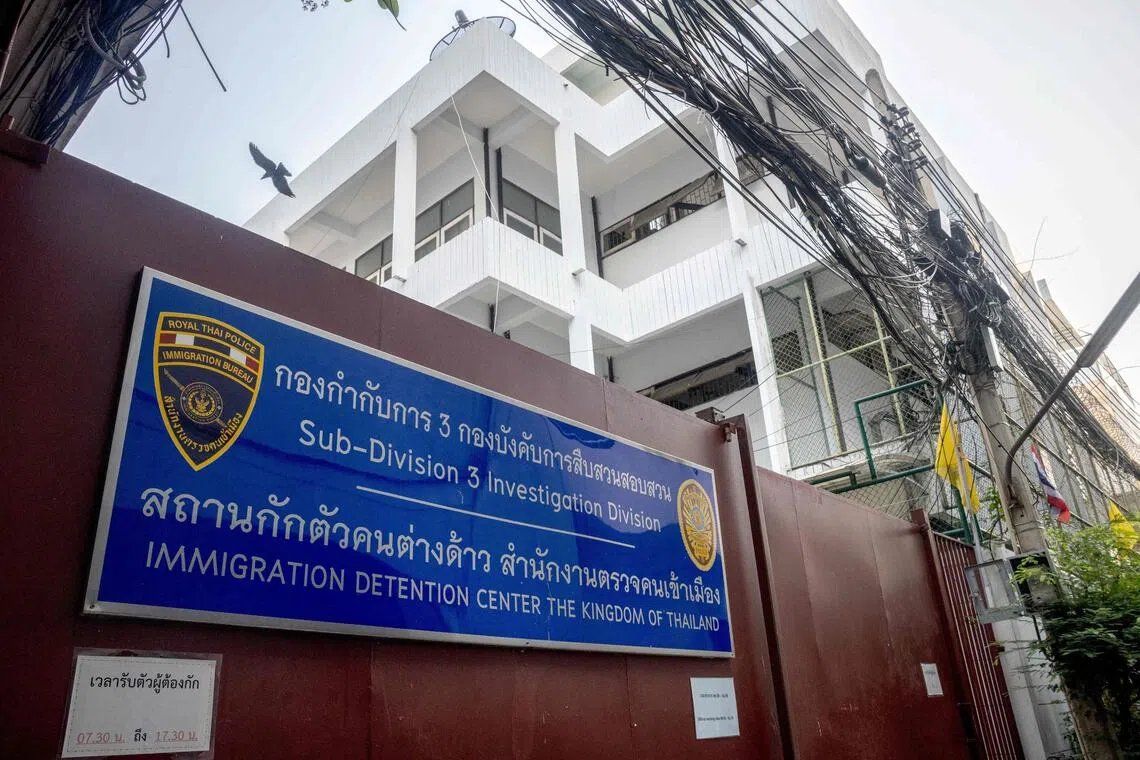
Prime Minister Anutin Charnvirakul has formalised Thailand's approach to managing foreign nationals who breach Thai law through a freshly enacted regulation that took effect on August 28. The Prime Minister's Office Regulation on Deportation B.E. 2569, signed on August 26 and gazetted three days earlier, establishes a comprehensive legal architecture for deporting individuals deemed incompatible with Thailand's legal and social standards. This move reflects Bangkok's effort to balance its traditional hospitality toward international visitors with increasingly assertive enforcement of national security and public order priorities.
The regulation operates from a foundational principle: Thailand remains open to foreigners arriving through proper channels for tourism, residence, employment or business purposes. Yet the preamble acknowledges a persistent challenge—the presence of foreign nationals who circumvent immigration law, undermine social stability or exploit the kingdom's liberal environment for personal enrichment. By creating formalised procedures, the Thai government aims to address this tension with greater efficiency and consistency, allowing authorities to make faster decisions about who can remain and ensuring that deportation orders follow predictable administrative pathways rather than ad-hoc determinations.
Central to the regulation is the elevation of the Interior Minister's authority in deportation matters, with the permanent secretary of the Interior Ministry serving as the primary reporting mechanism. When foreign conduct is assessed as contrary to public order, good morals or welfare—whether as a direct actor, instigator or supporter—the permanent secretary must escalate the case for ministerial consideration. This hierarchical approach concentrates decision-making power but theoretically also creates accountability, as the minister must justify each order by reference to specific legal categories and circumstances.
The regulation identifies six distinct categories triggering potential deportation. Foreigners who have unlawfully entered or remained in Thailand face removal, as do those working without proper permits and individuals operating unregistered businesses in violation of the Foreign Business Act. Document forgery represents another ground, reflecting Thailand's concerns about identity fraud and document trafficking networks. Most significantly, any foreign national completing a prison sentence of at least five years becomes eligible for deportation, as does anyone convicted as a principal offender, instigator or accomplice in the preceding offences. This broad construction captures not merely direct perpetrators but those facilitating or encouraging violations.
For Malaysian and broader Southeast Asian observers, this framework carries particular relevance. Thailand hosts substantial populations of foreign workers, particularly from neighbouring countries, and significant numbers of illegal entrants using Thai soil as transit to third destinations. The streamlined procedures could accelerate removals of individuals engaged in cross-border human trafficking, drug smuggling or organised crime—issues affecting the entire region. Simultaneously, the regulation's emphasis on ministerial discretion and swift processing raises questions about procedural safeguards and judicial review, matters that regional human rights advocates and international organisations may scrutinise.
The regulation imposes specific administrative timelines intended to prevent bureaucratic delay. The Department of Corrections must furnish the Interior Ministry with prisoner information at least fifteen days before release, enabling advance consideration of deportation orders. When courts suspend sentences or impose fines rather than imprisonment, the Office of the Judiciary must immediately notify the permanent secretary, ensuring that lenient outcomes do not inadvertently shelter foreign nationals from removal. These provisions recognise that deportation decisions require coordination across multiple agencies and that delays can undermine enforcement objectives.
Critically, the regulation addresses the humanitarian dimension of deportation through provisions governing destination and international cooperation. Foreign nationals are normally returned to their country of nationality, but where nationality cannot be established, authorities may send the person to their last documented residence before entering Thailand. Recognising practical and safety concerns, the regulation permits other countries or international organisations to request reception of the deportee within seven days of the order, provided they accept financial responsibility and the deportee consents. Such requests can cite risks of torture, cruel treatment, enforced disappearance or other human rights violations—a nod toward Thailand's international human rights commitments.
The thirty-day transfer window, extendable twice for thirty-day periods each, establishes a clock for third-country transfers. Should transfer prove impossible within ninety days of the initial order, standard repatriation procedures activate. This backstop prevents indefinite detention and recognises that third countries may lack capacity or willingness to accept deportees promptly. For states like Malaysia that occasionally receive deportees from neighbouring countries, such provisions clarify obligations and timelines, though capacity constraints remain a regional headache.
Financial responsibility emerges as another significant element. The Interior Ministry will establish deportation cost rules in coordination with the Finance Ministry, determining who pays for transportation, detention and associated services. By clarifying cost allocation, the regulation removes ambiguity that might otherwise encourage inaction or buck-passing between agencies. However, the absence of detailed public guidance on these rules means implementation details remain opaque, potentially creating opportunities for inconsistent application.
Dispute resolution rests entirely with the Interior Minister, whose decisions are final. This extraordinary grant of ministerial power—removing disputes from ordinary judicial or administrative review—concentrates authority but risks denying deportees meaningful recourse to independent adjudication. For regional jurisdictions accustomed to robust administrative law frameworks, this approach represents a distinctive choice reflecting Thailand's legal traditions and security priorities, yet it may generate friction with international expectations regarding due process.
The regulation's timing warrants consideration within Thailand's broader political and security landscape. Prime Minister Anutin leads a coalition government navigating complex domestic challenges, and enhanced deportation powers may reflect both genuine public order concerns and political incentives to project toughness on immigration. For Malaysia and neighbouring states, the regulation signals Thailand's determination to manage foreign populations more assertively, with implications for bilateral cooperation on irregular migration, law enforcement coordination and regional movement patterns.
Ultimately, this regulation exemplifies how Southeast Asian states are progressively tightening mechanisms of state control over foreigners, responding to transnational crime, terrorism concerns and public anxieties about unregulated migration. Thailand's framework, though domestically motivated, will reverberate across the region as deportees move between nations and as neighbouring governments assess their own enforcement approaches. Malaysian authorities monitoring this development will likely weigh Thailand's model against domestic law and practice while considering how regional mobility patterns may shift in response.

