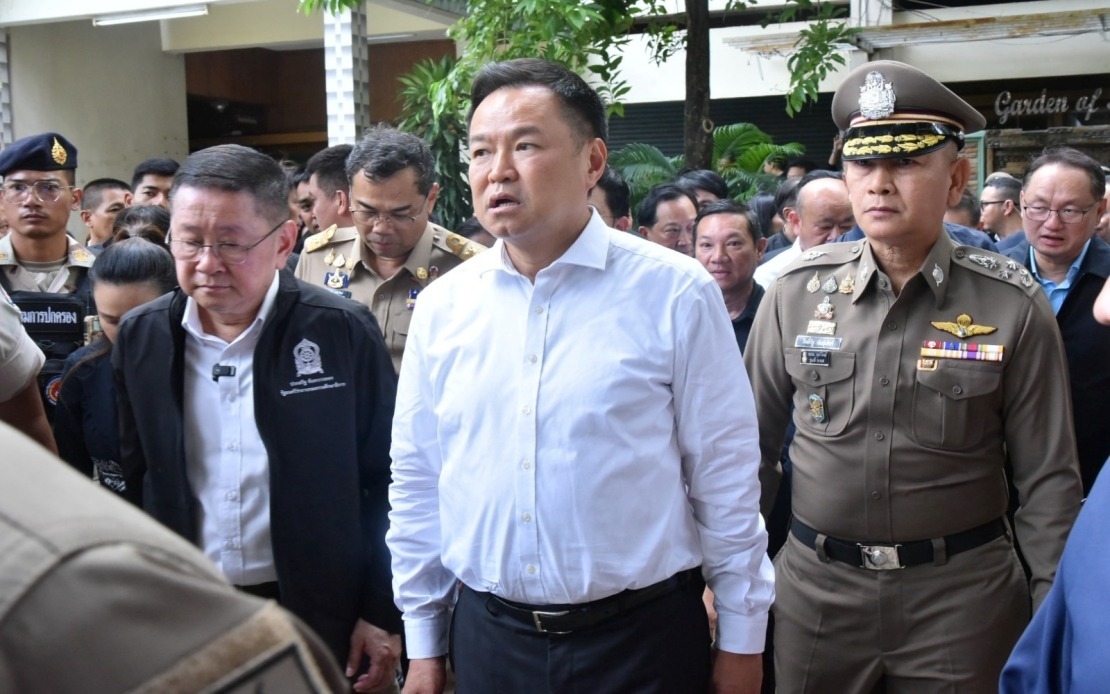
Thai Prime Minister Anutin Charnvirakul has announced his intention to introduce sweeping new firearms regulations in response to a devastating shooting incident at Debsirin Nonthaburi School on Friday that resulted in the deaths of seven people. Speaking to reporters immediately after visiting the school, Anutin, who holds the concurrent position of interior minister, outlined a framework for substantially tightening public access to weapons across Thailand. The tragedy has reignited national conversation about gun violence in a country where civilian firearm ownership has historically been relatively permissive compared to other Southeast Asian nations.
The Prime Minister indicated that the cornerstone of the new legislation would be a significant restriction on the ability of ordinary citizens to possess or carry firearms in public spaces. Under the proposed framework, only government officials performing official duties would retain authorization to carry weapons outside secure facilities. Anutin emphasized that existing laws already prohibit ordinary civilians from carrying guns in public, but acknowledged that enforcement mechanisms have proven inadequate. The new measures will reportedly mandate that police checkpoints conduct systematic searches for unlicensed firearms, with those found in violation facing criminal prosecution. This represents a notable escalation in enforcement posture compared to current practices.
The specifics of how the legislation might address firearm ownership requirements—including licensing procedures, background checks, and storage regulations—remain unclear at this stage. Anutin indicated that detailed discussions with the national police chief would be necessary before formal proposals are drafted and presented to parliament or cabinet committees. The timeline for introducing these measures has not been specified, though the Prime Minister's swift public commitment suggests the government intends to move expeditiously on the matter. The vague nature of current announcements raises questions about whether the reforms will extend beyond carrying restrictions to encompass more fundamental changes to Thailand's existing firearm licensing framework.
The incident that prompted this policy shift involved a 14-year-old student who opened fire at the school at approximately 10 am on Friday. The teenager killed three teachers and three fellow students during the rampage, with twenty-one additional individuals sustaining injuries serious enough to require hospitalization. Eight of the wounded remained in critical condition at the time of reporting. The shooter was subsequently discovered dead at the school premises, though authorities have not publicly disclosed whether this death resulted from police intervention or self-infliction. The precise circumstances surrounding the shooter's acquisition of a firearm remain under investigation.
The tragedy at Debsirin Nonthaburi School represents one of Thailand's deadliest school shooting incidents in recent memory, placing intense pressure on the government to demonstrate decisive action on public safety. In the immediate aftermath, Prime Minister Anutin directed the Education Ministry to develop comprehensive safety protocols designed to reassure parents and restore confidence in the school system's ability to protect students. However, Anutin appeared cautious about implementing measures that might dramatically alter the school environment. He explicitly rejected the notion of installing X-ray screening equipment at school entrances, characterizing such measures as abnormal and unlikely to become routine practice in Thailand's educational institutions.
The incident occurs within a broader regional context where mass shooting incidents have generated increased scrutiny of firearms regulation across Southeast Asia. While countries like Singapore and the Philippines have implemented stringent gun control measures, Thailand's regulations have remained more lenient, reflecting different historical and cultural approaches to civilian weapons ownership. The shooting serves as a stark illustration of how inadequately enforced restrictions can fail to prevent tragedies. Malaysian observers may find particular relevance in Thailand's experience, as Malaysia maintains its own firearms licensing system and has periodically debated the appropriate balance between public access and public safety regarding civilian weapon ownership.
The role of the police in enforcing the anticipated new regulations will prove critical to their effectiveness. Anutin's emphasis on checkpoint searches for unlicensed firearms suggests that the government intends to shift from a reactive to a proactive enforcement model. Police capacity to systematically conduct such searches across Thai territory, however, may present practical challenges. Training, resource allocation, and coordination between national and local law enforcement agencies will determine whether checkpoint measures translate into meaningful reductions in unauthorized firearm possession. The Interior Minister's direct involvement in these deliberations suggests that the security establishment views stricter enforcement as achievable within existing institutional frameworks.
Thailand's political environment may influence the pace and scope of legislative reforms. The country has experienced multiple changes in government and constitutional frameworks in recent decades, which has sometimes complicated the passage of complex legislation. Anutin's ability to drive the proposed measures through the current political structure will depend partly on maintaining sufficient political consensus and avoiding perception that gun control reforms are being weaponized for partisan advantage. International pressure and diplomatic engagement from neighboring countries sharing concerns about firearms trafficking and related security issues may provide additional momentum for reform efforts.
For Malaysia and other Southeast Asian nations, Thailand's experience offers cautionary lessons about the human costs of inadequate firearm regulation and enforcement. While each country maintains distinct legal frameworks reflecting local circumstances, the underlying challenge of balancing legitimate civilian access to firearms with community safety remains universal across the region. Thailand's policy response, once finalized and implemented, may establish precedents that influence how neighboring countries approach similar challenges. The effectiveness of measures ultimately adopted in Thailand will provide evidence regarding which enforcement strategies prove most effective in preventing unauthorized firearm possession and usage.

