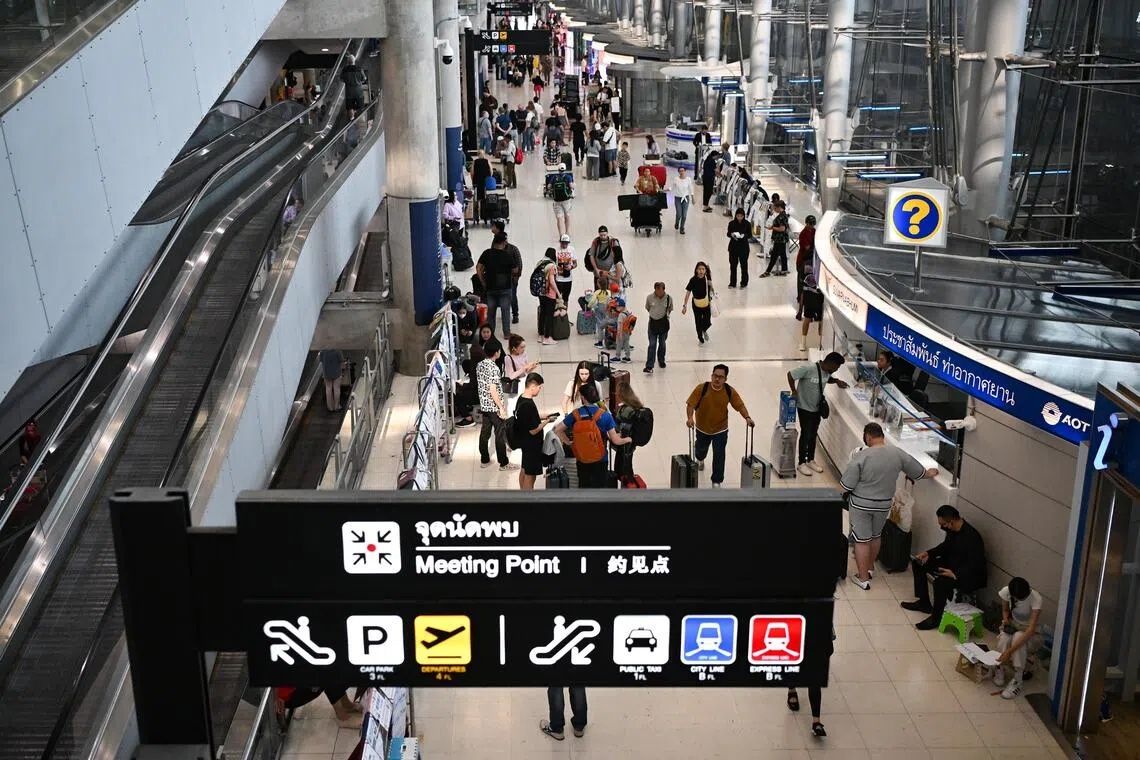
Thailand is moving forward with a significant expansion of its automated immigration system at Suvarnabhumi Airport, aiming to streamline entry procedures for travellers from 31 additional nationalities by the end of August. The initiative, already approved in principle by the Immigration Bureau, represents a substantial upgrade to one of Southeast Asia's busiest aviation hubs and reflects the kingdom's commitment to enhancing its appeal as a tourism destination amid intense regional competition.
Deputy Government Spokesperson Lalida Persvivatana confirmed that the necessary paperwork is in its final stages, with officials working to complete the signing process imminently. The expansion builds on existing automated gate infrastructure and seeks to address mounting pressure at the airport's immigration facilities, which process staggering passenger volumes during peak tourism periods. The facility handles approximately 190,000 passengers each day when tourism is at its height, with roughly 70,000 of these being international arrivals requiring formal immigration clearance.
The congestion challenge is particularly acute during specific windows. Immigration officials have identified that between 1 p.m. and 5 p.m., the airport can see between 5,000 and 6,000 passengers attempting to clear immigration each hour. This bottleneck creates operational strain and poses a risk to Thailand's international competitiveness, especially as competing regional airports continue to modernise their facilities. By allowing automated processing for a broader spectrum of nationalities, Thailand aims to distribute passenger flow more evenly and reduce wait times substantially.
Once fully operational, the expanded system is projected to enable approximately 6.5 million additional passengers annually to utilise the automated gates. This figure excludes roughly 900,000 holders of certain long-term visa categories who will also be eligible for the streamlined process. When combined, these groups would represent approximately 53 percent of all arriving international passengers, according to Persvivatana's assessment. This represents a transformative shift in how Suvarnabhumi manages its immigration workload and could serve as a model for other Thai airports seeking similar upgrades.
The project has attracted high-level political attention, underscoring its importance to Thailand's broader tourism and economic strategy. Deputy Prime Minister and Commerce Minister Suphajee Suthumpun recently visited the airport alongside Tourism and Sports Minister Surasak Phancharoenworakul, Deputy Transport Ministers Siriphong Angkasakulkiat, and officials from relevant agencies. The delegation's focus extended beyond immigration automation to encompass broader infrastructure considerations, examining waiting areas, transit facilities, and long-term capacity planning necessary to sustain Thailand's competitive edge as international visitor numbers continue climbing.
Implementation will occur in stages, with rollout schedules linked to equipment availability, security protocols, and the readiness of biometric systems supporting the automated gates. Persvivatana explained that first-time visitors will still require biometric registration during their initial entry, a security measure that prevents the system from completely eliminating human oversight. This balanced approach ensures that convenience gains do not compromise border security or data protection standards that international visitors have come to expect from modern airports.
The underlying philosophy driving this expansion extends beyond mere queue reduction. Officials explicitly state that the objective encompasses creating a comprehensive positive experience from the moment travellers disembark from their aircraft. By minimising friction at immigration, Thailand hopes to establish favourable first impressions that translate into longer stays, higher spending, and greater likelihood of repeat visits. This strategy recognises that international traveller behaviour is increasingly influenced by overall journey quality rather than destination attributes alone.
Thailand's push for immigration modernisation arrives at an opportune moment in the kingdom's tourism recovery. Between January 1 and July 18 of this year, Thailand attracted 17.36 million international visitors, demonstrating robust demand despite ongoing regional and global uncertainties. This figure suggests Thailand maintains powerful appeal across multiple source markets, but also highlights the infrastructure challenges accompanying such volumes. Suvarnabhumi, as the nation's primary international gateway, bears disproportionate responsibility for managing these visitor flows efficiently.
The automated gate expansion must be understood within the context of broader Southeast Asian airport competition. Neighbouring facilities in Singapore, Malaysia, and Indonesia have invested substantially in similar technologies, and travellers increasingly expect seamless digital immigration experiences. Thailand's expansion of automated services to 31 additional nationalities demonstrates awareness that falling behind technological standards could disadvantage the kingdom's competitive positioning. The move signals that Bangkok recognises modernisation as essential to maintaining its position as a premier regional tourism hub.
For Malaysian travellers specifically, the expansion may have direct relevance depending on whether Malaysian citizens are included among the 31 additional nationalities targeted. Malaysian passport holders represent a significant portion of Suvarnabhumi's passenger base, and inclusion in the automated system would particularly benefit leisure and business travellers who make frequent crossings between the two nations. The expansion also carries implications for Malaysian airports, which may face pressure to implement comparable systems to remain competitive in the region's travel facilitation hierarchy.
Beyond immediate immigration benefits, the airport modernisation initiative reflects Thailand's broader strategy to position itself as a regional leader in travel infrastructure and service quality. Government officials have explicitly acknowledged that capacity expansion alone cannot address future demand, necessitating complementary improvements to waiting facilities, transit areas, and ancillary services. This holistic approach suggests that Thailand views airport excellence as fundamental to its tourism economy and is prepared to invest accordingly.
The timeline targeting completion by end of August provides a reasonable implementation window, suggesting that technical and administrative obstacles have been substantially resolved. Successful execution would demonstrate Thailand's capacity to execute complex cross-agency infrastructure projects efficiently, enhancing investor confidence and potentially influencing future infrastructure planning across other sectors. The project also offers lessons for other Southeast Asian governments wrestling with similar immigration processing challenges at their own major airports.

