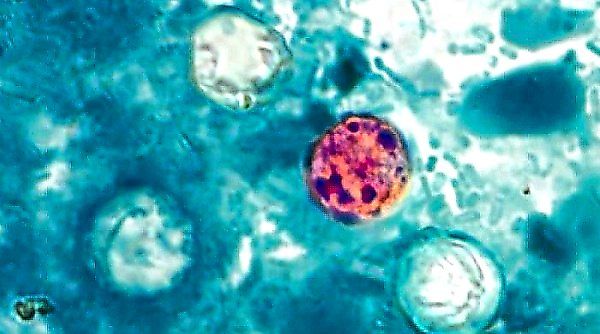
The multistate outbreak of cyclosporiasis affecting thousands across the American Midwest has exposed a critical vulnerability in modern food safety systems: the parasite responsible resists the very detection and tracking methods that health authorities routinely deploy against better-known pathogens. Unlike Salmonella or E. coli, which typically manifest symptoms within days and yield readily to genomic fingerprinting, cyclospora presents investigators with a distinctly asymmetrical challenge that threatens both public health responses and consumer confidence in fresh produce supply chains that extend into Mexico and throughout North America.
The outbreak, which has affected residents across Michigan, Indiana, Kentucky, Ohio and West Virginia, has been tentatively linked to shredded iceberg lettuce supplied to Taco Bell outlets by operations belonging to Taylor Farms in Mexico. However, establishing definitive causation has required an investigative approach harking back to earlier food safety methodology: epidemiologists and laboratory specialists methodically interviewed infected individuals about their dietary patterns, consumption locations, and timing of illness onset. This labour-intensive strategy compensates for the technological limitations that constrain cyclospora investigation, forcing public health agencies to reconstruct outbreak patterns through painstaking interrogation rather than through the molecular diagnostics that now dominate pathogen identification.
The fundamental problem lies in cyclospora's biological nature. As a parasite rather than a bacterium, it cannot be cultivated or propagated within laboratory environments—the essential prerequisite for generating sufficient genetic material to enable comprehensive genome sequencing. Bacterial pathogens like Salmonella produce distinct genetic fingerprints through whole genome sequencing, permitting investigators to match specific outbreak strains with contaminated sources with considerable precision. Cyclospora, by contrast, resists this approach entirely. Scientists attempting to identify the parasite must extract its genetic material directly from environmental or clinical samples, then amplify that material synthetically through polymerase chain reaction techniques. This indirect methodology introduces significant technical hazards, including the false-positive results that confounded the FDA's initial testing of Taylor Farms' products at the US-Mexican border.
The temporal dimension of cyclosporiasis compounds these detection challenges substantially. While most common foodborne pathogens trigger gastrointestinal symptoms within 48 to 72 hours—a timeframe permitting reasonably accurate recall—cyclospora symptoms can require up to 14 days to materialise. By the time infected individuals recognise their illness and seek medical evaluation, their recollection of specific meals, establishments, and consumption dates becomes correspondingly muddled. The affected produce itself may have already cycled through distribution networks and retail shelves, removing the possibility of direct laboratory examination. This temporal lag between consumption and clinical presentation essentially erases the epidemiological trail that investigators depend upon, rendering traditional outbreak investigation techniques substantially less effective than circumstances would otherwise permit.
Former FDA Commissioner Scott Gottlieb has articulated the technological disparity plainly: the agency ordinarily relies upon whole genome sequencing to generate pathogenic fingerprints that definitively connect specific outbreaks to particular agricultural sources. The cyclospora outbreak demonstrates the agency's diminished capacity when confronting an organism that resists this standard analytical framework. The absence of cultivable colonies means the absence of amplified genetic material, which means the absence of comprehensive sequencing data. Investigators operating without these conventional tools must instead depend upon epidemiological detective work—essentially reconstructing the outbreak through accumulated testimonies rather than through molecular certainty.
The Taylor Farms investigation illustrates both the strengths and limitations of this alternative methodology. Testing at the US-Mexican border initially detected cyclospora in the company's lettuce products, yet subsequent quality-control verification determined the initial finding to be erroneous. Despite this technical setback, accumulated outbreak data continued pointing consistently toward shredded lettuce sourced from Taylor Farms' central Mexican operations. The company subsequently initiated a comprehensive recall affecting all iceberg lettuce products from that region. Yet even this decisive action appears incomplete: Taco Bell cases account for approximately 60 percent of multistate cases, according to Gottlieb, indicating that parallel, possibly unrelated outbreaks remain under investigation by the Centers for Disease Control and Prevention. The incomplete picture suggests either contamination within other food distribution channels or multiple independent cyclospora exposures, neither scenario lending itself readily to resolution through current detection capabilities.
The public health response has entered a secondary phase potentially generating unanticipated complications. The CDC recently urged medical practitioners to actively test for cyclospora infection, reasoning that expanded diagnostic screening would ensure affected individuals receive appropriate antibiotic treatment promptly. However, this well-intentioned guidance may inflate apparent case numbers in ways that obscure the true epidemiological trajectory. Craig Hedberg, a food safety specialist at the University of Minnesota, has noted that the publicity surrounding the outbreak has likely motivated substantial numbers of patients displaying mild gastrointestinal symptoms to pursue cyclospora testing—a phenomenon that may create an illusion of expanding outbreak dimensions whilst actually reflecting heightened surveillance and diagnostic activity rather than genuine disease incidence growth.
For Malaysia and Southeast Asian observers, the cyclospora outbreak carries particular significance given the region's role within global fresh produce distribution networks. Mexican agricultural production, particularly of lettuce and other leafy vegetables, supplies markets throughout North America and increasingly penetrates Asian distribution channels. The detection and epidemiological challenges that have complicated the American outbreak response apply with equal force to potential contamination events within Malaysian or regional supply chains. Malaysia's position as a major regional importer of fresh produce, combined with the country's significant restaurant and food service sector, creates vulnerability to similar cyclospora incidents. The outbreak demonstrates that existing detection infrastructure may prove inadequate even within wealthy, technologically sophisticated healthcare systems, suggesting that developing and emerging economies face potentially greater diagnostic and investigative challenges.
The outbreak also underscores the structural limitations embedded within contemporary food safety frameworks. Whole genome sequencing has become the gold standard for pathogen identification precisely because it provides high-resolution genetic information enabling definitive source attribution. Cyclospora's resistance to this methodology exposes a blind spot within modern food safety science—one that cannot be resolved through incremental improvements to existing technologies but rather requires fundamentally different investigative and diagnostic approaches. Until cyclospora cultivation techniques are developed or alternative genetic analysis methodologies emerge, investigators will remain dependent upon time-consuming epidemiological interviews and probabilistic reasoning rather than upon the molecular certainty that contemporary food safety practitioners have come to expect.
The policy implications extend beyond immediate outbreak response into broader food safety governance. The cyclospora incident suggests that regulatory frameworks and resource allocation within food safety agencies may have become overly optimised for the most commonly encountered pathogens, potentially leaving substantial gaps in preparedness for organisms presenting atypical biological characteristics. Establishing detection capabilities for cyclospora and other difficult-to-trace pathogens may require dedicated research funding, training programmes for epidemiological investigation specialists, and modified regulatory protocols that compensate for technological limitations through enhanced epidemiological methodology. For Malaysian food safety authorities, the outbreak serves as a cautionary case study regarding the risks inherent in assuming that advances in molecular diagnostics have comprehensively solved the pathogen detection problem.

