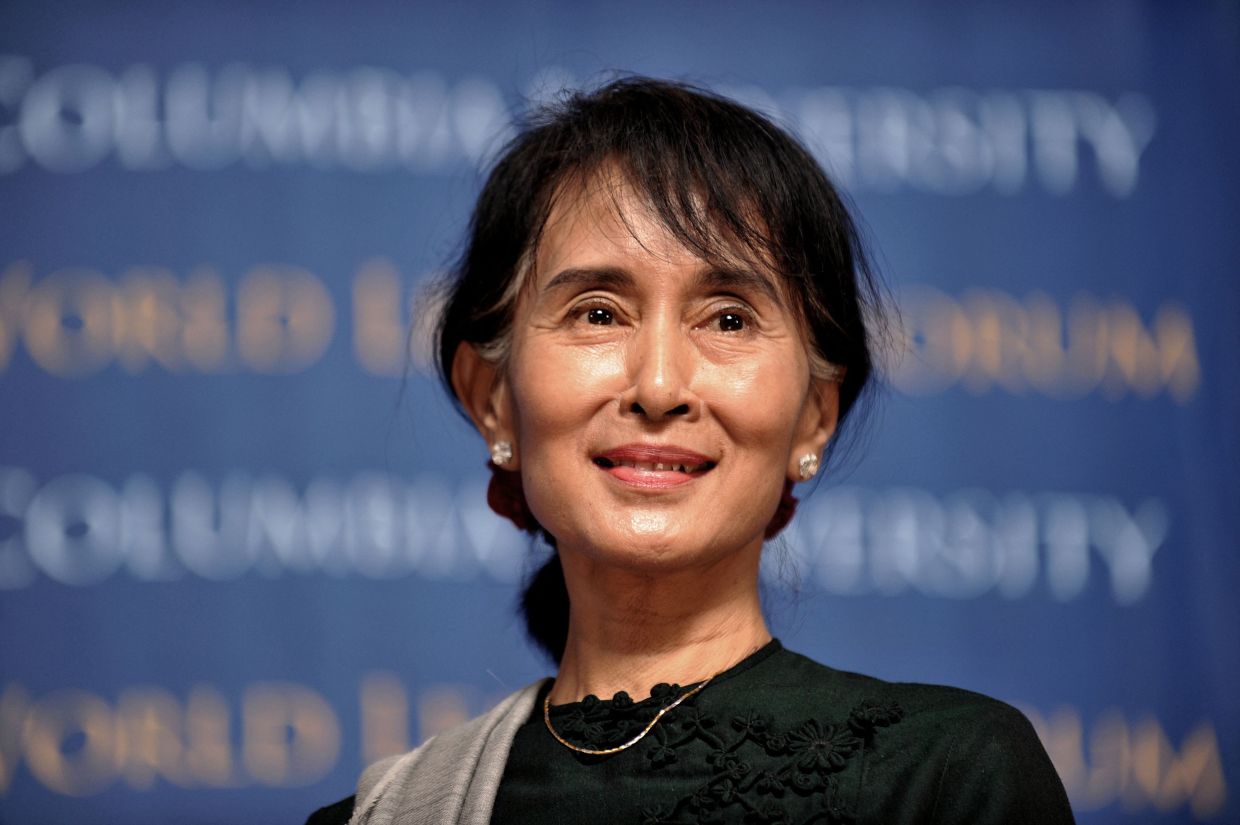
The mystery of Aung San Suu Kyi's imprisonment deepens in Naypyidaw, where Myanmar's deposed democratic leader languishes under house arrest at an undisclosed location within a capital city that appears deliberately designed to obscure such uncomfortable truths. While General Min Aung Hlaing announced her transfer from prison to house confinement last April as an act of clemency—a purported symbol of his transformation from military autocrat to civilian president—observers and even high-ranking officials within the regime acknowledge they have no idea where the 81-year-old former leader is being held. The opacity surrounding Suu Kyi's detention typifies the secretive nature of Naypyidaw itself, a purpose-built capital that urban theorists describe as a architectural monument to paranoia and authoritarian control.
Naypyidaw emerges as the physical embodiment of Myanmar's closed political system. With just over one million residents spread across a territory nine times larger than New York City, the capital resembles a labyrinth of anonymous administrative compounds connected by surreal twenty-lane highways that cut through jungle and agricultural land. When former military ruler Than Shwe designated Naypyidaw as the capital in 2005, replacing the historic port city of Yangon, he chose a location deliberately removed from Myanmar's urban centres and population concentrations. Urban scholars attribute this decision to military leadership's visceral fear of public uprising and foreign interference, anxieties shaped by decades of anti-colonial and pro-democracy movements that had repeatedly challenged their authority.
The physical design of Naypyidaw reveals its true purpose as an instrument of control. Its gilded parliament campus sprawls across eight hundred acres, ranking among the world's largest legislative compounds despite Myanmar's unbroken history of authoritarian governance. Mobile internet jammers routinely scramble navigation applications, rendering even smartphones inadequate for orientation. Security forces maintain constant surveillance across empty streets where gardeners frequently outnumber pedestrians and vehicles combined, their maintenance of manicured lawns along the endless highways creating an eerie, lifeless atmosphere. Architect Galen Pardee, an adjunct professor at Columbia University, characterizes the city itself as "a form of house arrest," fundamentally inverting what traditional urban planning considers essential to human flourishing. The city's entire design reflects an explicit political agenda: to isolate those in power while simultaneously demonstrating their authority through monumental, hollow grandeur.
Even Myanmar's administrative machinery has proven unable to locate Suu Kyi. When police special branch officials from two different jurisdictions were queried about her location, sources from both acknowledged her removal to jurisdictional areas technically off-limits to them. One official stated bluntly this week that "even generals do not have her information," a remarkable admission from within the command structure that controls the nation. A Union Solidarity and Development Party spokesman and parliamentarian, Thein Tun Oo, acknowledged personal ignorance about Suu Kyi's whereabouts, noting that "not everyone can know her location" and confessing "I don't know...because I am one of the people." This casual admission of bureaucratic compartmentalization suggests a deliberate strategy: Suu Kyi's location is restricted to such a narrow circle that even high-ranking party officials participate in a charade of transparency while remaining genuinely uninformed.
Naypyidaw's disorienting physical layout compounds the deliberate secrecy. Young residents of the capital report profound confusion navigating even their own neighbourhoods, with infrastructure so repetitive and anonymous that basic wayfinding becomes an exercise in futility. One 25-year-old resident, speaking on condition of anonymity for security reasons, described the landscape as visually interchangeable, admitting she frequently loses her bearings despite familiarity with certain areas. The same architectural monotony that confuses civilians effectively renders Suu Kyi's detention location virtually impossible for outside observers to identify or confirm. Where Yangon's bustling streets and distinctive landmarks would make extended house arrest immediately visible and vulnerable to public sympathy, Naypyidaw's vastness and sameness absorb such inconvenient truths into an anonymous landscape designed precisely for this purpose.
Suu Kyi's current confinement represents continuity rather than change from her previous imprisonment. Before ascending to power, she spent fifteen years under house arrest in her family's Yangon mansion, which became an iconic pilgrimage site for democracy advocates and contributed significantly to her international stature and 1991 Nobel Peace Prize. Following her electoral victory in 2015, she led a decade-long democratic interregnum before Min Aung Hlaing's February 2021 coup thrust the nation back into outright military dictatorship. She was subsequently imprisoned on charges that international human rights organisations universally characterise as fabricated and politically motivated. Her son, Kim Aris, speaking from London by telephone, rejected the military's characterisation of house arrest as humanitarian reform, arguing that her current location—wherever it may be—functions as "a private prison rather than a residence with home comforts." He noted that the fundamental conditions of her captivity remain unchanged despite the rhetorical shift from incarceration to confinement.
The military regime's presentation of Suu Kyi's house arrest as evidence of liberalisation appears increasingly hollow. Min Aung Hlaing orchestrated elections in January after five years of direct military rule, engineering an overwhelming victory for the pro-military Union Solidarity and Development Party by systematically excluding Suu Kyi's National League for Democracy from participation. The elections, characterised by international observers as severely restricted and devoid of genuine democratic competition, provided cover for his transition to the formal position of civilian president while maintaining substantive military control. This political theatre occurred precisely when Suu Kyi's location was rendered unknowable, allowing the regime to claim humanitarian progress while rendering its most prominent political prisoner invisible to public scrutiny.
The demolition of a villa where Suu Kyi previously resided further underscores the military's determination to erase evidence of her detention. Before assuming office, she was entitled to occupy a government residence within Naypyidaw's secured parliamentary precinct, accessible only through multiple security checkpoints requiring high-level clearance. That facility no longer exists, eliminating even a potential focal point for accountability or international attention. The destruction itself suggests deliberate obfuscation, removing physical landmarks that might anchor public understanding of her situation or facilitate verification of her wellbeing by external observers and human rights monitors.
For regional observers in Southeast Asia, Suu Kyi's hidden captivity illuminates broader patterns of authoritarian resilience in the post-Cold War era. Myanmar's military, having weathered decades of international isolation and sanctions, has demonstrated sophisticated methods of controlling narratives around political imprisonment. The strategic use of Naypyidaw's disorienting architecture combined with compartmentalised bureaucratic secrecy creates a detention system resistant to traditional forms of international pressure or documentation. Democratic nations in Southeast Asia and globally face considerable difficulty maintaining public attention on prisoners held in conditions designed to be invisible. The absence of leaked photographs, visitor accounts, or confirmed sightings allows the regime to define Suu Kyi's status through official pronouncements alone.
Suu Kyi herself has not appeared publicly since her detention, presenting no opportunity for independent verification of her health, mental state, or actual living conditions. The silence surrounding her treatment contrasts sharply with her earlier house arrest in Yangon, when international delegations and journalists could observe the compound's exterior and occasionally gain glimpses of the imprisoned democracy icon. Naypyidaw's design eliminates such possibilities, substituting anonymous compounds in a sprawling landscape where even detailed satellite imagery provides minimal intelligence about internal conditions. The regime controls not merely Suu Kyi's physical location but the very possibility of external observation or verification.
The continued presence of old magazines lauding Suu Kyi within Naypyidaw's parliament building stands as an unintended monument to her absence. These relics of the democratic decade remain on shelves as the Union Solidarity and Development Party consolidates control and celebrates what its spokesmen dismiss as the definitive conclusion of "her era." Yet Suu Kyi's invisible captivity in the nation's secret capital constitutes perhaps the clearest indictment of the military's hollow democratic transition. Where genuine democratic reform would involve Suu Kyi's release and political rehabilitation—or at minimum, transparent legal proceedings conducted before independent courts—her continued imprisonment in an undisclosed location reveals the regime's contempt for the democratic pretence it performs for international audiences.
Myanmr's democratic aspirations remain hostage to the very architecture and administrative structures that the military deliberately constructed to prevent their realisation. Naypyidaw stands as testimony to the proposition that a capital city itself can function as a tool of oppression, its very design subordinating human experience and civic participation to the security obsessions of authoritarian rulers. In this capital of confusion and secret detention, where even generals lack information about the location of the nation's most important political prisoner, the facade of Myanmar's democratic transition reveals itself as theatre performed for international consumption while the substance of authoritarian control intensifies beneath the surface.

