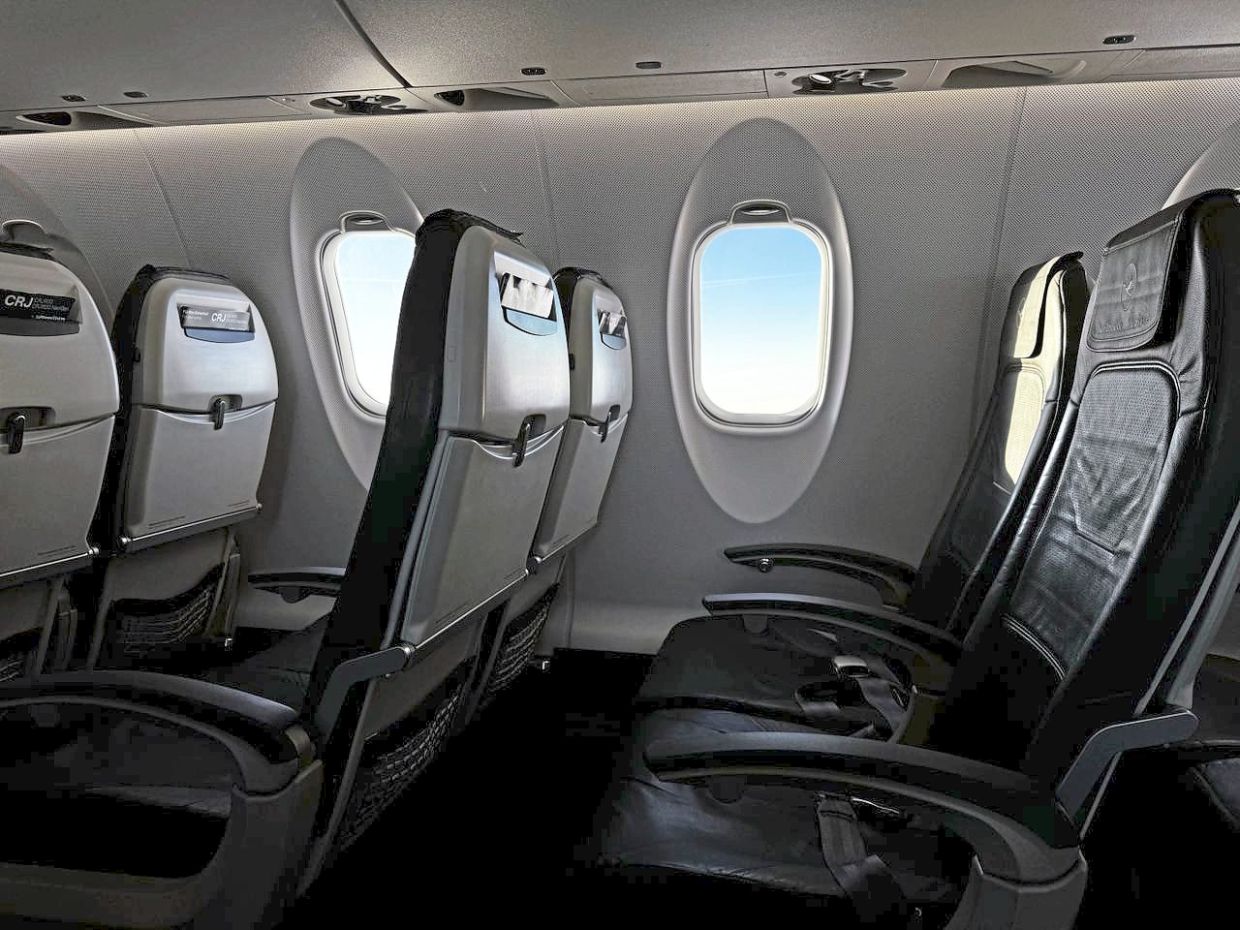
The modern transatlantic journey has become a study in inequality played out at cruising altitude. Two passengers boarding the same aircraft from the same city may inhabit entirely separate worlds by the time they arrive at their destination. One experiences priority security screening, exclusive lounges serving chef-prepared meals and craft cocktails, early boarding, and a lie-flat bed in a private suite. The other navigates standard queues, pays USD16 for a sandwich, and boards last with no guarantee of overhead bin space. This divergence is entirely deliberate, the result of a strategic pivot by America's largest carriers that has redefined air travel economics over the past 15 years.
What was once dismissed as an industry committed to democratising flight has transformed into something fundamentally different. Delta Air Lines, American Airlines, and United Airlines now explicitly organise their operations around extracting maximum revenue from passengers willing to pay substantially more. Delta CEO Ed Bastian articulated this philosophy bluntly: "We can't win by trying to provide the cheapest. We have to be able to win by providing the best." This declaration represents not merely a marketing adjustment but a wholesale restructuring of how these carriers allocate aircraft capacity, design new fleets, and allocate their capital investments.
The strategic shift accelerated following the Covid-19 pandemic, though its roots extend deeper into airline history. A decade ago, Delta pioneered sophisticated pricing algorithms that allowed them to offer first-class upgrades to economy passengers prepared to pay additional fees, rather than restricting these seats primarily to frequent-flyer elites. This innovation revealed substantial latent demand among leisure travellers willing to trade higher fares for noticeably superior comfort and service. When the pandemic temporarily devastated business travel, industry analysts anticipated airlines would revert to competing on price. Instead, they discovered something unexpected: leisure travellers proved equally enthusiastic about premium experiences. This revelation fundamentally altered how airline executives view their business, with premium revenue now a standard fixture of investor presentations and earnings calls.
The economics supporting this strategy have become extraordinarily compelling. What were once considered loss-leader premium cabins designed primarily to maintain brand prestige now represent the industry's highest-margin products. On heavily trafficked transatlantic routes, business-class cabins alone generate nearly equivalent revenue to economy sections occupying substantially more physical space, according to analysis by consulting firm McKinsey & Company. This disproportionate profitability has created powerful incentives to expand premium capacity at the expense of standard seating. Delta's newest aircraft arriving in 2027, the Airbus A350-1000, dedicates nearly half its cabin to premium configurations. American Airlines has committed to expanding premium capacity by 50 percent by decade's end.
The physical manifestations of this stratification have become increasingly theatrical. Delta's contemporary airport lounges resemble upscale restaurants, featuring open kitchens plating sophisticated dishes, made-to-order cocktail bars, soundproof relaxation pods, and observation decks overlooking the tarmac. American partnered with the James Beard Foundation to redesign lounge menus, elevating what was once utilitarian food service into culinary experience. For intercontinental routes, American's redesigned Boeing 787-9 Dreamliners feature business-class compartments with sliding privacy doors, lie-flat seats exceeding standard twin mattress dimensions, and amenity kits curated from celebrity brands. United's newest business-class suites include 27-inch entertainment displays, caviar service, and multi-course dining, with menus explicitly branded around cities within their network.
Yet even as airlines expand premium offerings, they remain acutely aware of pricing sensitivity among higher-income travellers. To broaden the premium market beyond traditional business-class customers, carriers have introduced tiered premium fares offering lower entry prices into premium cabins with reduced amenities. Delta introduced "basic" premium fares requiring passengers to forgo seat selection and lounge access. United implemented comparable stratification earlier this year. These innovations recognise that while some premium cabin customers prioritise full-service experiences, others primarily desire physical comfort and space, creating opportunities to capture price-sensitive segments willing to upgrade from economy.
The industry's emphasis on premium-class profitability also reflects deeper structural changes in airline operations since deregulation. Rather than viewing air transportation as a standardised commodity service, carriers now explicitly segment customers into distinct categories with radically different value propositions. This represents a fundamental philosophical departure from earlier eras when airlines competed primarily on route networks and reliability. Contemporary competition focuses on capturing high-value customers through luxury differentiation while minimising investments in mass-market offerings. United CEO Scott Kirby pushed back against this characterisation, arguing the airline invests across all customer segments through seatback entertainment and mobile app improvements. However, capital allocation data tells a different narrative, with billions channelled toward premium cabin redesigns and lounge expansion.
For Malaysian and broader Southeast Asian readers, this American industry evolution holds important implications. As regional carriers including Malaysia Airlines, AirAsia, and others navigate increasingly competitive international markets, the question of whether to emulate the premium-focused model becomes increasingly urgent. Some regional carriers have already begun introducing premium economy configurations and upgrading business-class products on long-haul routes, suggesting the American strategy holds cross-border appeal. However, the sustainability of ultra-premium positioning depends on sufficient high-income passenger demand to fill increasingly spacious premium cabins without excessive discounting, a calculation that may prove differently in markets with different wealth distributions and leisure travel patterns than the United States.
The expansion of premium air travel also raises broader questions about accessibility and equity in transportation infrastructure. As legacy carriers concentrate capital investment on luxury experiences for affluent passengers, budget-conscious travellers face shrinking standard cabin space, reduced amenities, and less competitive pricing dynamics. This mirrors broader economic trends across developed economies where service quality increasingly stratifies by income level. William McGee of the American Economic Liberties Project offered a wry observation: luxury has become so pervasive on premium carriers that Marie Antoinette would find herself comfortable in first-class cabins, though those in economy might indeed find only economy-class biscuits as consolation.
The sustainability of this premium-focused strategy ultimately depends on continued strong demand from high-income leisure travellers and business-class customers willing to pay substantially elevated fares. Recent macroeconomic pressures including inflation and recessionary concerns may test this assumption, particularly if corporate travel budgets tighten or consumer spending weakens. Additionally, the expansion of premium capacity across the industry may eventually lead to excess supply, creating pressure on premium pricing unless demand grows in tandem with supply increases. The industry's conviction that premium products represent the future revenue driver appears well-founded based on recent performance, yet the dramatic transformation of air travel from a mass-market service to an explicitly tiered luxury business model represents a significant departure from historical industry positioning.
Looking forward, the implications extend beyond individual carriers to reshaping expectations around air travel generally. A generation of passengers may come to expect sharply differentiated experiences based on cabin class, normalising inequality as an inherent feature of commercial aviation rather than an exceptional circumstance. The airlines' gamble that affluent passengers will consistently choose their carriers based on premium amenities and comfort, even when cheaper alternatives exist, will determine whether this strategy proves durable or eventually encounters headwinds from market saturation or economic contraction.

