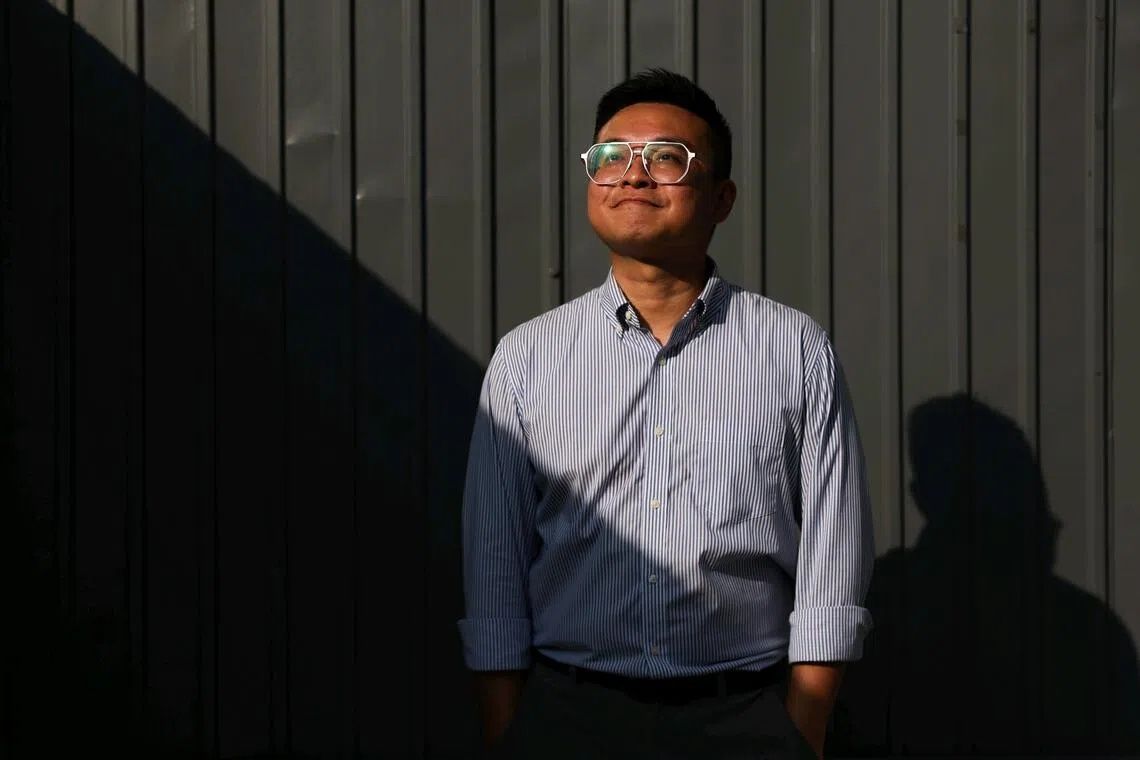
The facade of professional success can mask a desperate struggle with addiction. Cornelyus Tan, a 37-year-old marketing professional, spent years maintaining an outwardly accomplished career while secretly battling methamphetamine dependency. His double life continued until his 2022 arrest led to a six-month detention stint at Changi Prison's Drug Rehabilitation Centre, where he encountered an unexpected cross-section of society—teachers, lawyers, and bankers grappling with the same demons.
The statistics paint a striking picture of a shift in Singapore's drug demographics. The number of inmates with tertiary education or higher qualifications in the DRC climbed to 293 in 2025, a 43 per cent increase from just 204 cases in 2021. These newly admitted inmates with advanced education now represent approximately one in 10 admissions, up from 8.8 per cent four years earlier. Their educational credentials span the full spectrum, from polytechnic diplomas to doctoral degrees, reflecting a fundamental change in who struggles with substance abuse in the island nation.
While officials note that this growth partly reflects Singapore's overall educational advancement—with the proportion of residents aged 25 and above holding tertiary qualifications rising from 42.9 per cent to 54.5 per cent over the past decade—the trend still signals a worrying pattern. The Central Narcotics Bureau acknowledges that tertiary-educated individuals remain statistically under-represented in the DRC population, yet their absolute numbers continue climbing. The conviction of a medical doctor for drug use exemplifies how addiction can penetrate even the most insulated professional circles, sparking public surprise at revelations that challenge conventional wisdom about who becomes vulnerable to drugs.
Counsellors and addiction specialists increasingly emphasise that substance abuse respects no educational or socioeconomic boundary. Gopal Mahey, a senior counsellor at the Centre for Psychotherapy, underscores that addiction is fundamentally democratic, affecting individuals across all walks of life. The emergence of highly educated users reflects both structural changes in the global drug market and the proliferation of synthetic drugs that have become more potent and accessible. The traditional pathway into drug use—through family connections or neighbourhood dealers—has been fundamentally disrupted by technological forces that penetrate every demographic.
Technology has democratised drug access in ways previous generations never experienced. Tham Yuen Han, executive director at We Care Community Services, explains that sophisticated users no longer require personal connections to illicit suppliers. Instead, Telegram channels and other social media platforms deliver drugs directly to consumers, eliminating the friction that once served as a deterrent. For educated professionals with the financial means and digital literacy to navigate these platforms, obtaining substances has never been easier. The algorithm-driven nature of social media simultaneously exposes users to content that glamorises drug use or downplays its dangers, creating a cultural context that normalises experimentation.
Beyond technological access, the psychological mechanisms that drive addiction among educated professionals differ markedly from public perception. Rather than escaping poverty or hopelessness, many well-educated users initially perceive drugs as performance enhancers or stress management tools. Tan describes methamphetamine's initial appeal in terms that reflect productive, aspirational thinking: the drug delivered a "Superman effect," sharpening his creative faculties and sustaining the energy required for demanding professional work. His early career trajectory—including a 2015 news profile lauding him as a promising young photographer—demonstrates how drugs could genuinely appear to facilitate success rather than undermine it. When colleagues commented positively on his work during periods of use, the substance seemed functionally beneficial rather than destructive.
The relapse triggers for educated users often differ from stereotypical addiction narratives. Tan's initial use began at a house party in 2014 while he was still a university student, but his most damaging spiral occurred years later during 2020, when professional stress as a regional marketing manager overwhelmed his earlier attempts at abstinence. The psychological voice urging him to return to methamphetamine framed the drug pragmatically: here was something proven to work, a known solution to unbearable pressure. This rational-seeming calculus, combined with confidence in one's ability to maintain control, makes educated individuals particularly vulnerable to believing they can manage their addiction differently than others.
Samuel Chua, principal counsellor at the Institute of Mental Health's National Addictions Management Service, articulates a crucial insight: educated professionals are not fundamentally different from other addicts in their desire to escape pain. Their education provides no psychological immunity against despair, stress, or social isolation. What it does provide is a more sophisticated capacity for denial and justification. Tham notes that highly qualified individuals often harbour what becomes a dangerous assumption: their professional competence and self-discipline will allow them to control their drug use in ways that less capable people cannot. This cognitive distortion—the belief that intelligence and accomplishment create a protective barrier—often extends the period during which addiction remains hidden and untreated.
The mechanisms of concealment available to educated professionals allow addiction to deepen unchecked. Tan developed a formulaic approach to maintaining appearances: he would cycle between periods of heavy use and weeks of abstinence, timing his withdrawal phases to avoid detection while managing his chemical dependency through controlled patterns. A former junior college teacher, identified only as John, maintained his professional responsibilities throughout several months of methamphetamine use by attributing his increasingly irregular attendance to generic excuses. The cognitive scaffolding that professional life provides—regular employment, structured routines, social status—can paradoxically enable addiction by offering plausible cover stories and legitimate reasons for occasional absences or erratic behaviour.
The intersection of professional identity and addiction creates particular psychological burdens for educated users. Unlike individuals for whom drug use might represent a continuation of existing social dysfunction, educated professionals experience addiction as a shattering contradiction to their self-concept. The internal conflict between the successful professional image and the secret user identity generates shame that discourages help-seeking, even as the addiction intensifies. John's situation illustrates this dynamic: his position as an educator created both the stress that drove relapse and the professional cover that enabled continued use until his reporting officer noticed the pattern of missed classes. The very institutions and relationships that might typically provide support networks instead become repositories for deception.
The factors driving this trend extend beyond individual psychology into the broader social environment. Peer influence within professional circles, social media exposure to drug-glamorising content, and exposure to more permissive drug cultures during overseas education or work experiences all contribute to normalising use among educated cohorts. The CNB has identified these cultural and environmental vectors as significant drivers, alongside the simple reality that drugs themselves have become more sophisticated, more potent, and more efficiently marketed. The educated professional with disposable income, social connections, and the literacy to navigate online markets occupies a particularly vulnerable intersection of access, motivation, and means.
Understanding this demographic shift carries crucial implications for public health and addiction prevention in Singapore and the broader Southeast Asian region. Policymakers and intervention programmes have historically tailored approaches toward lower-income, less-educated populations, assuming that education and economic stability would naturally insulate more privileged groups. This data comprehensively demolishes that assumption. Healthcare providers, workplace wellness programmes, and community organisations must develop more sophisticated approaches that recognise addiction's capacity to penetrate professional environments where secrecy and shame run deepest. The cases of Tan, John, and the hundreds of other educated professionals in Singapore's detention centres suggest that effective intervention requires understanding addiction not as an affliction primarily of the economically disadvantaged, but as a universal human vulnerability that manifests across all educational and professional strata.

