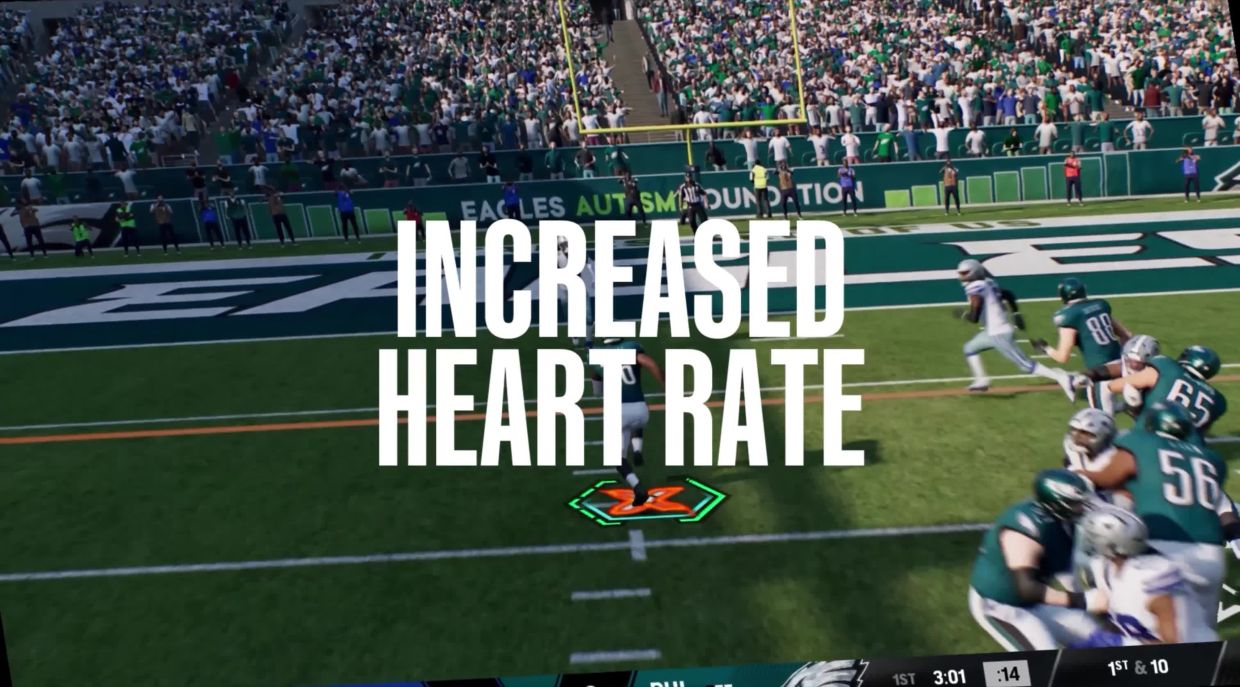
When linebacker Cam Skattebo takes a brutal hit during gameplay in the latest Madden NFL title, his head crashes against the turf in a sequence designed to look lifelike. Yet millions of players experience the same scene without any consequence—a clean recovery. However, those who have downloaded a free community modification will witness something markedly different: blurred vision, heightened light sensitivity, nausea, accelerated heart rate, piercing headaches, breathing difficulty, vertigo, and ringing tinnitus, accompanied by a disorienting shaking screen. This unofficial patch, comprising 9,000 lines of code, deliberately reconstructs what a concussive event might feel like, creating a stark contrast that exposes a troubling gap between the game's commitment to realism and its treatment of brain injuries.
The Madden franchise stands as one of sports entertainment's most successful ventures, with the newest iteration reaching millions of players globally. Yet Electronic Arts, the game's developer, has systematically removed concussions from the simulation—a deliberate choice that occurred without public fanfare or explanation. The company declined to comment on the omission when approached about the modification. This silence reflects a deeper discomfort within the NFL ecosystem regarding how head injuries are portrayed to consumers, particularly young audiences who represent a crucial demographic for both the league and the video game industry.
Chris Borland, the former linebacker who famously walked away from his NFL career after a single season due to mounting concerns about cumulative brain damage, expressed qualified support for the modification's educational intent. However, he pointedly noted the limitations of translating neurological trauma into interactive entertainment. Borland questioned whether a visual simulation could truly capture the lived experience of concussive injury, asking whether the game could authentically portray the relational consequences—irritability straining family bonds, cognitive deterioration, personality changes—that extend far beyond the moment of impact. His skepticism underscores the fundamental challenge of gamifying a medical crisis.
The deletion of concussions from Madden represents a deliberate reversal of earlier design choices. Throughout the 1990s and into the 2010s, the game included ambulances removing injured players and featured animations of players undergoing concussion evaluations, acknowledging brain injury as a legitimate game mechanic worthy of inclusion alongside torn ligaments and muscle strains. This shift away from representation accelerated precisely when public consciousness of the NFL's brain injury scandal reached its peak. The documentary featuring Will Smith, investigative reporting, and the landmark settlement exceeding US$1.5 billion in claims to former players created sustained pressure on the league's image—pressure that extended into its licensing agreements and product partnerships.
Ben Utecht, the former tight end who retired in 2010 specifically to protect his long-term neurological health, articulated the league's unstated logic during interviews about the Madden franchise. The NFL explicitly desires to avoid deterring parental involvement or discouraging youth participation in American football, which supplies the demographic foundation for the professional sport's future profitability and cultural dominance. Removing concussions from the game serves this commercial imperative by preventing young players from confronting the injury's reality during entertainment. Yet Utecht identified the logical inconsistency: if other injuries remain part of the gameplay experience—with players deciding whether to risk ankle injuries or withdraw athletes—then the selective exclusion of concussions sends a uniquely dishonest message about their relative seriousness.
Documentation of NFL oversight during Madden's development reveals negotiations between Electronic Arts and the league's licensing division regarding concussion integration. Former league executives recalled discussions about whether head injuries should appear with realistic frequency and severity, given that in actual football, identical impacts sometimes result in concussions while other times they do not. The league apparently sought accurate representation—a realistic inclusion—yet this objective was ultimately abandoned. Last season alone saw 168 reported concussions across the NFL, a significant jump from 129 the previous year, attributed to rule changes encouraging more kick returns and more dynamic field play. This escalating incidence underscores the very injury the game refuses to depict.
The concussion modification, available only for computer versions of Madden, emerged from the broader modding community that has long enhanced sports and role-playing video games with community-created content. These modifications range from roster updates to character creation tools to, now, injury awareness campaigns. The creators behind the concussion mod explicitly designed their addition to raise awareness among players about what athletes experience following head trauma, hoping that exposure during casual gaming might translate to broader public understanding of neurological risks inherent in American football.
Kristen Thomson Sheely, executive director of the Derek Sheely Foundation, recognized both the cultural penetration of Madden and the potential the modification represents. Her son Derek, a fullback at Frostburg State University, died at age 22 following a catastrophic brain injury sustained during a 2011 practice. According to court documentation, Derek complained of a headache after an initial head impact; when he mentioned this to coaching staff, he was verbally berated and returned to play in a 7-on-7 drill. A subsequent collision resulted in his collapse and permanent loss of consciousness. The family's eventual US$1.2 million settlement required the university to retire Derek's jersey number, 40, permanently displayed on campus as institutional acknowledgment of the tragedy.
The Derek Sheely Foundation's collaboration with the Madden concussion mod represents a deliberate strategy to reach audiences beyond traditional sports medicine and athletic safety circles. Thomson Sheely emphasized the modification's capacity to introduce concussion awareness to people who would never otherwise engage with formal safety resources—individuals playing a beloved entertainment product who might never attend a concussion awareness seminar or research brain injury literature. The mod concludes each game with Derek Sheely's jersey displayed, transforming a recreational gaming experience into a moment of remembrance and awareness.
For Malaysian and Southeast Asian audiences, this situation illustrates broader tensions within the global sports entertainment industry regarding corporate responsibility and health transparency. As American football gradually expands its international presence, including through digital platforms and streaming services, the question of how head injury risks are represented—or concealed—in marketing materials and entertainment products carries implications for emerging markets with less established sports medicine infrastructure. The Madden franchise's deliberate omission of concussions reflects prioritization of commercial interests over public health education, a pattern replicated across industries when profitability conflicts with honest risk disclosure.
The modification's success in gaining traction despite its limited technical availability demonstrates sustained grassroots concern about the gap between what professional football actually entails and what mainstream entertainment portrays. Players installing the mod actively choose a more uncomfortable, realistic experience over the sanitized version, suggesting appetite for authentic representation. Yet the fact that realistic concussion portrayal requires external modification rather than official inclusion underscores the entertainment industry's persistent unwillingness to fully reckon with the physical consequences of the sports it celebrates. Until Madden's developers voluntarily integrate concussions as a standard game mechanic—not as optional realism but as fundamental to authentic simulation—the franchise will remain complicit in the broader cultural minimization of brain injuries that continues endangering athletes worldwide.

