The world's most prestigious fashion houses have embraced a contradiction that would have scandalized designers a generation ago: they are now profiting handsomely from garments that appear damaged, aged and poorly maintained. What once represented carelessness or poverty has been repackaged as desirability, commanding prices that rival impeccably crafted pieces and generating waiting lists that stretch for months. This inversion of traditional luxury signalling reveals something fundamental about how contemporary wealth consumption operates and what aspirational dressing means in an era of unprecedented inequality.
The mechanics of this transformation are worth examining closely. Chanel, the house that built its reputation on precision tailoring and refined simplicity, now offers its iconic 2.55 handbag in deliberately distorted shapes, as though stomped and compromised. Prada presents clothing adorned with deliberate yellowing stains mimicking decades of neglect, while Coach's "Loved Leather" collection features pre-applied scuffs and wear patterns that took artisans hours to engineer convincingly. The popularity proved so overwhelming that Coach has already expanded the line, introducing additional colorways of the same manufactured imperfection. These are not mistakes or factory seconds destined for discount outlets; they are flagship products commanding full luxury pricing.
Understanding why consumers pay premium rates for intentional degradation requires examining the psychology of contemporary status signalling. For much of the twentieth century, luxury operated through visibility: immaculate tailoring, pristine materials and obvious craftsmanship demonstrated one's resources and refinement. In an age where counterfeiters can replicate surfaces convincingly, however, the traditional markers of wealth have become compromised. Ultra-wealthy consumers increasingly seek ways to differentiate themselves from aspirational middle-class buyers who can access convincing fakes. Paradoxically, damage becomes a more credible authenticity marker because it is labor-intensive to fake convincingly and thus costlier to produce at scale.
The fashion houses themselves have recognized an additional advantage: designing intentional imperfection requires the same technical expertise as achieving perfection, yet allows for lower material quality and simpler construction techniques. A pre-distressed leather bag uses less premium tanning process than flawless leather, yet commands equivalent pricing. This margin advantage has proven irresistible to brands facing margin pressures from changing retail dynamics and rising production costs. By reframing damage as desirability, they have essentially freed themselves from the obligation to maintain quality standards while maintaining price points.
Spring and summer collections across major houses showcase how thoroughly this aesthetic has penetrated luxury design. Ralph Lauren pairs intentionally ripped jeans with formal tailoring—waistcoats, blazers and ties—creating a studied contradiction that signals confident disregard for conventional rules about appropriate dressing. Burberry's stonewashed pink denim ensemble layered beneath argyle sweaters epitomizes the "prep-punk" hybrid that appeals to consumers seeking to communicate both establishment credentials and iconoclastic rebellion. Sandro's cropped vest and shorts, enhanced with rustic metal studs and suede trim, explicitly invoke cowgirl aesthetics while maintaining luxury construction and pricing.
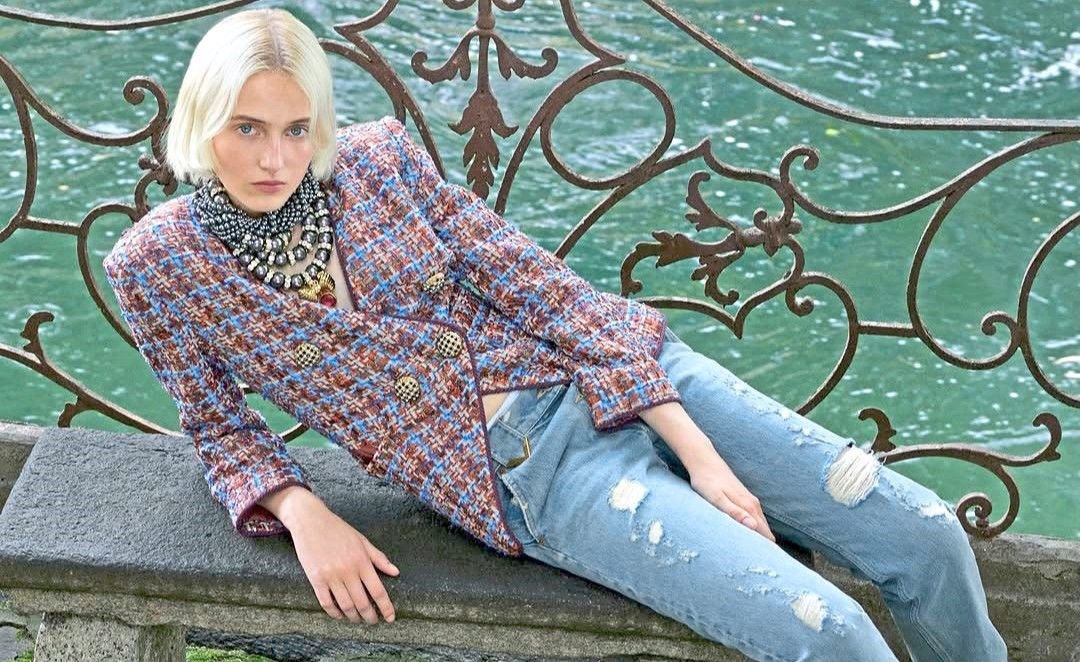
The mud-caked and dirt-splattered pieces emerging from houses like Louis Vuitton and Acne Studios push the aesthetic further into provocation. Louis Vuitton's denim jacket, artfully splattered with earth-toned smudges and sandy particles, suggests the wearer has engaged in adventure and physical exertion—a narrative that appeals to affluent urbanites seeking to escape their sedentary professional lives. Acne Studios layers mud-slick patina jeans with crumpled denim jackets, while Valentino's Cruise 2027 collection pairs shredded jeans with tailored tweed jackets and pearl necklaces, creating jarring contradictions that only work for consumers confident enough to ignore conventional style hierarchies.
For Malaysian and Southeast Asian consumers, this trend carries particular significance. The region's luxury market has historically emphasized visible perfection and pristine condition, reflecting cultural preferences for newness and respect for material goods. Chinese consumers especially have traditionally associated luxury with flawlessness and respect for craftsmanship. This global pivot toward intentional decay represents a fundamental challenge to those aesthetic preferences, yet the trend is spreading rapidly through high-end boutiques across Kuala Lumpur, Bangkok and Singapore. Young affluent professionals in major Southeast Asian cities are increasingly adopting these aesthetics, particularly those educated or working internationally who absorb Western luxury codes.
The environmental implications merit consideration as well. While superficially this trend might seem wasteful—paying premium prices for damaged goods—it actually creates space for consumers to embrace worn garments without shame. The source text notes that consumers can now keep aged pieces without feeling obligated to discard them in favor of pristine replacements. In a region increasingly conscious of consumption's environmental costs, the normalization of weathered and worn clothing could theoretically reduce pressure to constantly replace wardrobes. However, this argument requires skepticism: luxury houses still produce new collections constantly, and this trend is more likely to accelerate consumption by making damage itself a collectible aesthetic rather than genuinely extending garment lifecycles.
The deeper question this trend raises concerns the nature of luxury in an age of mass production and widespread affluence. When visual perfection becomes too easily replicated, luxury brands must find new ways to justify premium pricing. Manufacturing imperfection, while counterintuitive, represents one solution. It requires skilled labor, involves controlled experimentation and ultimately proves difficult to copy at scale without appearing inauthentic. For consumers, purchasing deliberately damaged luxury goods communicates something more subtle than traditional luxury: it signals awareness of fashion's codes, confidence to ignore conventional judgment and membership in a sophisticated cohort that finds amusement in paradox.
What remains uncertain is whether this aesthetic will mature into a permanent feature of luxury design or represents a cyclical provocation destined for inevitable backlash. Fashion history suggests pendulums swing: excessive ornamentation eventually provokes a return to minimalism, and studied chaos eventually triggers demands for renewed order. The current moment's celebration of damage may eventually seem as dated as the deliberately distressed grunge aesthetic of the 1990s. Nevertheless, for now, the world's most prestigious fashion houses have collectively decided that looking worn, torn and dirty—at least when executed with sufficient self-awareness and financial commitment—represents the current pinnacle of style and status.

