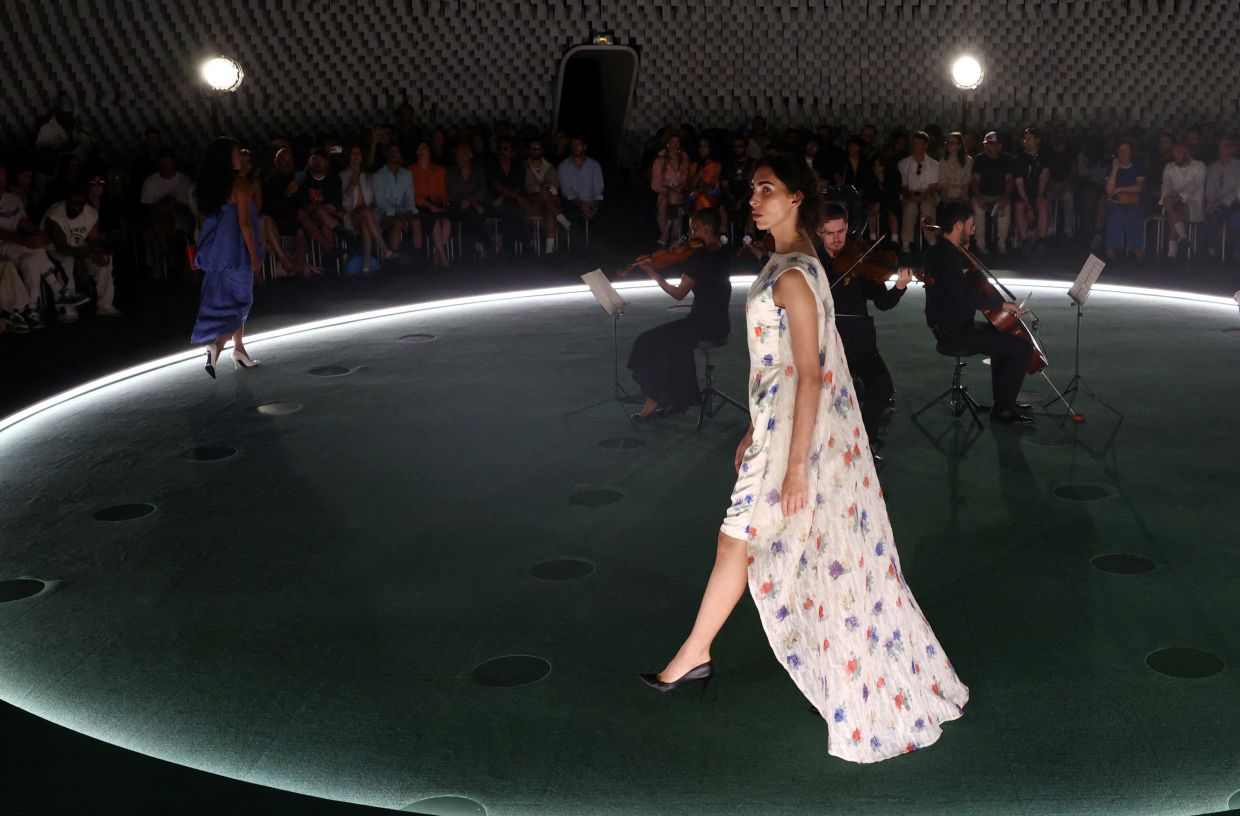
The fashion industry is witnessing a remarkable shift toward sleeveless designs, reflecting broader changes in how people dress for hotter climates and more casual social environments. According to Cognitive Market Research, the global sleeveless market is expected to nearly double in value, expanding from US$24.36 billion (approximately RM99.38 billion) in 2021 to over US$51.39 billion (RM209.65 billion) by 2033. This surge is not merely speculative; fashion platforms are already recording tangible evidence of the trend's acceleration. Alexandra Van Houtte, founder of the fashion search engine Tagwalk, reported observing a 133% increase in sleeveless designs across Spring 2026 collections compared to Spring 2025, suggesting that major fashion houses are betting heavily on this aesthetic.
The drivers behind this transformation are multifaceted. Rising global temperatures have made lighter, less restrictive clothing increasingly practical for daily wear. Simultaneously, the fitness and wellness movement has created a cultural environment where displaying muscular arms has become aspirational rather than taboo. Beyond these practical and lifestyle factors, shifting gender norms have challenged traditional expectations about how women should present themselves physically. Designer Willy Chavarria, who featured extensively sleeveless pieces during Paris Fashion Week, observed that sleeveless designs are now substantially outperforming traditional sleeved garments in terms of consumer interest and retail performance over recent seasons.
The prevalence of sleeveless styles has become inescapable in popular culture. Television news programmes increasingly feature female anchors wearing sleeveless dresses, normalizing the look across mainstream media. This visible shift in professional settings signals that sleevelessness is no longer confined to casual or resort wear, but has become acceptable—even expected—in formal contexts. For many women, however, this trend presents a genuine dilemma rather than a straightforward fashion choice. The question of whether to embrace sleevelessness involves complex psychological and social dimensions that extend far beyond simple aesthetic preference.
The reluctance many women feel toward sleeveless clothing often stems from deeply rooted body image concerns that have been systematically overlooked in contemporary discussions about body positivity. While modern discourse celebrates self-acceptance regarding various physical characteristics, the arms—particularly the upper arms—remain curiously absent from these conversations. This omission is telling, as arms function as a biological marker of age in ways that modern medicine and cosmetic procedures have difficulty addressing. Even as face treatments and procedures have become increasingly sophisticated, the delicate skin around the triceps, the subtle accumulation of fat beneath the armpit, and the gradual lengthening of ligaments and muscles as we age resist easy intervention.
The relationship between arm exposure and aging anxiety carries particular weight for women, though this concern is rarely discussed openly. Beyond the visible signs of aging, arms communicate a narrative about a person's physical capabilities and life history. Yet for decades, women displaying visibly developed arm muscles faced social censure for appearing unfeminine or overly masculine. This gendered criticism created a paradoxical situation where developing strength—through exercise or labor—became something to conceal rather than celebrate. The conversation became further complicated when Michelle Obama's preference for sleeveless dresses sparked a remarkably intense public debate characterized by racial undertones, with critics questioning whether such choices were professionally appropriate or genuinely empowering statements.
Institutional barriers have reinforced women's hesitation to bare their arms in professional contexts. Only in 2017 did the United States House of Representatives modify its dress code policies following sustained pressure from female congresswomen who challenged rules that effectively prohibited sleeveless attire. The Senate took an additional two years to implement similar changes, illustrating how recently these restrictions remained in place. These formal restrictions reflected and reinforced broader cultural messaging that presented covered arms as more professionally appropriate and authoritative. The lingering effects of these policies continue to influence how women approach wardrobe decisions, even as explicit rules have been removed.
Designers and fashion industry leaders are increasingly advocating for a reframing of how women approach their bodies and aging. Antonin Tron, designer for Balmain, directly challenges the cultural narrative that female sexuality or desirability diminishes with age, arguing instead that aging bodies possess their own beauty and authority. This perspective offers permission for women to reconsider their relationship with sleevelessness not as capitulation to trend pressure, but as an act of acceptance and self-expression. Rather than dismissing those uncomfortable with sleeveless styles as simply resisting fashion, the conversation becomes one about finding pathways toward personal comfort while gradually expanding one's boundaries.
For women uncertain about adopting sleeveless styles, Tron and other designers recommend several practical strategies that maintain control over one's presentation while experimenting with the trend. The fundamental principle involves strategic visual redirection: wearing a sleeveless top paired with eye-catching jewelry—whether statement necklaces, bangles, or elaborate earrings—draws attention toward elements the wearer finds more confident. This approach acknowledges that fashion is ultimately about composition and emphasis rather than displaying everything equally. Alternatively, transitional styles offer middle-ground options that provide some arm coverage while maintaining the visual lightness of sleeveless designs; cold-shoulder cuts and open-armed variations allow for partial exposure.
Cap sleeves represent another accessible entry point for those hesitant about full sleevelessness, providing minimal coverage that nevertheless shifts the overall visual impression. Designer Willy Chavarria has suggested layering strategies using sheer or transparent materials over sleeveless pieces, creating visual filters that provide both coverage and the aesthetic benefits of sleeveless silhouettes. Beyond style considerations, the technical construction of armholes significantly impacts comfort and confidence; strategically cut armholes positioned high under the arm but not tight-fitting prevent unflattering gaps and unwanted material bunching that can exacerbate self-consciousness.
Ultimately, the resistance women feel toward sleeveless clothing reflects broader anxieties about visibility, aging, and bodily autonomy that deserve acknowledgment rather than dismissal. However, reframing arms through the lens of what they accomplish rather than how they appear offers genuine psychological relief. Human arms represent accumulated capacity—delivering presentations, lifting children and belongings, typing communications, embracing loved ones, and managing financial responsibilities. This functional narrative transforms arms from objects of aesthetic judgment into evidence of lived capability and contribution. By consciously shifting perspective toward what arms have accomplished rather than how they look, women may discover that sleevelessness becomes less about conforming to trend pressure and more about genuine self-recognition.

