A Malaysian doctor working in northwest England discovered something unexpected during a busy day at the hospital. Exhausted from a full clinic schedule and unable to eat past mid-afternoon, she mentioned her hunger to a colleague. Though the secretary had no substantial food available, she offered a mandarin orange and, when the doctor hesitated, immediately volunteered to peel it. This seemingly small gesture transported her mind across continents and decades, unlocking a profound realisation about how humanity communicates affection.
For Malaysians, the connection between food and emotional expression runs deep through the fabric of family life and social relationships. Growing up in Malaysia, the author experienced this tradition intimately through multiple generations. Her paternal grandmother maintained a cherished ritual of preparing sliced, salted green apples after meals—a practice her mother continues today. Her late father would meticulously crack open crabs and extract the tender meat, a skill he performed so consistently that his daughter never felt compelled to learn it herself. These were not mere feeding moments but deliberate acts of devotion, each gesture a silent declaration of familial love.
The practice extended into childhood habits that reflected the cultural philosophy of care through nourishment. An unusual childhood preference for reading during meals prompted her grandmother to hand-feed her throughout her teenage years, ensuring she would not choke while absorbed in storybooks. This patient, sustained gesture exemplifies how Malaysian families embed care into the most routine activities. Even small consumer choices became expressions of affection—her mother consistently purchased blue-packet Hup Seng Teddy biscuits despite occasional disagreements over crisp flavours, always remembering them during homecomings after the author moved abroad.
Festive seasons in Malaysia become particularly rich occasions for communicating care through food preparation and sharing. Deepavali celebrations prompted her aunt to deliberately add extra potatoes to the traditional chicken curry, knowing these would be consumed while chicken remained untouched. This knowledge, accumulated through years of observation and love, transformed a standard dish into something personal and deeply affirming. Simultaneously, her mother's Malay colleague from school would arrive each year bearing a chocolate moist cake—an act of neighbourly kindness that required no obligation yet became anticipated with genuine eagerness. Such practices illustrate how Malaysian communities embed care within the rhythm of festival seasons.
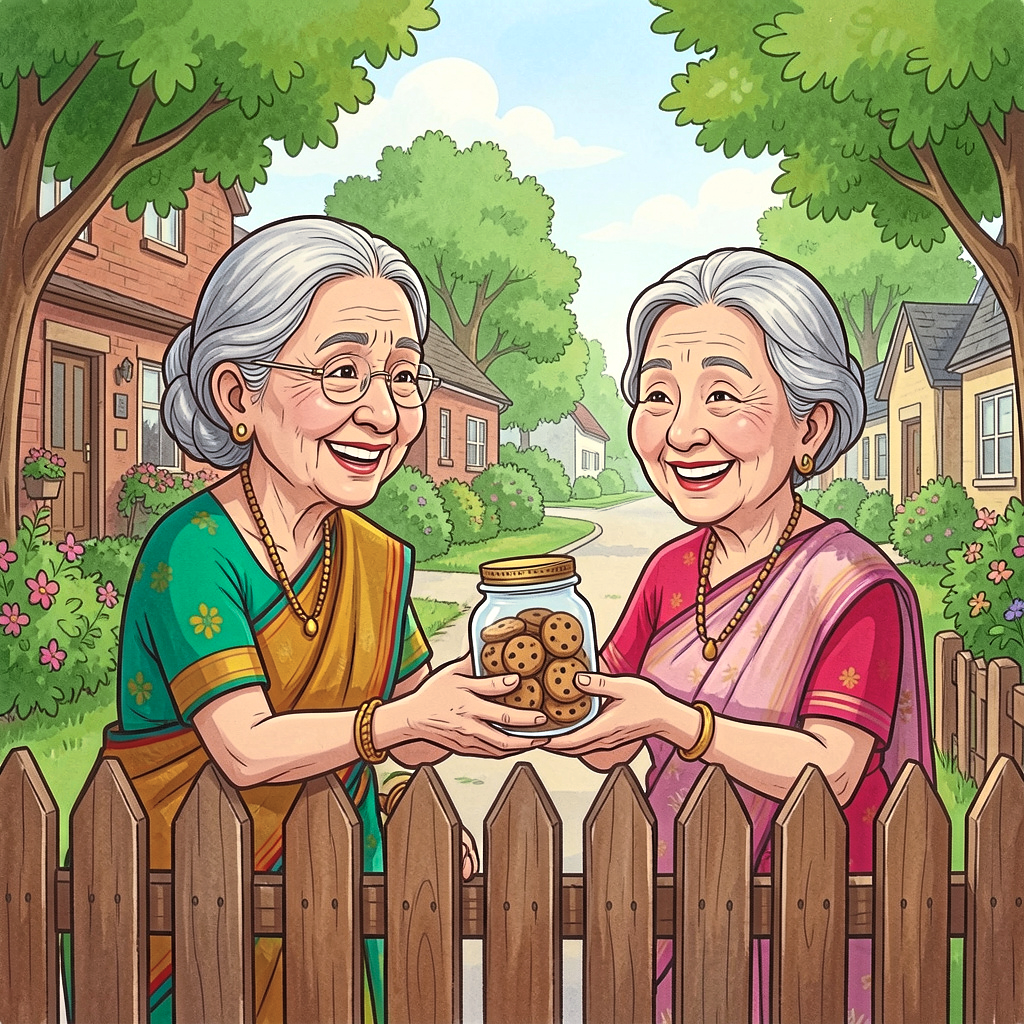
The scope of food-based care extends beyond immediate family to encompass broader neighbourhood relationships and community bonds. A next-door neighbour of more than fifty years regularly appeared with containers of prepared dishes, most memorably sweet upma offered at breakfast, a preparation still treasured in memory decades later. Afternoon visits might bring onion cucur, maintaining a rhythm of casual yet meaningful exchange. When containers returned, they never went empty—reciprocal acts ensuring that care flowed bidirectionally through the dividing fence. These interactions created a tapestry of mutual obligation and affection that structured neighbourhood life across decades.
Intercultural food sharing during Malaysian festival seasons demonstrates how this language transcends ethnic boundaries. During Chinese New Year, neighbours exchange homemade cookies; during Deepavali, the author's mother still participates in a years-long tradition of exchanging sweets with a retired colleague who visits with mandarin oranges while receiving cookies in return. The author's mother, herself retired for eight years, continues these exchanges automatically, suggesting that certain rituals embed themselves so deeply into identity that they persist beyond their original practical purpose. Even sanitation workers receive festival treats, extending the circle of care to those often overlooked in social hierarchies.
The jarring moment in the English hospital office revealed something transformative about human nature across borders. A British colleague's instinctive offer to peel fruit for a tired colleague echoed the Malaysian rituals of the author's childhood with striking precision. The gesture carried identical meaning—acknowledgement of exhaustion, desire to ease burden, expression of consideration—yet emerged from a completely different cultural context. This recognition prompted reconsideration of what she had always assumed was distinctly Malaysian, forcing acknowledgement that the impulse to care through food nourishment might be fundamentally human rather than culturally specific.
This realisation recontextualises food's role in human societies across geography and history. While different cultures develop distinct culinary traditions and varied expressions of care-giving, the underlying impulse appears remarkably consistent. Whether manifested through carefully peeling fruit, preparing elaborate festival dishes, or hand-feeding a distracted child, food becomes the tangible vehicle for expressing emotions that might otherwise remain unspoken. The consistency of this behaviour across disparate cultures suggests something archetypal about human connection—an ancient language spoken before written words developed, still powerful in its simplicity.
For Malaysian readers, this observation carries particular resonance in an increasingly mobile world. As younger generations migrate for education and employment, maintaining these food traditions becomes both more challenging and more meaningful. The deliberate purchase of blue-packet biscuits for a grown daughter who lives abroad, the careful preparation of family recipes for returning relatives, the exchange of cookies with neighbours regardless of ethnicity—these practices anchor identity and community even as circumstances change. In the context of Southeast Asian urbanisation and globalisation, these rituals represent cultural continuity and emotional security.
The author's extended reflection also speaks to something urgent in contemporary society. In an era of individualised living and transactional relationships, the insistence on communicating care through shared food represents a deliberate choice toward human connection. Malaysian culture's particular emphasis on this practice—evident in the ubiquity of food-centred social events, the significance of cooking in family life, and the way culinary expertise is inherited and valued—demonstrates a sophisticated understanding of human needs. Food nourishes not merely the body but the relationships that sustain psychological wellbeing.
Looking forward, this understanding offers practical implications for Malaysian diaspora communities maintaining connection with home. Young Malaysians abroad often report that food becomes the most powerful anchor to homeland identity and family relationships. The simple act of cooking a mother's recipe or sharing Malaysian snacks with local friends recreates belonging and communicates heritage. Simultaneously, it acknowledges that the emotions expressed through Malaysian food traditions resonate with universal human experiences—they are particular enough to carry cultural authenticity yet universal enough to be understood across borders.
Ultimately, the encounter in an English hospital revealed that humanity possesses a shared vocabulary written in flavours, textures, and the labour of preparation. Whether expressed through a Malaysian grandmother's patience in hand-feeding a reading-obsessed child or a British secretary's willingness to peel fruit for a tired colleague, the message translates with remarkable fidelity: I have noticed your need, and I choose to ease your burden. In a world fractured by linguistic differences, economic inequality, and cultural misunderstanding, food remains one of the few languages that requires no translation. For Malaysia and beyond, this realisation invites deeper appreciation for the quiet, nourishing ways communities sustain themselves through care made edible.

