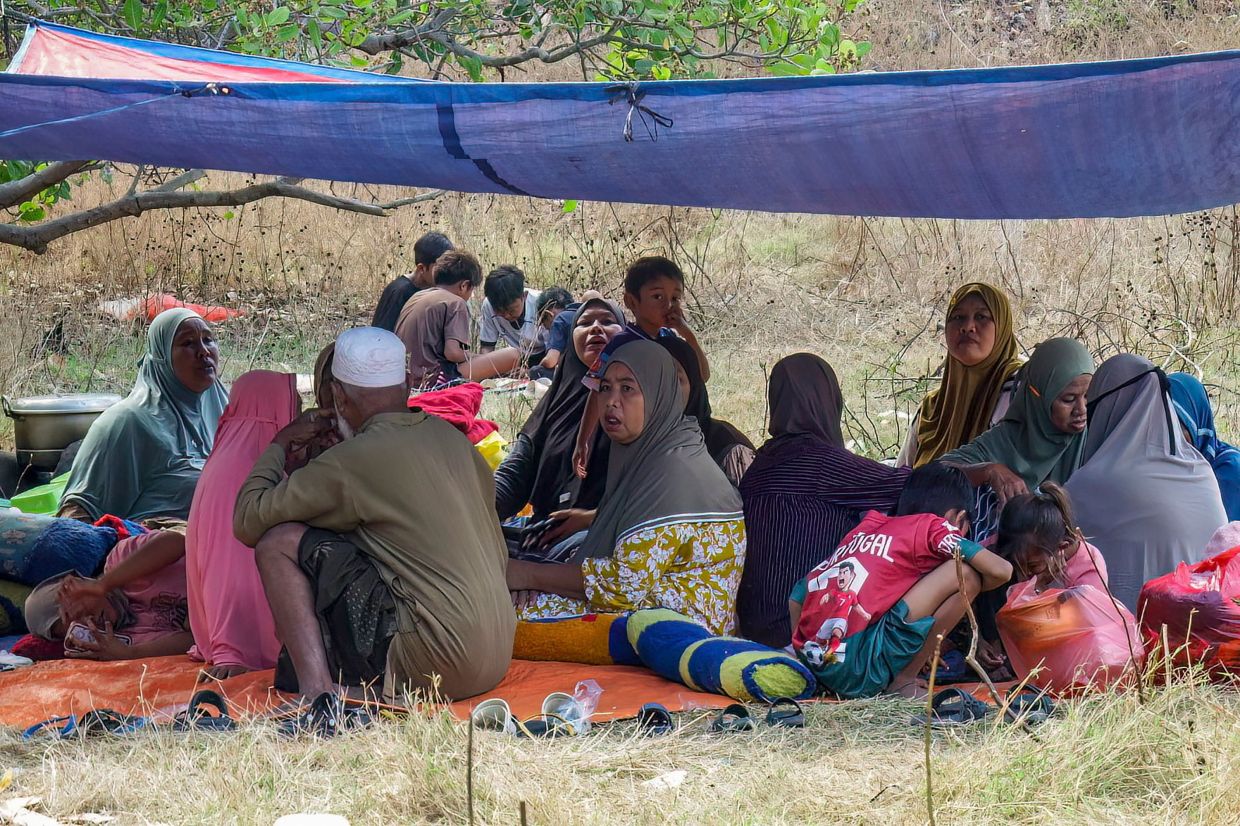
On Sunday, approximately 5,000 residents of Indonesia's Flores island remained displaced following a catastrophic 7.7-magnitude earthquake that struck early Saturday morning, leaving at least 48 dead and over 100 injured in its wake. The disaster compounded fears among islanders already traumatized by a similarly powerful 1992 tremor that had devastated the region decades earlier, creating a psychological toll that extended beyond the immediate physical damage.
The seismic event, which originated in shallow offshore waters just north of Flores, unleashed over 341 aftershocks throughout the hours immediately following the initial quake, according to Berton Suar Pelita Panjaitan, spokesman for Indonesia's BNPB national disaster agency. This sustained aftershock sequence kept residents in a heightened state of anxiety, preventing many from returning to their homes even where structures appeared superficially intact. The secondary shocks posed an ongoing risk of structural collapse, forcing authorities to maintain evacuation protocols throughout affected communities.
The scale of infrastructural damage proved extensive across the island's populated zones. Official assessments documented severe destruction to at least 914 residential dwellings, with hundreds more sustaining moderate to significant harm. Beyond residential properties, the earthquake damaged 93 educational facilities, 36 health centers, and 38 government offices, effectively paralyzing basic services across affected areas. The destruction of health infrastructure proved particularly troubling given the immediate medical needs arising from earthquake-related injuries and the challenges of delivering emergency medical care in the aftermath.
Many survivors who fled to elevated terrain faced desperate humanitarian conditions. Residents of Nangahale village on Flores's northern coast expressed urgent needs for fundamental supplies including food, potable water, medicines, and children's essentials. A 55-year-old woman named Nurhidayati, sheltering on a hillside mat alongside neighbors, articulated the psychological dimension of the crisis, recounting how memories of the devastating 1992 earthquake—which had killed approximately 2,500 people and triggered a destructive tsunami—now compounded her trauma and prevented her from contemplating a return home despite the discomfort of outdoor refuge.
Communications infrastructure suffered significant damage, leaving portions of the affected region without reliable electricity or telecommunications capabilities. At least one primary emergency access road remained impassable, hampering rapid delivery of humanitarian assistance to the most isolated communities. These infrastructure failures created cascading challenges for rescue operations and the coordination of relief efforts, while isolation intensified the psychological stress experienced by survivors awaiting assistance.
The initial tsunami threat that sent residents racing toward higher ground proved less severe than initially feared. Waves reaching heights of up to 1.6 meters struck some coastal regions, but the tsunami warning was subsequently lifted after assessment confirmed no major inundation would occur. Nevertheless, authorities maintained advisories urging residents to avoid damaged structures, as the combination of structural compromise from the initial quake and ongoing aftershocks created a persistent risk of building collapse that could prove fatal to those attempting premature returns.
Government response mobilized relatively quickly by regional standards. The national disaster agency announced preparation of a 14-day emergency response status for East Nusa Tenggara province, which encompasses Flores. The government dispatched 50,000 aid packages totaling 275 tonnes to the affected region, representing a substantial but potentially insufficient response to the scale of displacement and need. International assistance began materializing as the International Federation of Red Cross and Red Crescent Societies coordinated preparations for expanded aid delivery to temporary shelter zones.
The European Union offered technological support through its Copernicus Earth observation satellite system to facilitate search and rescue operations, with Commission President Ursula von der Leyen publicly pledging European solidarity with Indonesia's relief efforts. Such international engagement reflected growing recognition that major earthquakes in Southeast Asia demand coordinated cross-border responses, particularly regarding specialized search and rescue capabilities and satellite imagery analysis.
Flores's vulnerability to seismic hazards reflects Indonesia's geographical positioning within the Pacific Ring of Fire, the arc of intense tectonic activity encompassing Japan, Southeast Asia, and the broader Pacific basin. The nation experiences frequent earthquakes as a consequence of complex interactions among multiple tectonic plates underlying the Indonesian archipelago. Historical precedent demonstrated the catastrophic potential of these geological forces, with the 2004 Sumatra-Andaman earthquake and tsunami—registering 9.1 magnitude—killing approximately 220,000 people across the region, including roughly 170,000 within Indonesian territory.
The Flores disaster underscores ongoing challenges facing Indonesia's disaster management infrastructure. Despite advances in early warning systems and evacuation protocols since 2004, the nation's dispersed island geography and limited resources create persistent vulnerabilities in reaching remote populations rapidly with coordinated humanitarian assistance. Survivors' desperate appeals for basic necessities—food, medicine, water—highlighted gaps between disaster response capability and ground-level humanitarian need, particularly in areas where damaged infrastructure compounded access difficulties.
For Malaysia and other Southeast Asian nations, the Flores earthquake reinforced the region's shared seismic vulnerability and the imperative for maintaining robust disaster preparedness frameworks. While Malaysia's location outside the Ring of Fire affords somewhat lower earthquake risk, the nation's experience with the 2004 tsunami demonstrated how distant seismic events can generate transnational humanitarian emergencies. Regional cooperation mechanisms, including information-sharing protocols and pre-positioned emergency response capacity, remain essential given the unpredictable nature of major seismic events and their potential for cascading regional impacts.

