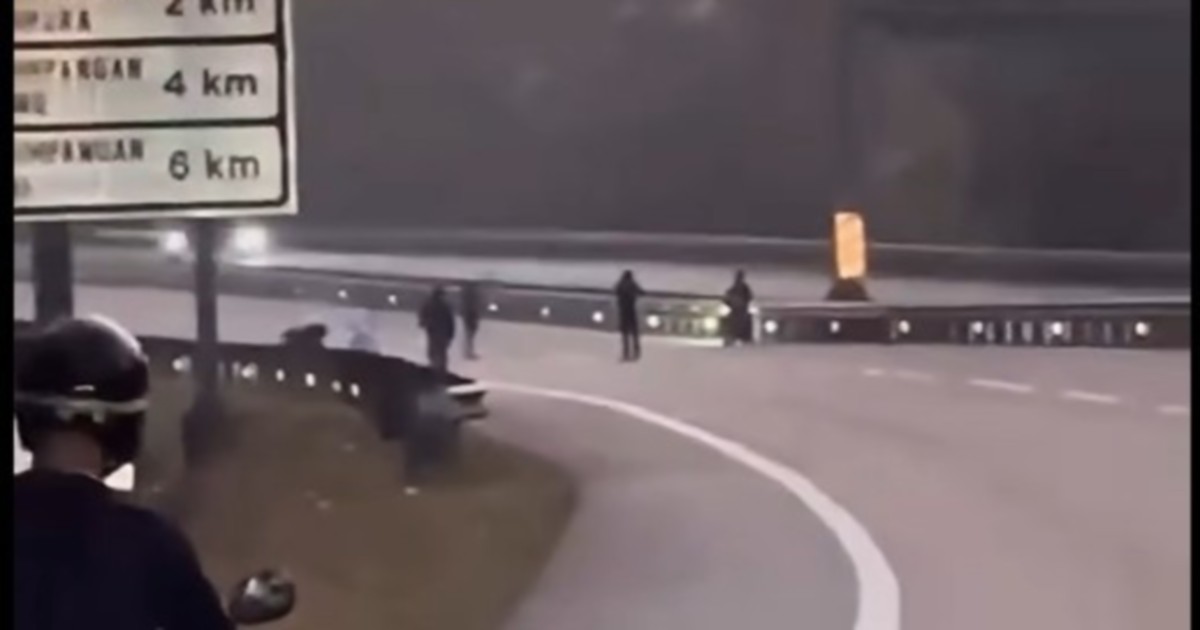
Police in Kulai have expanded their investigation into an illegal street racing incident on the Second Link highway in Johor, with the remand of three additional suspects pushing the total number of arrests to 11. The development signals an intensifying crackdown by enforcement agencies on dangerous road activities that threaten public safety along one of Malaysia's most critical transport corridors.
The Second Link, which connects Johor to Singapore and handles substantial commercial and commuter traffic daily, has become a focal point for traffic law enforcement efforts. The concentration of arrests related to a single illegal racing event underscores both the scale of the incident and the seriousness with which authorities are treating organised street racing activities on federal highways.
Street racing and illegal motorcycle activities have long posed significant challenges to Malaysian law enforcement. These activities not only violate traffic regulations but create genuine hazards for other road users, potentially causing accidents that endanger lives and disrupt commerce. The Second Link's role as a vital economic artery connecting Malaysia to Singapore makes such incidents particularly concerning, as they threaten the reliability and safety of cross-border transportation networks.
The incremental expansion of the investigation, with additional arrests continuing beyond the initial wave, suggests that police are systematically tracking participants in the incident. Such thoroughness indicates that authorities have obtained substantial evidence—possibly from traffic cameras, witness statements, or vehicle identification—enabling them to identify and apprehend individuals methodically rather than rushing conclusions.
For Malaysia's highway safety framework, these coordinated enforcement actions represent a necessary deterrent against the underground street racing culture that has periodically emerged in various regions. Johor, as one of the country's most developed and traffic-dense states, experiences particular pressure from organised racing enthusiasts who exploit highway infrastructure for illicit activities.
The involvement of multiple suspects raises questions about the structure and scale of the racing operation. Illegal street races typically require coordination among participants, spotters, and sometimes spectators, suggesting a degree of organisation that law enforcement must systematically dismantle through comprehensive investigation and prosecution.
From a public safety perspective, the continuing arrests demonstrate that authorities are not treating this as an isolated incident but as part of a broader pattern requiring sustained attention. This approach reflects international best practices in managing organised traffic violations, where treating incidents as systemic rather than exceptional has proven more effective at reducing recurrence.
The legal implications for those remanded remain pending, though Malaysia's traffic laws provide substantial penalties for illegal racing activities, including potential imprisonment and driving bans. The severity of penalties reflects the genuine threat that such activities pose to public safety and the need to maintain order on highways that carry tens of thousands of vehicles daily.
For Malaysian motorists, particularly those regularly using the Second Link for business or commuting purposes, such enforcement actions offer reassurance that authorities remain committed to maintaining highway safety standards. However, the incident also highlights persistent challenges in preventing dangerous driving behaviour, suggesting that enforcement alone may need to be supplemented by public education campaigns addressing the risks and consequences of street racing.
The cross-border nature of the Second Link adds complexity to highway management, requiring coordination between Malaysian and Singapore authorities on traffic safety matters. Any organised racing activity on this corridor has potential implications for bilateral transport relations and cross-border commerce reliability.
As investigations progress and the three newly remanded suspects are questioned, authorities will likely uncover further details about the incident's planning, participants' involvement levels, and the underlying organisation. Such intelligence frequently leads to additional enforcement actions, suggesting that the arrest toll may yet climb as the investigation deepens.

