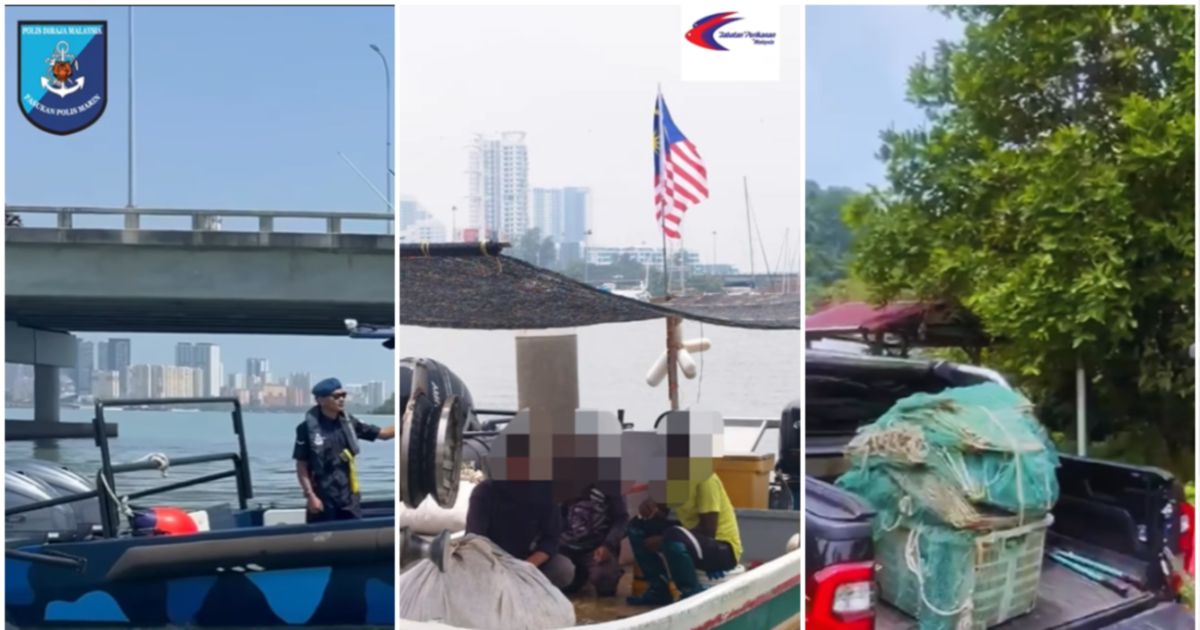
Three men have been taken into custody following a coordinated enforcement sweep across Penang waters, with authorities simultaneously impounding fishing apparatus and a vessel collectively valued at RM75,360. The operation, conducted by multiple maritime and fisheries enforcement agencies, underscores mounting pressure on illegal fishing activities throughout Malaysia's northern maritime zones.
The arrests come amid a broader crackdown on unregulated fishing practices that have plagued Malaysian waters for years. Illegal and unreported fishing operations not only deplete fish stocks critical to food security and livelihoods, but also undermine legitimate fishermen who operate within regulatory frameworks. The seizure of equipment and vessels serves as both a deterrent and a financial blow to operators conducting unauthorised activities.
Penang's waters have long represented a strategic enforcement priority given the state's substantial fishing industry and its position along major maritime trade routes. The region supports thousands of traditional and commercial fishermen whose incomes depend on sustainable fish populations. Unregulated vessels operating without proper licensing or catch documentation directly threaten these livelihoods by depleting shared marine resources and creating unfair competitive pressures.
The combined value of seized assets—RM75,360—reflects the significant investment some operators maintain in illegal operations. This financial dimension demonstrates that enforcement actions carry real consequences for those involved in unregulated fishing, potentially discouraging future violations. However, authorities acknowledge that seizures alone remain insufficient to eliminate the problem entirely.
Joint operations between different enforcement bodies have proven more effective than single-agency approaches. Coordination between maritime police, fisheries departments, customs authorities, and coast guard services allows for comprehensive coverage across vast ocean areas where illegal activities typically occur away from public view. Information sharing between agencies helps identify repeat offenders and organised fishing networks operating across multiple jurisdictions.
The legal framework governing Malaysian fisheries includes mandatory licensing, catch reporting requirements, and designated fishing zones intended to protect marine ecosystems and ensure fair resource distribution. Operators caught violating these regulations face substantial penalties, vessel confiscation, and potential criminal charges. The three men arrested will likely face prosecution under relevant maritime and fisheries legislation, with sentences potentially including fines and imprisonment depending on violation severity.
For Malaysian fishermen and the fishing industry more broadly, strengthened enforcement sends a positive signal about government commitment to protecting marine resources. Small-scale traditional fishermen particularly benefit from reduced competition from illegal operators who undercut prices and avoid compliance costs. Tourism operators and coastal communities also gain from healthier fish populations and reduced pressure on marine ecosystems.
Regional cooperation remains crucial given that fishing vessels frequently operate across international boundaries and territorial waters. Southeast Asian nations share interconnected marine resources, meaning enforcement gaps in one country can undermine conservation efforts throughout the region. Malaysia's efforts contribute to broader ASEAN initiatives addressing illegal, unreported, and unregulated fishing—a practice estimated to cost developing nations billions in lost revenue annually.
The operation reflects lessons learned from previous enforcement campaigns that identified vulnerabilities in monitoring capabilities and inter-agency coordination. Advances in vessel tracking technology, satellite monitoring, and real-time communication systems have enhanced authorities' ability to detect and respond to suspicious maritime activity. These tools enable faster response times and more targeted operations than traditional patrol methods alone.
Looking forward, sustaining enforcement momentum requires adequate resources, continued inter-agency cooperation, and community reporting. Fishermen operating legally can provide valuable intelligence on competitors engaging in unauthorised activities. Public awareness campaigns explaining the consequences of illegal fishing and environmental benefits of compliance help generate grassroots support for regulatory enforcement.
The seizure also highlights the economic scale of illegal fishing networks. Beyond the three arrested individuals, these operations typically involve suppliers of fuel and provisions, buyers purchasing caught fish without documentation, and distributors moving product through supply chains. Targeting higher-level organisers and financiers behind individual vessels could prove more effective than focusing solely on boat operators.
As Malaysia positions itself as a model for sustainable fishing practices regionally, high-profile enforcement actions serve multiple purposes. They demonstrate regulatory capacity to international partners and trading partners concerned about seafood sourcing, protect domestic fish stocks and fishermen's interests, and reinforce the principle that maritime rules apply equally to all operators regardless of nationality or connection. The Penang operation exemplifies this multifaceted enforcement approach.

