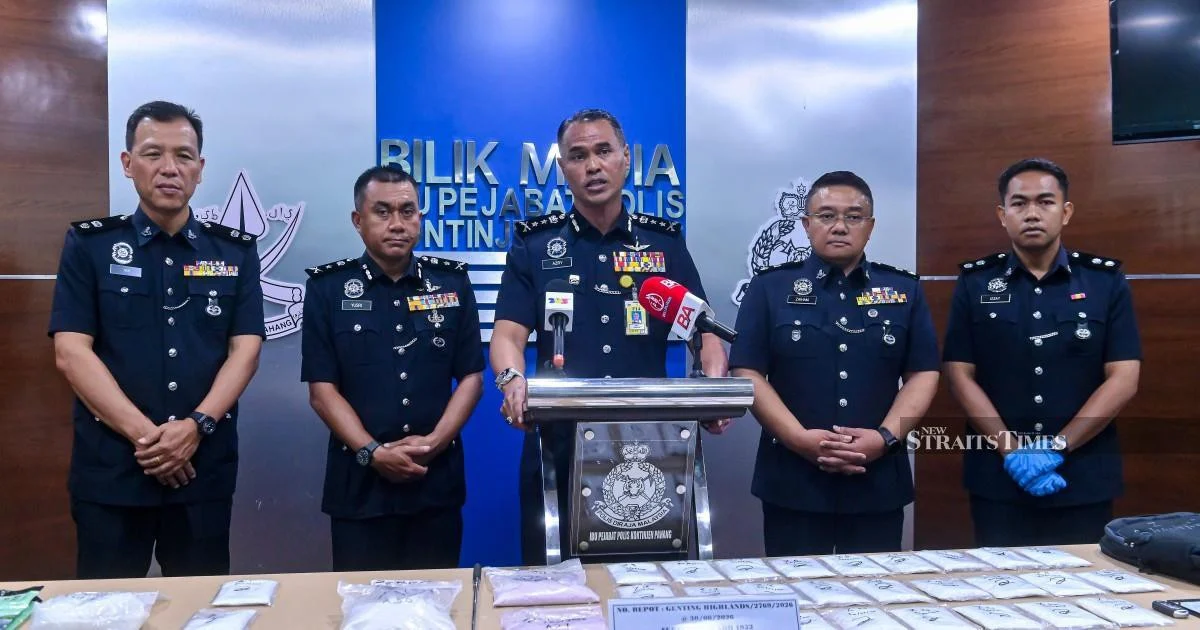
Pahang's drug enforcement agencies have concluded a comprehensive three-day crackdown that stretched across all 11 districts of the state, culminating in 333 arrests and the confiscation of controlled substances, currency and motor vehicles collectively worth in excess of RM500,000. The operation, identified as Op Hawk, represents a coordinated response to the entrenched drug trafficking infrastructure that has long plagued the eastern coast state, with authorities systematically sweeping through known distribution and consumption zones to dismantle local supply chains.
The breadth of this enforcement action underscores the persistent challenge narcotics pose to Pahang's public health and safety. Rather than concentrating resources in a single locality, the decision to execute simultaneous raids across the entire state suggests that drug-related crime remains distributed throughout the region, from urban centres like Kuantan and Temerloh to smaller towns and rural areas. This sprawling nature of the problem reflects broader Southeast Asian trafficking patterns, where Malaysia's strategic geographic position makes it a transit point and consumption hub for drugs originating from production zones in Myanmar, Thailand and further afield.
The seizure figures provide a concrete measure of the operation's success, though experts caution that discrete enforcement actions, however substantial, represent snapshots rather than solutions to systemic drug problems. The recovery of RM500,000 worth of assets suggests mid-level operations were targeted, consistent with authorities moving beyond street-level dealers toward dismantling profit structures that fund larger networks. The inclusion of vehicles among confiscated assets indicates investigators identified transportation infrastructure used to distribute narcotics—a key vulnerability in supply chains that move products through congested highways and border regions.
For Malaysian policymakers, such operations serve dual purposes. They generate headline-grabbing arrest figures and demonstrate law enforcement commitment to the drug war, messaging that resonates with public expectations of safety. Simultaneously, they provide actionable intelligence about emerging trafficking routes, consumption patterns and distribution methods that inform longer-term strategic planning. The statewide coordination evident in Op Hawk suggests Pahang's authorities have consolidated intelligence across district-level police units, a significant logistical achievement in a state covering nearly 36,000 square kilometres.
The arrest of 333 individuals raises important questions about enforcement philosophy and sustainability. Malaysia's drug laws carry severe penalties, including mandatory death sentences for trafficking large quantities. Whether Op Hawk focused primarily on traffickers, distributors, or users remains unclear from available information, yet this distinction carries profound implications for the incarcerated population's composition and long-term criminal justice outcomes. Data from previous similar operations indicate that street-level users often constitute the majority of arrests, raising concerns about whether enforcement resources target high-impact nodes in supply networks or concentrate on lower-risk arrests that burden the prison system without substantially reducing availability.
From a Southeast Asian perspective, Operation Hawk's execution in Pahang reflects wider regional coordination efforts against transnational drug flows. Thailand, which shares a northern border with Malaysia, faces comparable pressures from fentanyl and methamphetamine production in areas outside government control. The strategic approach taken in Pahang—attacking distribution infrastructure rather than relying solely on border interdiction—mirrors strategies being trialled across the Association of Southeast Asian Nations, recognising that demand-side interventions and supply-chain disruption must operate in concert.
The economic dimensions of the seizure merit examination. The RM500,000 in confiscated assets represents capital that would have circulated through Pahang's informal economy, funding organised crime infrastructure. Beyond the direct value, these seizures potentially disrupt cash flows that sustain traffickers' operational capacity and living standards, applying financial pressure to criminal networks. However, the relative ease with which drug organisations replenish inventory—often within weeks of major busts—suggests the long-term impact on trafficking capacity remains marginal unless coupled with sustained enforcement and criminal prosecution.
Community engagement forms another critical dimension rarely quantified in operational announcements. Enforcement successes depend heavily on intelligence from residents who report suspicious activities. Whether Op Hawk incorporated community policing elements, public education about reporting mechanisms, or neighbourhood engagement strategies remains unspecified, yet such components substantially amplify enforcement effectiveness by expanding surveillance capacity beyond uniformed personnel.
The timing and scope of Op Hawk occur against a backdrop of Malaysia's broader drug policy framework, which has historically emphasised harsh penalties while grappling with rehabilitation capacity limitations. The arrest of 333 individuals will flow into an already-strained penal system, where drug-related offences comprise a substantial proportion of the incarcerated population. Balancing enforcement intensity with rehabilitation infrastructure represents an ongoing policy tension that Op Hawk's results will exacerbate unless accompanied by corresponding investments in treatment facilities and reintegration programmes.
Looking forward, the implications for Pahang's law enforcement strategy require scrutiny of whether Op Hawk represents a one-off intensive operation or signals a sustained elevation in anti-drug enforcement capacity. Trafficking networks demonstrate resilience and adaptability; initial disruptions frequently trigger organisational restructuring rather than dismantlement. Sustained success requires follow-up operations, intelligence consolidation across jurisdictions, and coordination with federal-level authorities investigating the source organisations supplying mid-level distributors that Op Hawk targeted.

